Plug-In Solar vs Rooftop Solar: Which One Is Right for Your Home?
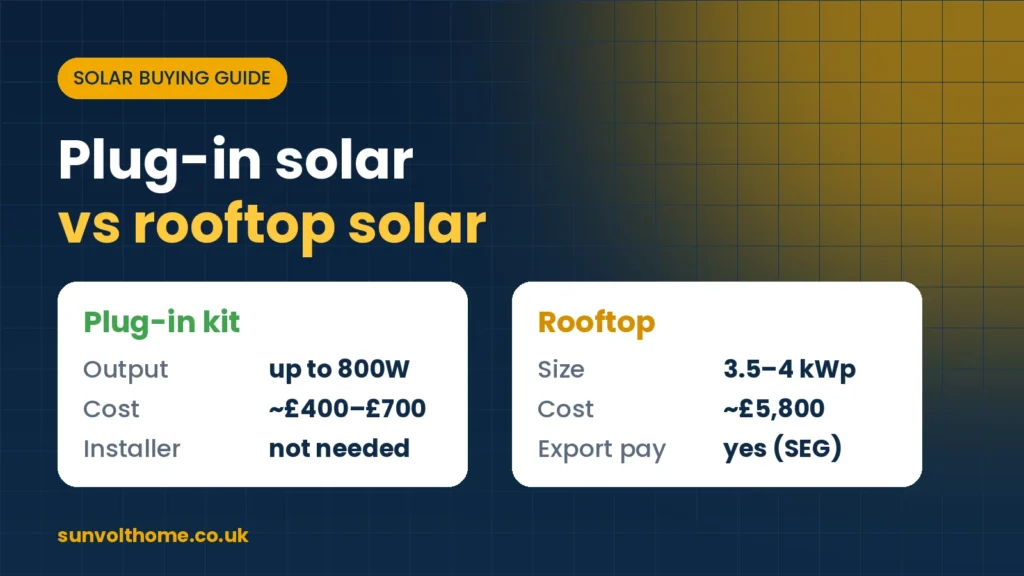
Since plug-in solar became legal in Great Britain on 27 August 2026, the question we hear most is a simple one: plug-in solar vs rooftop solar: which is better? The short answer is that they solve different problems. A plug-in solar kit is a small, cheap way to trim your daytime bill. A rooftop solar system is a proper power station on your house that can cover a big share of your annual usage.
Picking the wrong one is the expensive mistake. Some people spend £6,000 on a roof system when a £500 kit would have done what they needed. More often it’s the other way round: someone buys a kit expecting it to halve their bill, and it was never going to.
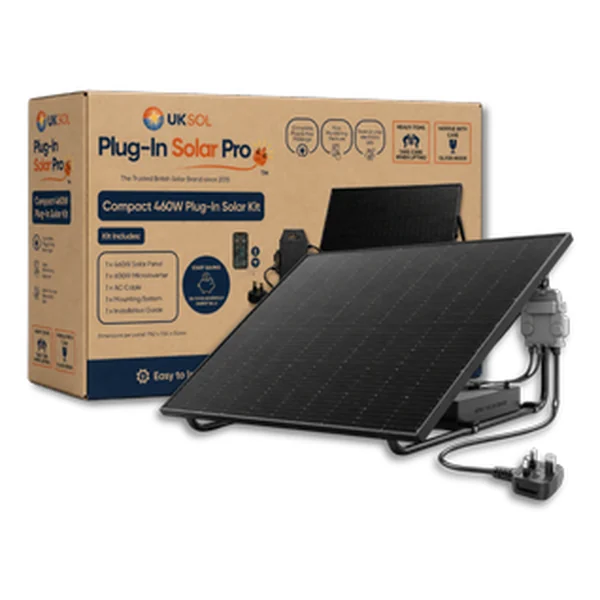
Plug-in solar vs rooftop solar at a glance
| Plug-in solar kit | Rooftop solar system | |
|---|---|---|
| Typical size | Up to 800W output (often 1–2 panels) | 3.5–4 kWp is common (8–10 panels) |
| Typical cost | Roughly £400–£700 for an 800W kit | About £5,800 for 3.5 kWp fitted (MCS data, Oct 2026) |
| Installation | Plug into a wall socket; no scaffolding | MCS-certified installer, scaffolding, consumer unit work |
| Export payments (SEG) | Generally not eligible | Eligible with an MCS installation |
| Battery | Some kits add a small one | Full home battery, often 5–10 kWh |
| Can you take it with you? | Yes | No, it stays with the house |
| Good for renters? | Yes, with landlord agreement | Rarely |
| VAT | 0% on solar and batteries until 31 March 2027, then 5% | |
How much electricity each one actually makes

This is where the gap becomes obvious.
A plug-in solar kit is capped at 800W of output by law. In the North East or Yorkshire, a well-placed kit might produce something like 550 to 700 kWh a year. A 3.5 kWp roof system in the same postcode could produce roughly 2,800 to 3,000 kWh. That’s four or five times as much.
Those are our estimates for a south-facing, unshaded setup, and real results swing a lot with orientation and shading. But the ratio holds. A kit covers a slice of your daytime baseload: fridge, freezer, router, the odd wash. A roof system can cover a large part of a typical home’s 2,500 to 3,500 kWh annual use, especially with a battery.
Payback: the honest comparison
Plug-in kits win on upfront cost and lose on total savings. Rooftop systems are the reverse. Here’s a rough worked example using Ofgem’s current electricity rate of 26.32p per kWh. It’s illustrative, not a quote.
Plug-in kit: you use 300–450 kWh of what it produces, so you save about £80–£120 a year. On a £500 kit, that’s a payback of somewhere around four to six years.
Rooftop system with no battery: you might use 40–50% of 2,900 kWh directly, around 1,200–1,450 kWh, worth £315–£380. Export the rest under the Smart Export Guarantee and you add more on top, depending on your tariff. On £5,800, payback is usually longer than the kit’s, but the system keeps saving hundreds a year for 25 years or more.
Rooftop with a battery: self-use can climb well past half your generation, and the battery can charge cheaply overnight too. It costs more upfront and pays back more in total.
If electricity goes up to the forecast 32.54p per kWh in January 2027, every one of those savings figures rises by about a quarter. The bigger system benefits most in pounds, simply because it’s displacing more units.
Who should pick a plug-in solar kit
A plug-in solar kit is the right call more often than installers like to admit. It makes sense if:
- you rent, or you’re likely to move in the next few years;
- you live in a flat or a house with a shaded, small or listed roof;
- you want to try solar without committing thousands of pounds;
- someone is home during the day, so the power gets used rather than wasted;
- you have a sunny, south-facing garden, patio or wall to put the panel on. Wooden balconies, fences and timber cladding are excluded by the rules, so ground frames are often the easiest option.
Who should go for rooftop solar
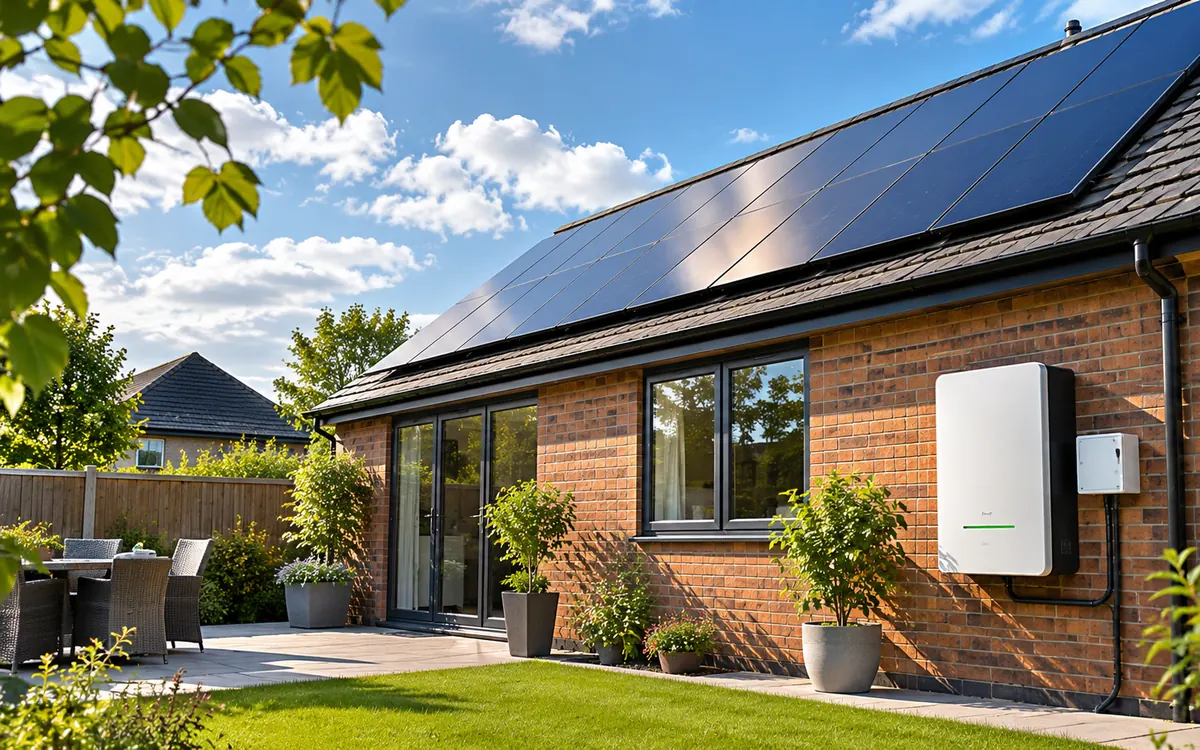
If you own the house, plan to stay, and have a reasonable roof, rooftop solar does far more for your bill. It’s the better choice when you use a lot of electricity, run an electric car or heat pump, or want a battery big enough to cover your evenings. It also adds export income, which a plug-in solar kit generally can’t.
The cost is the barrier for most people. The Warm Homes Loan Scheme now lets homeowners borrow for panels and batteries, often below normal personal loan rates, and the 0% VAT window runs until 31 March 2027. Our guide to government-backed solar loans explains how that works.
Can you have both?
You can, but it rarely makes sense. Current G98 guidance allows one plug-in device per household, and a kit adds little once you have a decent roof system. The more useful combination is a plug-in solar kit now, while you’re renting or saving, then a rooftop solar system later. The kit moves house with you.
Three homes, three different answers
These are made-up examples, but they’re the kinds of homes we talk to every week across the region.
A renter in a Leeds flat
Second floor, south-facing window, a small balcony with a metal railing. No access to the roof and a landlord who won’t agree to anything permanent. Rooftop solar isn’t an option. A plug-in solar kit is, if the landlord and freeholder agree in writing and the panel can be mounted safely. The saving is modest, but it’s something, and the kit leaves with them when the tenancy ends.
A retired couple in a Darlington semi
Home most of the day, a decent south-west roof, a usage of around 3,000 kWh a year. This is a strong rooftop case. They use a lot of their generation in the daytime without even trying, so self-consumption is high. A plug-in solar kit would help a little, but it would leave most of that roof’s value on the table.
A family in Harrogate with an electric car
Both parents out at work, kids at school, the car charging overnight. Daytime use is low, so a plug-in solar kit would export much of what it makes, earning little or nothing for it. A rooftop solar system with a battery is the better fit: the battery holds the daytime solar for the evening rush, and the household can choose a tariff with cheap overnight rates for the car.
What each route involves
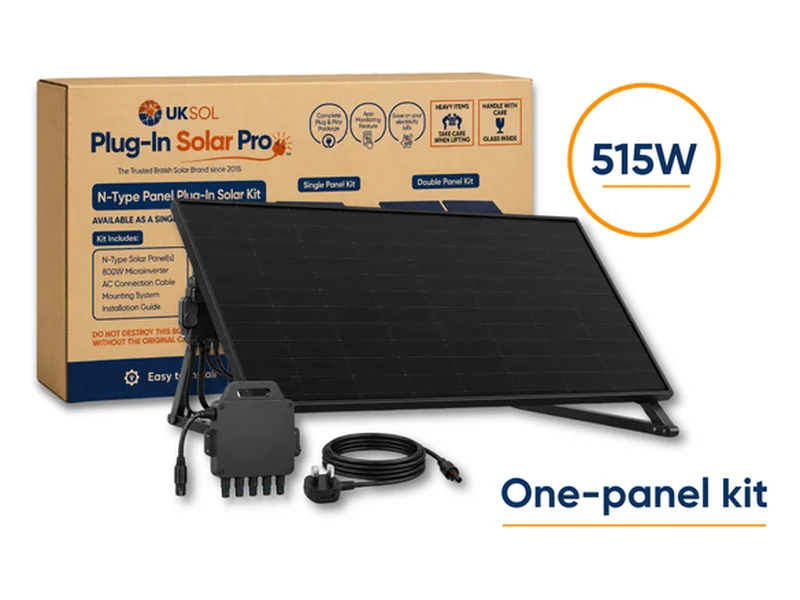
The process is very different, and it’s worth knowing what you’re signing up for.
Plug-in kit. You buy the kit, choose a sunny spot, assemble the frame, plug it in, and notify your network operator online. No survey, no scaffolding, no appointment. Most people are generating the same day.
Rooftop system. An installer surveys the roof, designs the system around your usage, and gives you a written quote. Installation usually takes a day or two once the scaffolding is up. The installer registers the system with MCS, handles the network operator notification, and gives you the certificate you need to apply for Smart Export Guarantee payments. From first call to switch-on, a few weeks is typical.
Lifespan, warranties and upkeep
Solar panels themselves last a long time; manufacturers commonly warrant output for 25 years or more. Inverters are the part that tends to need replacing first, often somewhere in the 10 to 15 year range for string inverters, while microinverters often carry longer warranties. Batteries degrade gradually and come with their own warranty terms.
Upkeep is light for both. Rain does most of the cleaning. A ground-mounted kit is easy to wipe down and keep clear of leaves; a rooftop solar system mostly needs an occasional check that nothing is shading it and that the inverter is reporting normally. Check the specific warranty on whatever you buy, because terms vary widely between brands.
Mistakes to avoid
- Comparing kit prices with roof prices per panel. A rooftop quote includes scaffolding, certification, a full inverter, warranties and export eligibility. They aren’t the same product.
- Expecting a kit to cut your bill in half. At 800W, it can’t.
- Ignoring the roof you already have. Plenty of people in terraced streets assume their roof is too small. Eight panels fit on more roofs than you’d think; see how many solar panels fit on your roof.
- Waiting past March 2027 without meaning to. The VAT change adds roughly £300 to a typical rooftop install.
Frequently asked questions
Is plug-in solar worth it in the UK?
It can be, if you use the electricity while it’s generating. A compliant 800W kit might save around £80–£120 a year in northern England, so a £500 kit typically pays back in four to six years. It won’t replace a rooftop solar system for bigger savings.
How many plug-in solar panels can I have?
The legal limit is 800W of AC output, and current G98 guidance allows one plug-in device per household. You can have more panel wattage than 800W, but the inverter caps what goes into your home.
Is rooftop solar better than a plug-in solar kit?
For total savings, yes: a 3.5 kWp roof system produces about four to five times more electricity and qualifies for export payments. A plug-in solar kit is cheaper, needs no installer, and suits renters or homes without a usable roof.
Can I add a battery to plug-in solar?
Some plug-in solar kits come with a small battery, which stores daytime power for the evening. It adds cost, and the 800W output limit still applies. A full home battery is normally paired with a rooftop solar system.
Do I need planning permission for rooftop or plug-in solar?
Most houses don’t need planning permission for rooftop panels, which usually fall under permitted development. Listed buildings, conservation areas and flats can be different. Plug-in kits rarely need it either, but wooden balconies, fences and timber cladding are excluded as mounting points.
Which lasts longer, plug-in or rooftop solar?
The panels in both commonly carry output warranties of 25 years or more. The electronics tend to need replacing first. A rooftop solar system has a larger inverter and sometimes a battery, while a plug-in solar kit relies on a single microinverter. Check the warranty terms on the specific product.
Not sure which one fits your home?
We do both, so we don’t have a reason to push you either way. Have a look at our plug-in solar kits, with free local delivery across the North East, North Yorkshire and West Yorkshire, or our rooftop solar panels and battery storage. For a straight answer on your own house, book a free survey or call 0330 057 7202.
Sources: SI 2026/848 (plug-in solar regulations, in force 27 August 2026); MCS installation cost data (October 2026); Ofgem price cap, 1 October to 31 December 2026; Cornwall Insight January 2027 forecast; HMRC VAT Notice 708/6. Generation and savings figures are Sunvolt estimates for a south-facing, unshaded setup in northern England. Last updated 22 November 2026.