Is Plug-In Solar Legal in the UK? What Changed on 27 August 2026
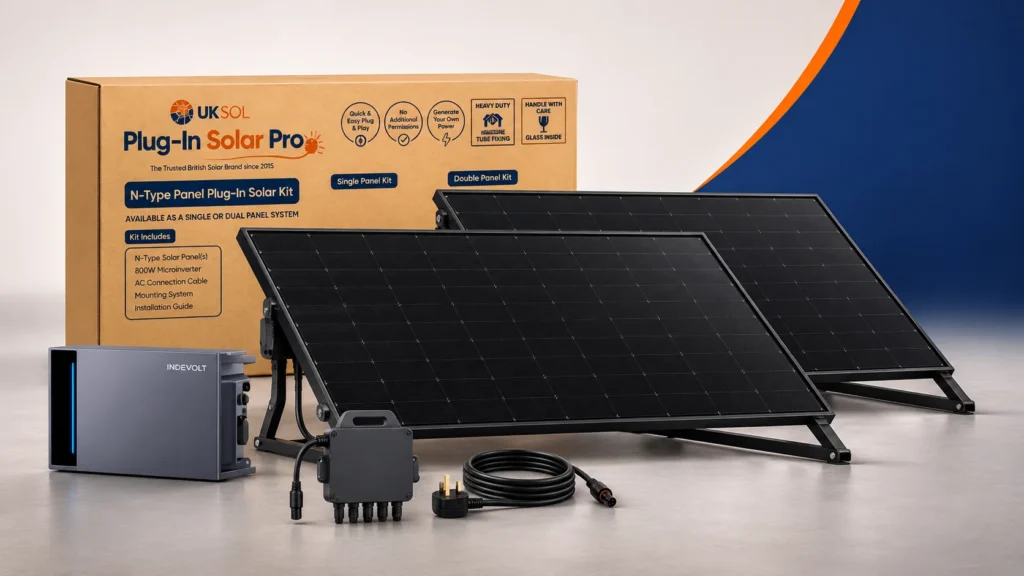
Is plug-in solar legal in the UK? Yes. Plug-in solar has been legal in Great Britain since 27 August 2026, when new regulations (SI 2026 No. 848) changed the electrical safety rules that used to make plugging a solar panel into a wall socket a grey area at best. You can now buy a kit, set the panel up in your garden or on a wall, plug it into a normal socket, and use the power in your home.
There are conditions, though, and most of the confusion online comes from people skipping them. Some articles still say “legal since April”. Others imply any panel off a marketplace is fine. Neither is right. Here’s what actually changed, what a compliant kit looks like, and the checks we’d do before buying one for a house in the North East or Yorkshire.
What changed, and when
Two separate things happened in 2026, and they get muddled together.
First, the wiring rules. Amendment 4 to BS 7671 (the 18th Edition wiring regulations) came into force on 15 April 2026. It added provisions for small plug-in generators and battery storage. That is the “April” date some sites quote, but on its own it didn’t make plugging a panel into a socket lawful.
Second, the law itself. The government consulted in June 2026, published its response and an Interim Product Specification (IPS v2.0) in July, and the amending regulations came into force on 27 August 2026. Those regulations amend the Plugs and Sockets etc. (Safety) Regulations 1994 and the Electricity Safety, Quality and Continuity Regulations 2002. That second change is the one that matters for homeowners.
So: April for the wiring standard, August for the law.
The rules that make plug-in solar legal
The legal definition is narrow on purpose. A plug-in solar device has to generate electricity from sunlight, connect through a standard plug and socket, run in parallel with the grid, and have a maximum AC output of 800 watts.
That last number trips people up. The 800W limit applies to what the microinverter puts out, not to the panels. A kit with 890W or even 1,260W of panels can still comply, because the inverter caps the output at 800W. Extra panel wattage just means the kit reaches that cap more often, which is useful on a grey Teesside morning.
| Requirement | What it means in practice |
|---|---|
| 800W AC output cap | The microinverter is limited to 800W, whatever the panel size |
| Standard plug and socket | A moulded BS 1363 plug, no adaptors, no multi-way extensions |
| Anti-islanding protection | The inverter shuts off automatically if the grid goes down, so it can’t feed a dead line |
| Compliant product | Built to the government’s Interim Product Specification (IPS v2.0) |
| Grid notification | Your network operator is told about it under the G98 process |
The Energy Networks Association keeps a Type Test Register that marks plug-in solar kits as compliant or non-compliant. It’s worth checking a kit there before you pay. Specialist trackers reported more than 70 plug-in entries marked compliant by late September 2026, from around 19 manufacturers, so the market has filled up fast.
Do you need an electrician?
For the plug-in route, the regulations don’t require one. That’s the whole point of the change. But “not required” isn’t the same as “not worth it”, and this is where we’d push back on the more breathless articles.
Your socket sits on a circuit that was wired before anyone imagined a solar panel feeding it. Most modern homes are fine. Older properties are a different story: a ring main with no RCD, a tired consumer unit, or an earthing arrangement nobody has looked at since the 1980s. If your fuse box still has rewireable fuses, get it checked first. A half-hour inspection is cheap next to the alternative.
A few sources also say kits “must” be fitted by an electrician. That applies to the hardwired route, where a kit is connected directly to the consumer unit on its own circuit. It isn’t a blanket rule for plug-in solar kits.
Telling your network operator (G98)
You still need to notify your Distribution Network Operator. In our area that’s usually Northern Powergrid. Plug-in solar uses the G98 “connect and notify” route, which is a notification, not a request for permission. It’s an online form and it doesn’t cost anything.
One limit to know about: the current G98 guidance allows one plug-in device per household. You can’t plug three kits into three sockets and call it a rooftop system. If you want more than 800W, you’re in proper installation territory, which is a different product altogether.
Will you get paid for the electricity you export?
Probably not, and it’s better to plan around that from the start. Smart Export Guarantee payments generally need an MCS-certified installation, and plug-in solar kits aren’t installed that way. Some suppliers have been more flexible than others, so ask yours directly, but don’t count on export income when you work out whether a kit pays for itself.
The value of a plug-in solar kit is in the electricity you use while it’s generating: the fridge, the router, the washing machine on a sunny Saturday. Every unit you use from the panel is a unit you don’t buy at the full rate.
Renting, leaseholds and timber balconies
Being legal doesn’t override your tenancy or your lease. Renters should get the landlord’s agreement in writing. The good news is that a plug-in solar kit is removable, which takes away the usual objection about drilling and rewiring. Leaseholders in flats will usually need the freeholder or managing agent to agree, especially for anything fixed to a balcony or external wall.
There’s also a fire-safety point that hardly anyone mentions. The rules exclude mounting kits on wooden balconies, wooden fences or gates, and timber-clad parts of a building. Ground-mounted frames in the garden avoid the issue entirely.
What a kit can realistically do in the North East

Here’s a rough, worked example. Treat it as illustrative, not a promise.
Say you put an 800W-capped kit on a south-facing frame in a Stockton garden. Over a year it might produce somewhere around 550 to 700 kWh, a bit less than the same kit in Kent. If you’re home during the day, or run appliances while the sun is up, you might use 300 to 450 kWh of that directly. At Ofgem’s October to December 2026 cap rate of 26.32p per kWh, that’s roughly £80 to £120 a year off your bill.
Not life-changing. But the kit costs a fraction of a rooftop system, there’s no scaffolding, and you can take it with you when you move. If electricity prices rise in January as forecast, the same units become worth more.
How to check a kit is compliant before you buy
Since the rules changed, kits have turned up everywhere: DIY sheds, supermarkets, marketplace sellers you’ve never heard of. Some are excellent. Some are the same uncertified hardware that was sold “for off-grid use only” a year ago, with a new listing title. Five minutes of checking sorts one from the other.
- Look the inverter up on the ENA Type Test Register. Search the manufacturer and model. You want a plug-in entry marked compliant, not just any listing for that brand.
- Read the inverter’s rating plate or datasheet. It should say 800W (or less) AC output. If the listing only shows panel watts, ask the seller.
- Check the plug. A moulded UK three-pin plug, fitted at the factory. Not a European Schuko plug with a travel adaptor, and not a plug you wire yourself.
- Look for a statement of compliance with the government’s Interim Product Specification (IPS v2.0). A reputable seller will put this in writing.
- Check who you’re buying from. A UK seller with a returns address and a phone number is worth paying a little more for. If the inverter fails in year three, you’ll want someone to ring.
If a listing can’t answer those five points, walk away. Cheap kits that can’t prove compliance aren’t a bargain, because they aren’t covered by the change in the law.
Where to put the panel
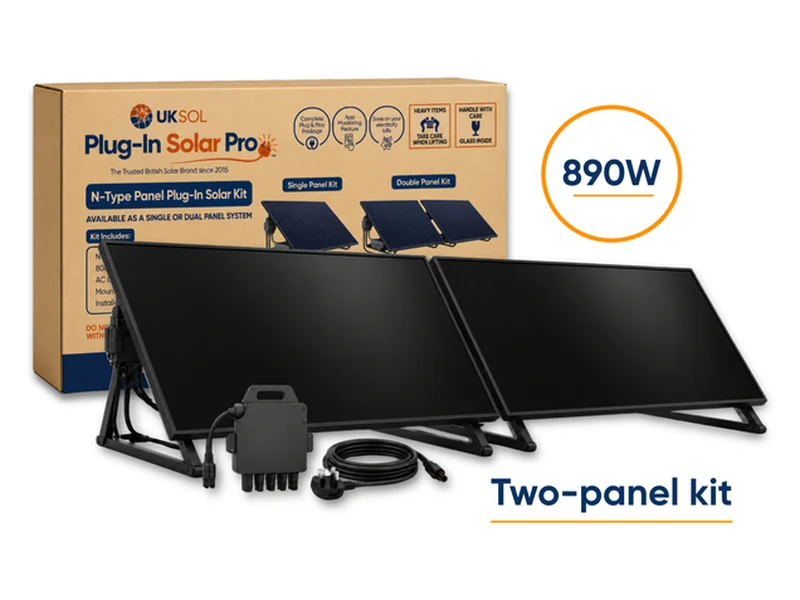
Placement matters more than brand. A mid-range kit in full sun will beat a premium one in half-shade every single day.
South-facing is best, but east or west still works well, especially if you’re home in the morning or evening. A tilt of around 30 to 40 degrees suits our latitude; most ground frames sit somewhere in that range. Lay a panel flat on the lawn and you’ll lose a noticeable chunk of output, and it’ll collect leaves and puddles.
Wind is the bit people underestimate. Coastal gardens in Redcar or Whitby get gusts that will move an unweighted frame. Use the ballast or ground anchors the manufacturer specifies. A panel is a sail.
Cable run counts too. The microinverter’s plug has to reach a wall socket without an extension lead, so pick a spot near an outside socket, or near a window or door where an indoor socket is within reach of the supplied cable. Don’t trap the lead in a closing window.
From box to first kilowatt-hour
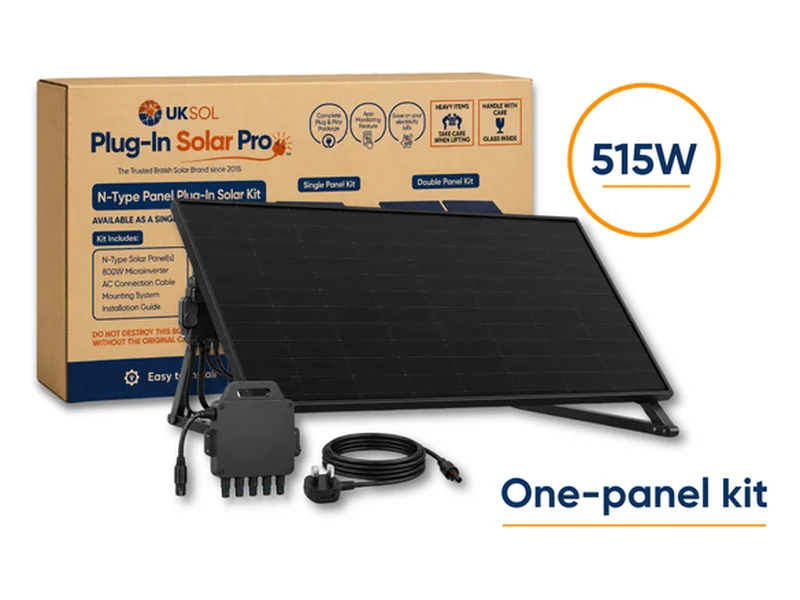
Here’s what setting one up usually looks like. Always follow your kit’s own instructions over this list.
- Assemble the frame and fix the panel to it.
- Position it, check the shading at different times of day, then weight or anchor it.
- Connect the panel’s cables to the microinverter (the connectors only fit one way).
- Plug the microinverter into a wall socket. It waits a short while, checks the grid, then starts feeding power in.
- Complete the G98 notification online.
- Set up the monitoring app if your kit has one, so you can see what it’s actually producing.
Most people are done in an afternoon. The slowest part is usually deciding where it goes.
Insurance, moving house and the boring stuff
Tell your home insurer. It’s a small change to the property and most insurers will simply note it, but you don’t want the first conversation to be after a storm. If you rent, keep a copy of your landlord’s written agreement with your tenancy paperwork.
When you move, the kit comes with you. Unplug it, take it down, notify the network operator that it’s gone, and set it up at the new place (with a fresh G98 notification there). That portability is a real advantage over rooftop panels, which stay with the house.
Mistakes we see people making
- Buying on panel wattage alone. A 1,000W panel bundle with an uncertified inverter isn’t a compliant plug-in solar kit, however good the price looks.
- Using an extension lead. Adaptors and multi-way leads are specifically banned. Plug the kit into a wall socket.
- Skipping the G98 notification. It takes minutes. Do it.
- Expecting export payments. Plan the payback on self-use only.
- Shading. A panel that sits in the shadow of the fence from 2pm loses far more than you’d guess. Spend ten minutes watching where the sun actually falls before you pick a spot.
Frequently asked questions
Is balcony solar legal in the UK?
Yes, in England, Scotland and Wales, from 27 August 2026, provided the kit’s AC output is 800W or less, it meets the government’s product specification, and it plugs into a standard socket. Flats may still need freeholder permission, and wooden balconies are excluded.
Can I plug a solar panel into a normal socket?
Yes, if it’s a compliant plug-in solar kit with an output capped at 800W and a moulded UK plug. Don’t use adaptors or extension leads, and have the circuit checked if your wiring is old or has no RCD protection.
Do I need to tell anyone about my plug-in solar kit?
Yes. You notify your network operator through the free G98 online process. It’s a notification rather than an application, so you don’t wait for approval. Tenants should also tell their landlord in writing.
Is plug-in solar legal in Northern Ireland?
The key change to the electricity safety rules covers England, Wales and Scotland only. Northern Ireland has separate legislation, so check the local position before buying.
Can I install plug-in solar myself?
Yes. A compliant plug-in solar kit is designed to be set up by the homeowner and plugged into a normal socket, with no electrician required by the regulations. It’s still sensible to have older wiring checked, and hardwired systems connected to the consumer unit need a qualified electrician.
What is the maximum size of plug-in solar in the UK?
The limit is 800W of AC output from the microinverter. The panels can add up to more than 800W, but the inverter caps what flows into your home. Current G98 guidance allows one plug-in device per household.
Do I need planning permission for plug-in solar?
Most homes won’t, but there are exceptions. Listed buildings and properties in conservation areas can have extra restrictions, and flats may need freeholder consent. Wooden balconies, fences and timber cladding are excluded as mounting points. If in doubt, ask your council before fixing anything to the building.
Where to go from here
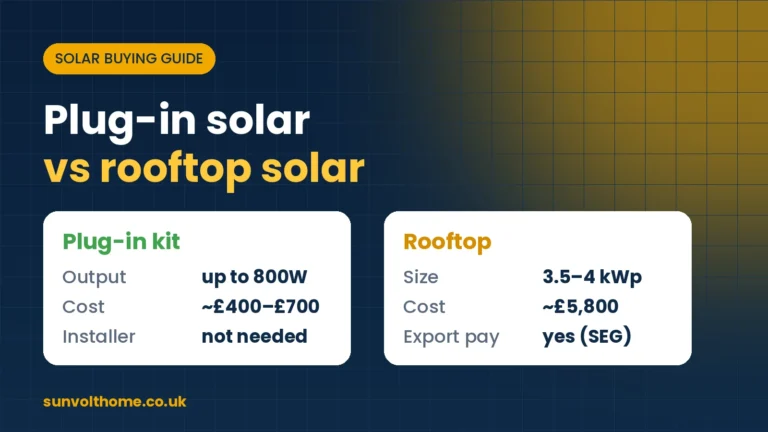
If you’ve got a sunny patch of garden and you’re home for part of the day, a plug-in solar kit is now a legitimate, low-hassle way to trim your bill. If you want to cover most of your usage, a rooftop system will do far more, and our guide to solar panel costs shows what that looks like. For a side-by-side comparison, read plug-in solar vs rooftop solar.
You can see the kits we’re offering on our plug-in solar kits page, with free local delivery across the North East, North Yorkshire and West Yorkshire. Not sure which route suits your home? Call us on 0330 057 7202 or book a free survey and we’ll tell you straight.
Sources: The Plugs and Sockets etc. (Safety) Regulations 1994 and Electricity Safety, Quality and Continuity Regulations 2002 (Amendment) Regulations 2026 (SI 2026/848); DESNZ Interim Product Specification v2.0 (July 2026); BS 7671:2018+A4:2026; Ofgem price cap, 1 October to 31 December 2026. Rules checked November 2026.