Energy Price Cap January 2027: What the 26% Rise Means for Your Bill
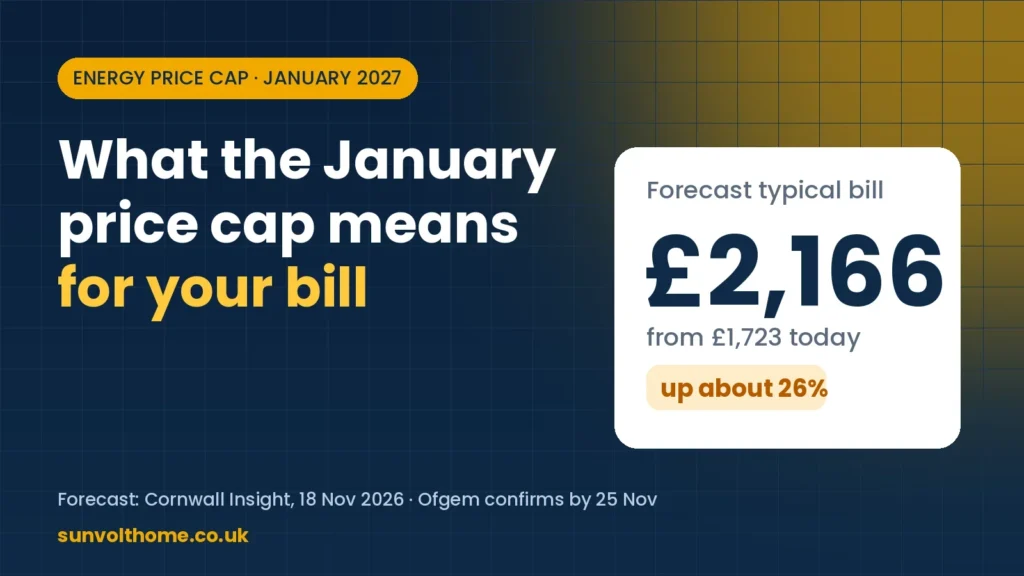
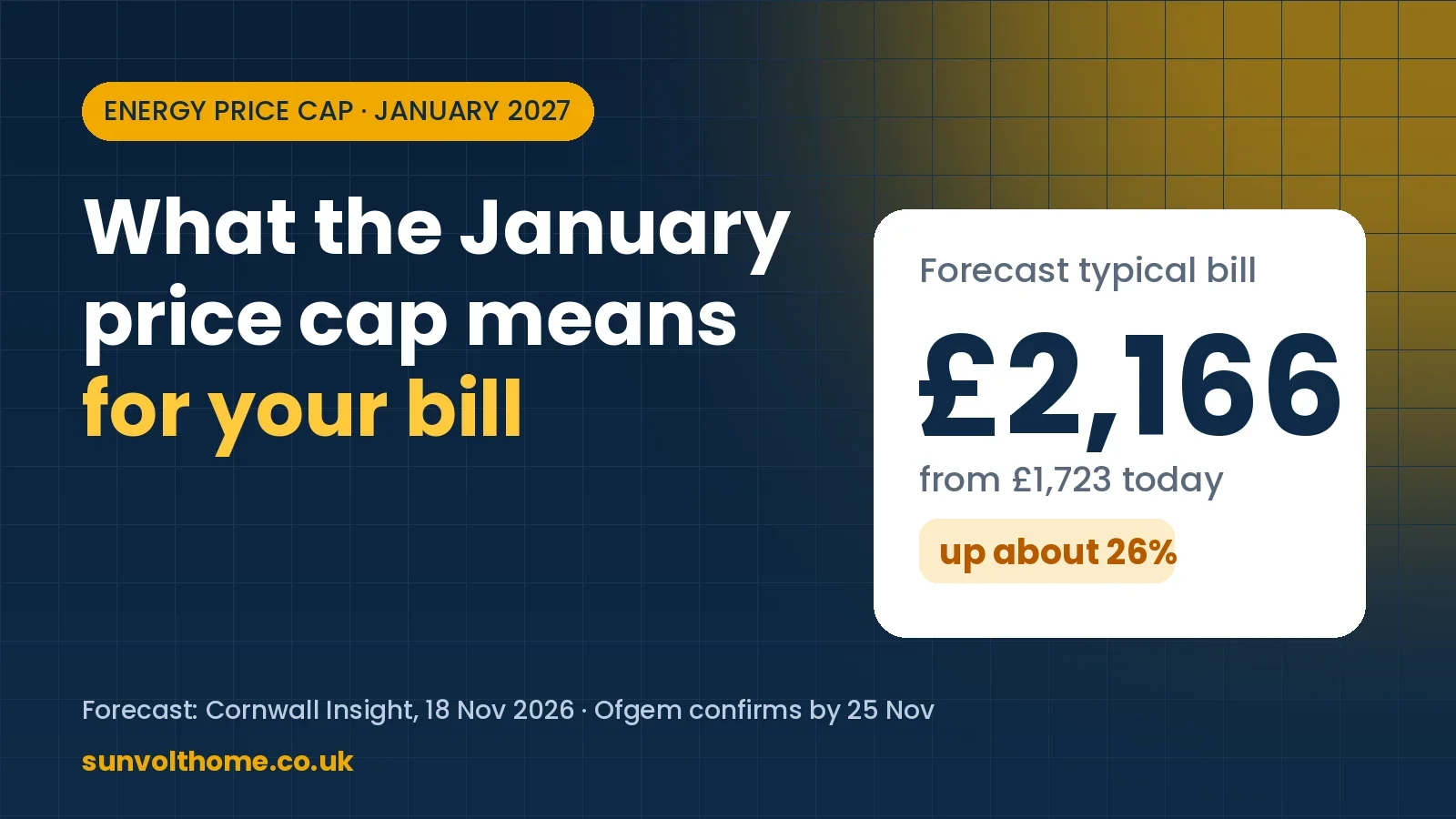
Ofgem will confirm the energy price cap for January 2027 by 25 November 2026, and the forecasts aren’t kind. Cornwall Insight’s final forecast, published on 18 November, puts a typical dual-fuel bill at about £2,166 a year from 1 January, up roughly 26% from today’s £1,723. Electricity would go from 26.32p to around 32.54p per kWh.
That’s a forecast, not the final figure. We’ll update this article once Ofgem publishes. But the direction is clear enough to plan around, and if you live in the North East or Yorkshire, where a lot of homes are older and harder to heat, it’s worth doing the sums now rather than in February.
The energy price cap numbers: what we know and what’s still a forecast
| Now (1 Oct to 31 Dec 2026) | Forecast (1 Jan to 31 Mar 2027) | |
|---|---|---|
| Typical annual dual-fuel bill | £1,723 | £2,166 |
| Electricity unit rate | 26.32p/kWh | 32.54p/kWh |
| Electricity standing charge | 54.83p/day | about 56p/day |
| Gas unit rate | 7.97p/kWh | 10.90p/kWh |
| Gas standing charge | 29.68p/day | about 31p/day |
The current figures are Ofgem’s, averaged across England, Scotland and Wales for a standard variable tariff paid by Direct Debit. The £1,723 annual figure is worked out from those rates at Ofgem’s typical usage of 2,500 kWh of electricity and 9,500 kWh of gas a year. The January column is Cornwall Insight‘s forecast.
The reason is mostly wholesale gas. Ofgem pointed to the conflict in the Middle East when it raised the October price cap by 4%, and forecasters add low European gas storage heading into winter.
What a 26% rise looks like in your house
Averages hide a lot. A two-bed terrace in Hartlepool and a detached four-bed outside Harrogate will feel this very differently.
Take the electricity side on its own. A household using 3,500 kWh a year (a family with a tumble dryer and an electric oven, say) would pay about £921 on unit rates at today’s price. At the forecast 32.54p, that becomes about £1,139. Roughly £218 more a year, before the standing charge moves at all.
Gas rises by a bigger percentage, so homes heated by an old boiler take the larger hit. That’s one reason we’d look at heating efficiency before anything else in a draughty house.
The price cap only limits the rate you pay. It doesn’t cap your bill. Use more, pay more.
Why every unit you generate is worth more from January
This is the part most coverage misses. When the unit rate goes up, so does the value of electricity you don’t have to buy.
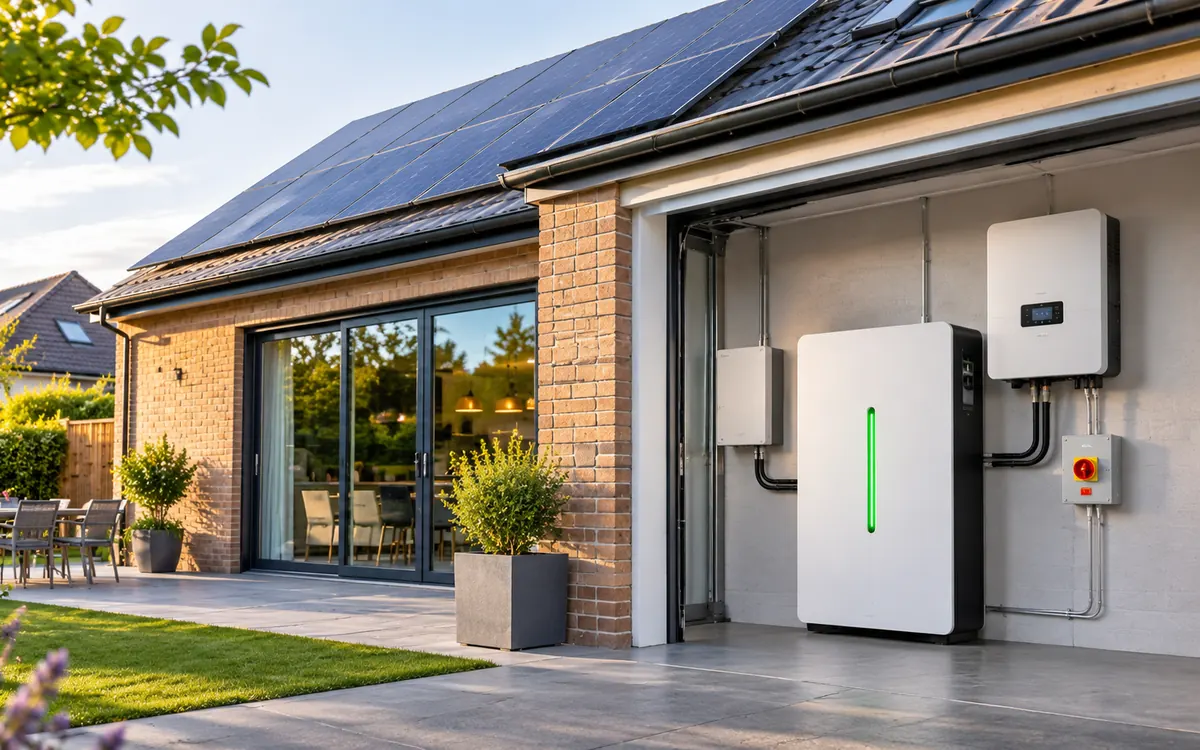
Solar panels don’t change the price cap. They change how much electricity you’re exposed to. If a rooftop system covers 1,500 kWh of your usage a year, that’s worth about £395 at today’s rate and about £488 at the forecast January rate. Same panels, same sunshine, bigger saving.
A battery stretches that further. Without one, a lot of your solar goes out to the grid in the middle of the day while you’re at work, often for a fraction of what you pay to buy it back at 7pm. With one, you store the midday surplus and use it in the evening, when you’d otherwise be paying the full rate. Batteries can also charge from the grid overnight on a time-of-use tariff, then run the house through the expensive early-evening hours.
We won’t pretend solar fixes a winter bill on its own. In December, panels in Durham produce a fraction of what they do in June. The value comes over the whole year, which is exactly why the higher rate matters: it raises the value of every spring and summer unit too.
Things you can do before 1 January
- Take a meter reading on 31 December. Submit it so you’re billed at the old rate for everything used before the change.
- Look at fixed tariffs, carefully. A fix below the new cap can save money, but some fixes are priced above it. Compare the unit rate and standing charge, not just the headline.
- Check your tariff type if you have, or plan to have, a battery. A time-of-use tariff with cheap overnight rates suits a battery far better than a flat rate.
- Get the 0% VAT window into your plans. Solar panels and batteries are VAT-free until 31 March 2027. From 1 April, HMRC moves them to the reduced 5% rate, about £300 extra on a typical install. More in our guide to VAT on solar panels and batteries.
- Check for help you might be missing. Low-income households in England may qualify for council-delivered Warm Homes: Local Grant funding, and homeowners can now borrow for solar and batteries through the Warm Homes Loan Scheme.
How the energy price cap is actually set
The energy price cap isn’t a number Ofgem picks out of the air. It’s a formula, reviewed every three months, that adds up what it costs a supplier to get energy to your door and allows a small margin on top.
The biggest piece is wholesale energy: what suppliers pay for gas and electricity on the market, averaged over an observation window months before the cap period starts. That lag is why forecasters like Cornwall Insight can predict the cap with reasonable accuracy weeks ahead. The other pieces are network costs (running the pipes and wires), policy costs, suppliers’ operating costs, VAT and the permitted margin.
When wholesale gas jumps, it hits the energy price cap twice. Gas bills rise directly, and electricity rises too, because gas-fired power stations still set the price of a lot of the UK’s electricity. So a gas shock in the Middle East ends up on the electricity bill of a house in Middlesbrough that doesn’t even have a gas connection.
The 2027 timeline
Ofgem has already published its announcement dates for next year, which makes planning easier.
| Cap period | Announced by |
|---|---|
| 1 January to 31 March 2027 | 25 November 2026 |
| 1 April to 30 June 2027 | 23 February 2027 |
| 1 July to 30 September 2027 | 26 May 2027 |
Two other dates sit alongside these. The 0% VAT rate on solar panels and batteries ends on 31 March 2027. And the April cap is expected, for now, to come in slightly lower than January’s, though that forecast will move a lot between now and February.
Cutting usage this winter: what actually moves the bill
Most “energy saving tips” save pennies. A few save real money, and they cost little or nothing.
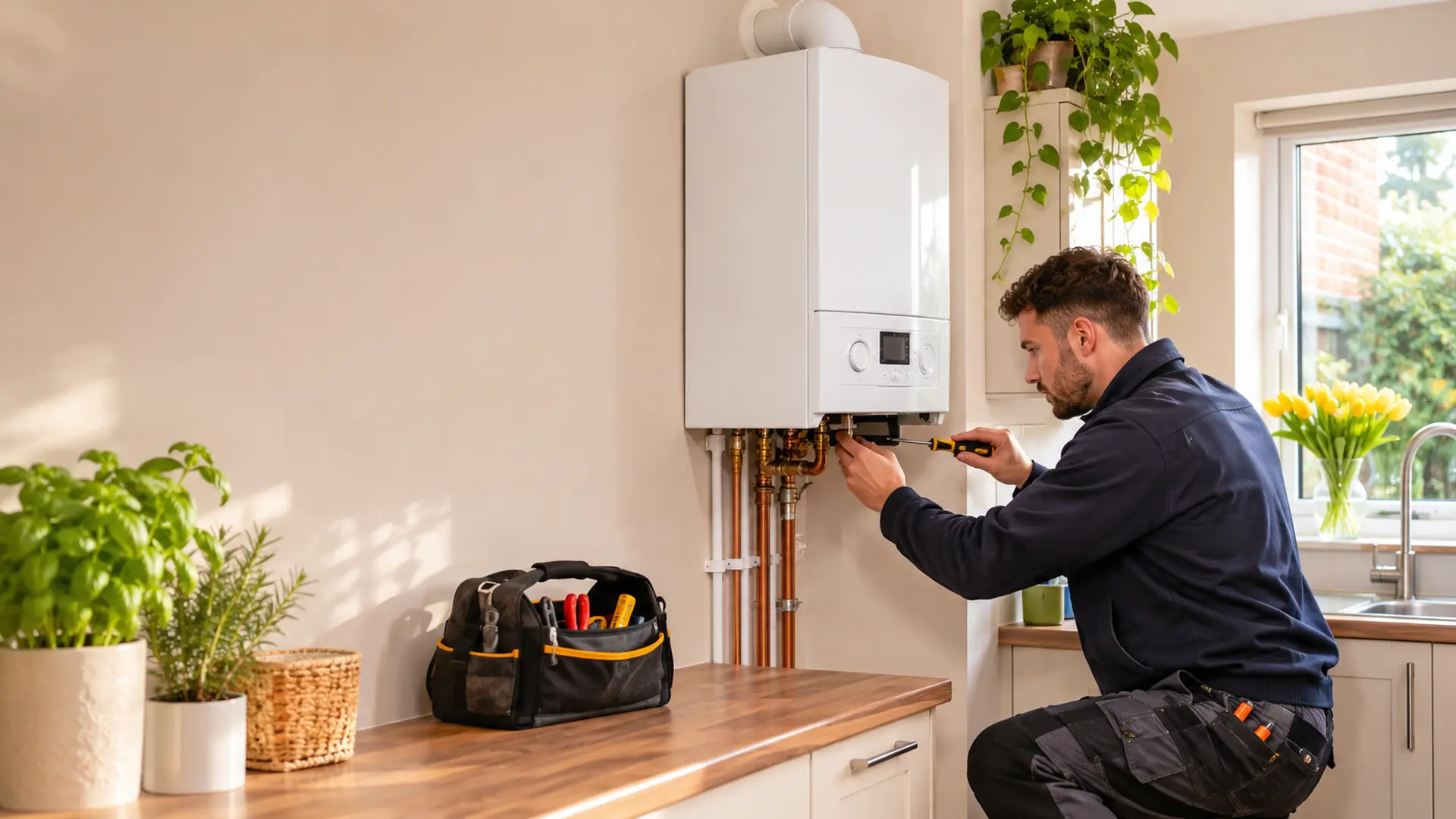
- Turn down your combi boiler’s flow temperature. Many are set to 70 to 80°C out of the box. Dropping the radiator flow temperature to around 60°C lets a condensing boiler run more efficiently, and most homes stay just as warm. Leave the hot water setting alone if you have a cylinder.
- Use the thermostatic valves on your radiators. Turn them down in rooms you don’t use, rather than heating the whole house to the same temperature.
- Draught-proof the obvious gaps. Letterbox, loft hatch, the gap under the back door. It’s a cheap afternoon’s work in an older terrace.
- Watch the tumble dryer. It’s one of the biggest electricity users in many homes. On a dry, breezy day the washing line does the same job for free.
- Shift flexible loads. If you’re on a time-of-use tariff, run the dishwasher and washing machine in the cheap hours.
None of these replace a proper fix for a cold, leaky house. But they’re the right place to start before spending money.
A worked example: battery plus time-of-use tariff

This one is hypothetical, to show how the maths works. Your tariff and usage will differ.
Say your home uses 10 kWh of electricity a day in winter, and around 6 kWh of that falls in the evening, when you’d normally pay the full capped rate. Now imagine you’re on a time-of-use tariff with a cheaper overnight rate, and you have a battery that charges overnight and covers those 6 evening units.
At the forecast January rate of 32.54p, those 6 units would cost about £1.95 a day at the standard rate. If your overnight rate were, for example, 10p per kWh, the same units would cost about 60p. That’s roughly £1.35 a day, or around £120 over a 90-day winter quarter, from the battery alone, before any solar.
The real figure depends on the tariff you can get, how big the battery is, and how much is lost charging and discharging. Treat this as a way to think about it, not a forecast for your house.
Is it worth getting solar just because of the price cap?
Our honest view: don’t buy solar as a reaction to one quarter’s energy price cap. Prices go up and down; Cornwall Insight already expects a small fall in April. Buy it if the numbers work over 20-plus years at sensible prices, and treat a higher cap as a reason those numbers look better, not as the whole case.
The homes where solar makes the strongest case are the ones with a decent south, east or west-facing roof, someone in during the day, or a plan to add a battery or an electric car. If that’s not you, a heating upgrade or insulation might do more for your bill. If you’re renting or don’t have a usable roof, a plug-in solar kit is a smaller, cheaper option that’s now legal.
Frequently asked questions
When is the January 2027 price cap announced?
Ofgem has said it will announce the cap for 1 January to 31 March 2027 by 25 November 2026. It sometimes publishes slightly earlier. The new rates take effect on 1 January 2027.
How much will energy bills go up in January 2027?
Cornwall Insight’s final forecast is about £2,166 a year for a typical dual-fuel household, roughly 26% higher than the current £1,723. Ofgem’s confirmed figure may differ slightly. Your own bill depends on how much energy you use.
Does the price cap affect people with solar panels?
Yes, for the electricity you still buy from the grid. It also raises the value of the solar electricity you use yourself, because each unit you generate replaces one you’d otherwise pay the capped rate for.
Should I fix my energy tariff before January 2027?
It depends on the deal. Compare the fixed unit rates and standing charges with the new price cap once Ofgem announces it. A fix is only worth it if it’s cheaper than the price cap over the period you’d be locked in. Check any exit fees too.
Does the energy price cap apply to fixed tariffs?
No. The cap applies to standard variable (default) tariffs. If you’re on a fixed deal, your rates stay as agreed until the fix ends, then you move onto your supplier’s variable tariff, which is covered by the cap, unless you choose another deal.
Will the energy price cap go down in April 2027?
Early forecasts suggest a small fall in April, but they will change. Ofgem announces the April to June 2027 cap by 23 February 2027, based on wholesale prices over the coming months.
Is the energy price cap the same across the UK?
The headline figures are averages for England, Scotland and Wales. Actual unit rates and standing charges vary by region and payment method, so check your own bill for the rates that apply to you. Northern Ireland has a separate system.
Want to see your own numbers?
Our solar payback calculator gives you a quick estimate. For a proper figure based on your roof and your usage, book a free home survey or call 0330 057 7202. We cover the North East, North Yorkshire and West Yorkshire, and we’ll give you a fixed written quote. If the numbers don’t work for your home, we’ll say so.
Sources: Ofgem, “Changes to energy price cap between 1 October and 31 December 2026”; Cornwall Insight January 2027 price cap forecast (18 November 2026); HMRC VAT Notice 708/6. Last updated 22 November 2026. Forecast figures will be replaced with Ofgem’s confirmed cap once published.