
VAT on solar panels and batteries: the 0% rate explained
Why your solar or battery quote shows 0% VAT, what the relief covers and the March 2027 deadline.
Read more about VAT on solar panels and batteries: the 0% rate explainedStore your solar energy, reduce reliance on the grid and power your home with intelligent battery storage.
Get a quote
A home battery gives you a simple way to manage daily electricity costs, store cheaper or self-generated energy and rely less on the grid. Leave your details and our team will call you to talk through the options for your home, with no obligation.
Prefer email? Write to us at info@sunvolthome.co.uk
Why a home battery
A home battery protects you when the grid goes down and saves you money when it is up.
Benefit 1
A correctly configured battery backup system can help keep essential devices running when grid electricity is unavailable.
How battery backup worksBenefit 2
Store excess solar energy, or charge the battery on a suitable off-peak tariff, and use the stored energy when you need it.
Estimate your savingsHome battery storage
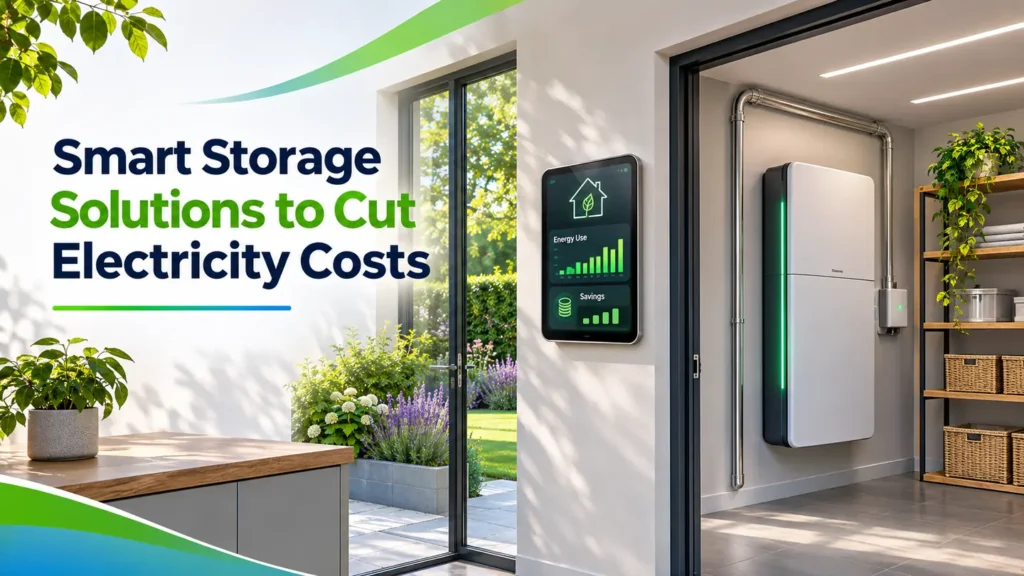
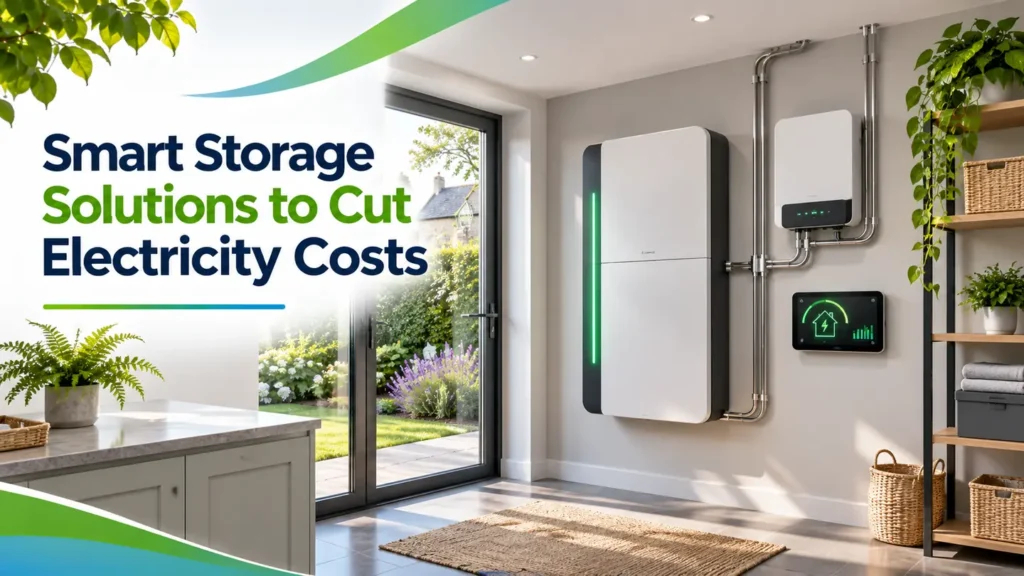
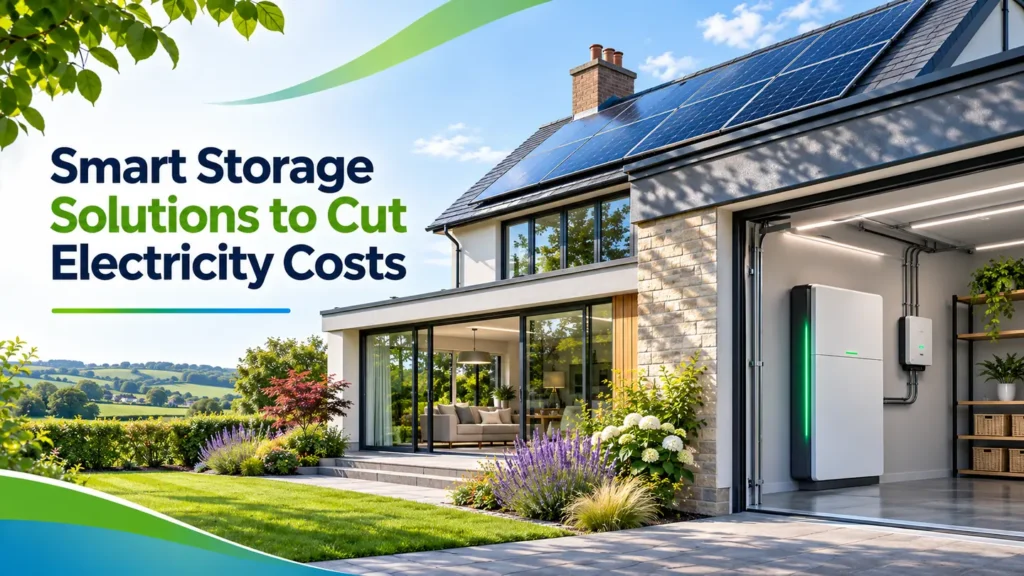
A home battery stores electricity so you can use it when it is worth most to you. It can charge from your solar panels during the day, or from the grid when electricity is cheaper on a suitable time-of-use tariff, then power your home when prices are higher or the sun has gone down.
That means buying less electricity at peak rates and relying less on the grid, while making better use of the energy your panels generate.

Time-of-use tariffs
Many UK suppliers offer time-of-use tariffs, where the price of electricity changes through the day. Rates are usually lowest overnight and highest in the late afternoon and early evening. A battery lets you buy when it is cheap and use it when it is not.
A day with a home battery
NightCharging at the cheaper off-peak rate
DayHolding charge and storing spare solar
Evening peakPowering your home instead of the grid
Late eveningTopping up your home until the next cheap rate
Illustration of a typical time-of-use tariff. Your tariff’s times and rates may differ.
01
On a time-of-use tariff, the battery charges during lower-rate periods, often overnight.
02
Stored electricity powers your home at more expensive times instead of the grid.
03
Shifting when you buy electricity can reduce how much you pay at peak prices.
04
With solar panels, spare daytime generation is stored for the evening.
05
Set charging schedules and see your usage in the app, so you can plan around your tariff.
Energy prices may be unpredictable, but your control over household electricity doesn’t have to be.
Battery features
Features depend on the battery and inverter you choose. We explain what your recommended system supports, and what it does not, before you decide.
Our batteries
Proven batteries from leading brands, sized to your home and installed by our own team.
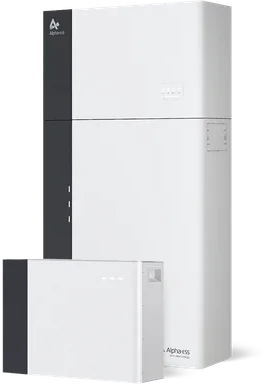
AlphaESS
Affordable, scalable battery storage
Free home survey and one fixed, written price before any work starts.
Smart storage
Charge your battery when electricity is cheap overnight, and use it through the day.
Off-peak tariffs can cost less than half the standard price-cap rate
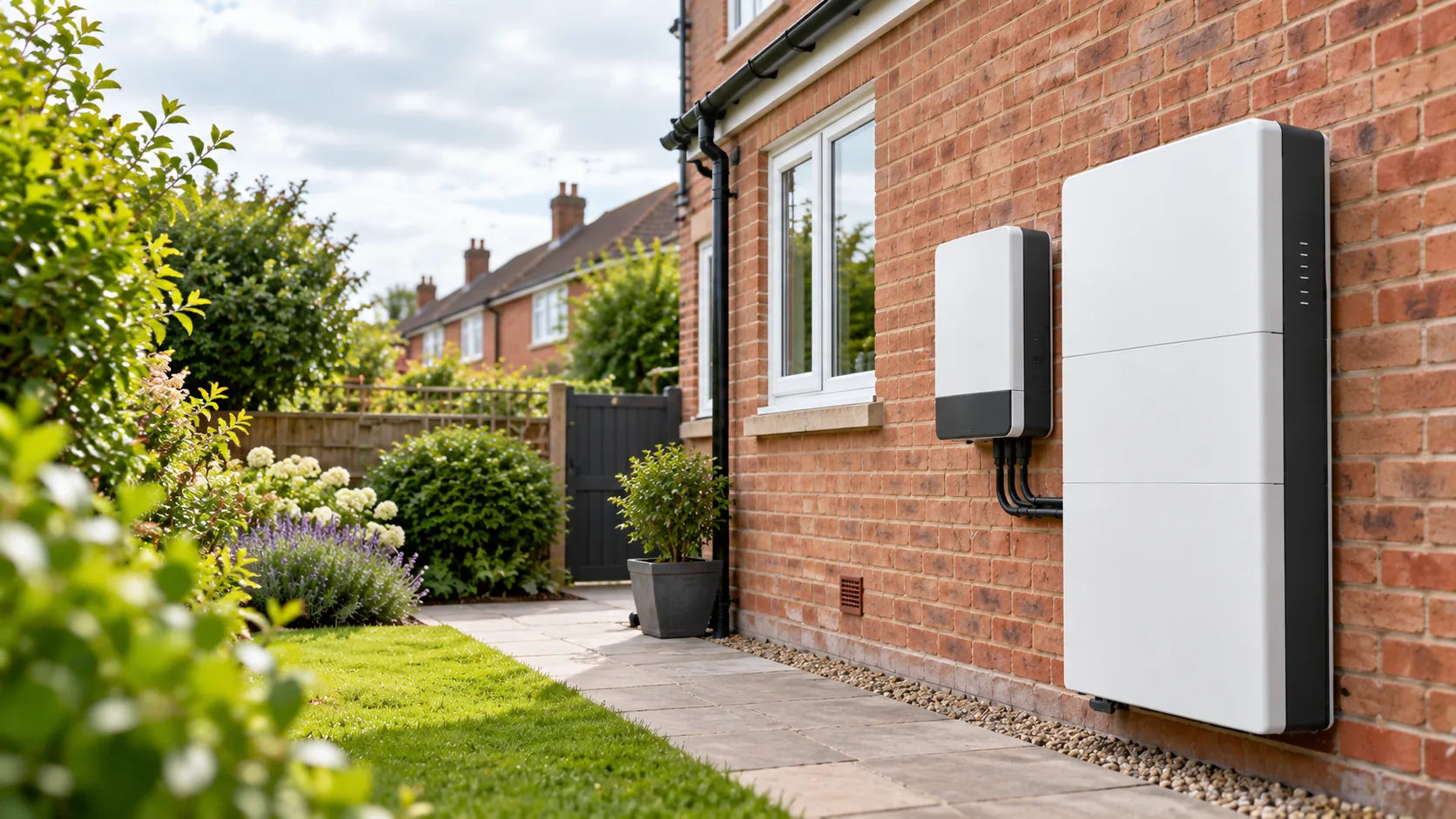

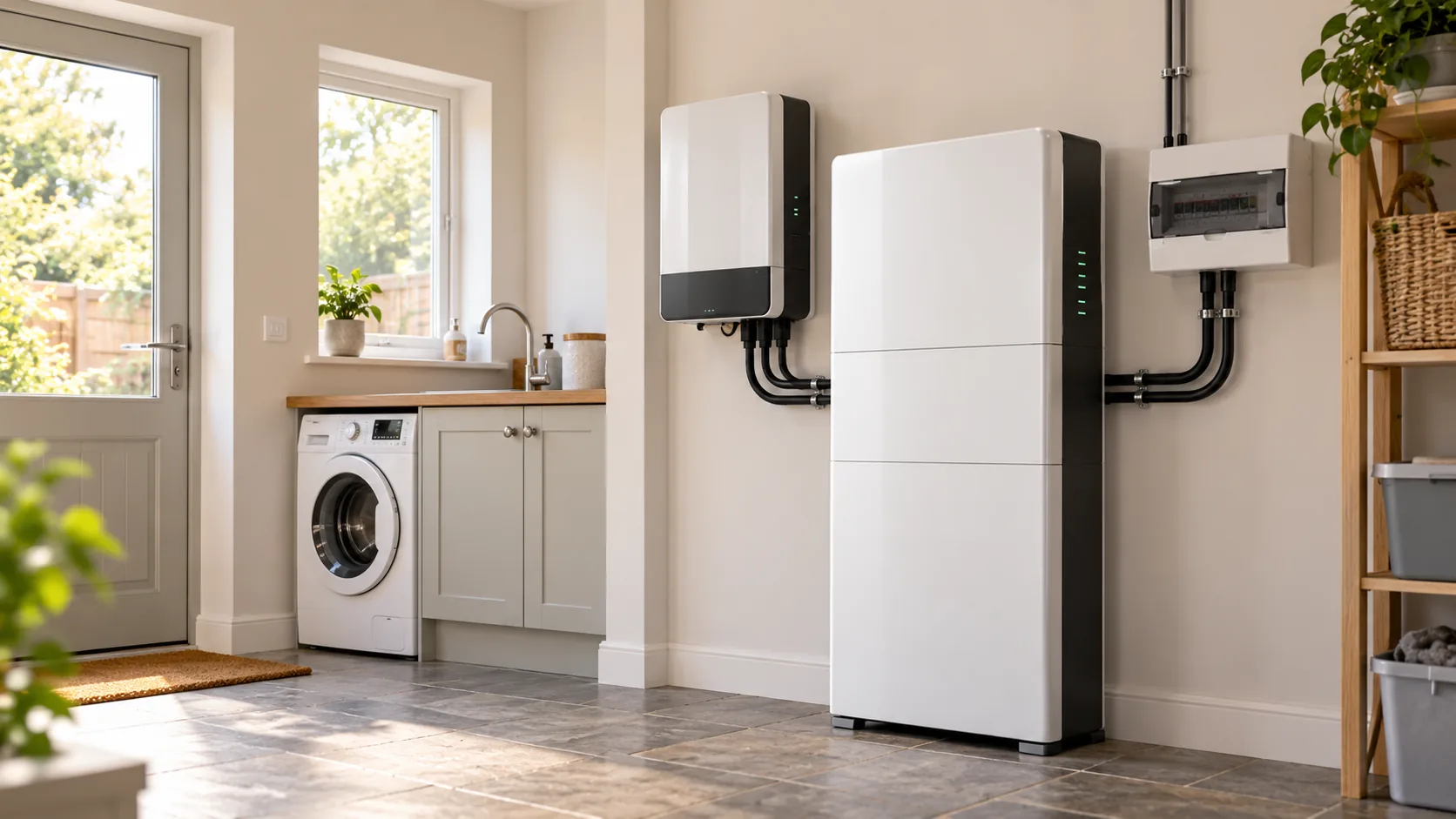
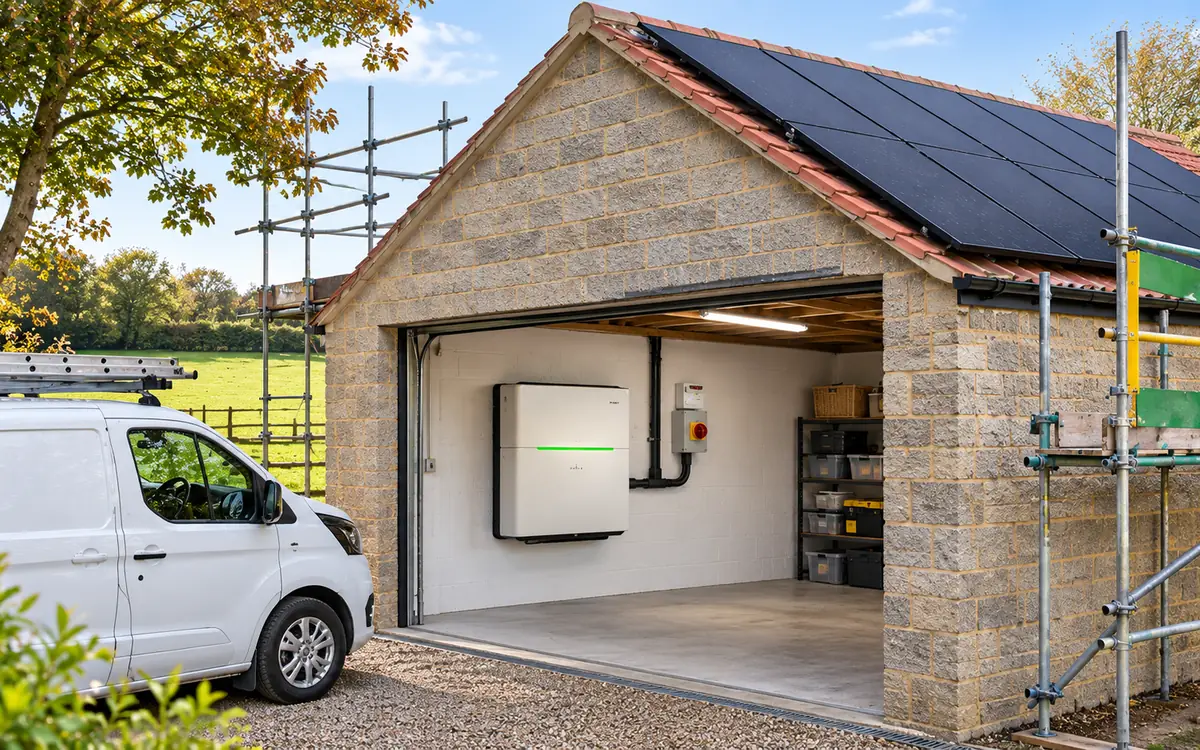
Choosing a home battery installer is an important decision. At Sunvolt Home, we focus on reliable installation, clear communication and energy storage solutions designed around your property and energy needs.
Our team helps homeowners choose suitable battery storage solutions based on their property, electricity usage and energy requirements.
Every installation is planned around the property layout, battery location and electrical requirements to ensure a suitable setup.
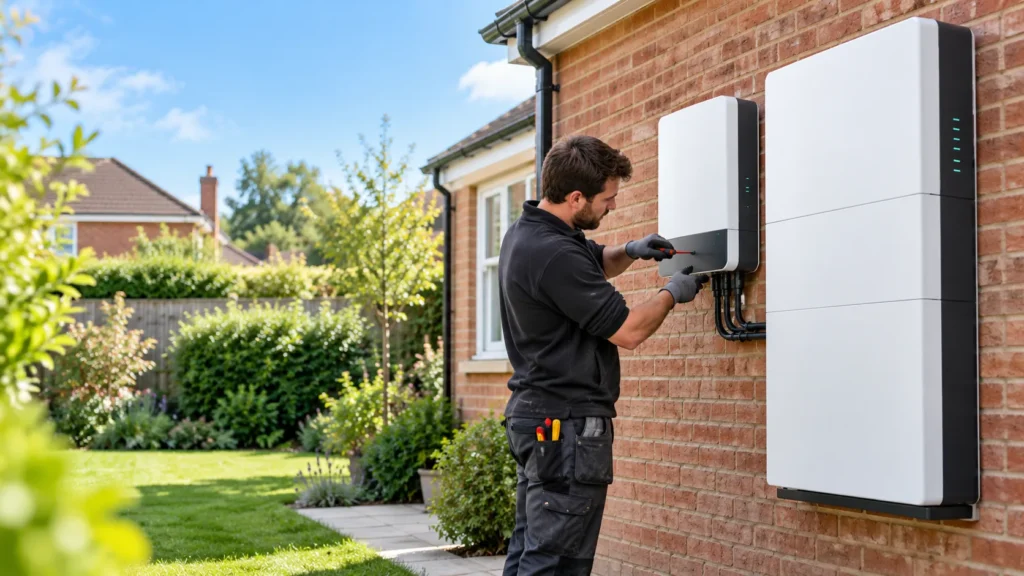
Our installation team follows the relevant electrical and installation requirements.
We work with suitable battery storage products designed to help homeowners store and manage electricity efficiently.
From the initial enquiry to installation and handover, we keep customers informed about the process and available options.
We provide installation guidance and explain how to monitor and manage your home battery system after installation.
How it works
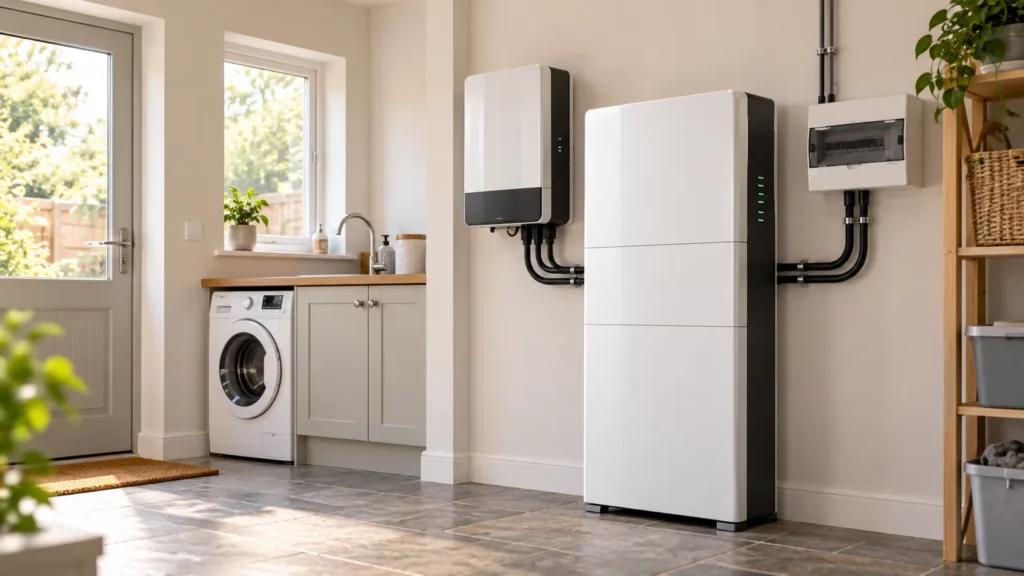
A home battery stores electricity in a dedicated unit, measured in kilowatt-hours (kWh). It charges from your solar panels when they make more than you need, or from the grid during cheaper periods, and your home draws from it first when demand rises.
Smart software sets the charging schedule around your tariff, and with solar panels it keeps surplus generation for later instead of exporting it.
roughly an evening’s use for many homes
often chosen by larger homes or high users
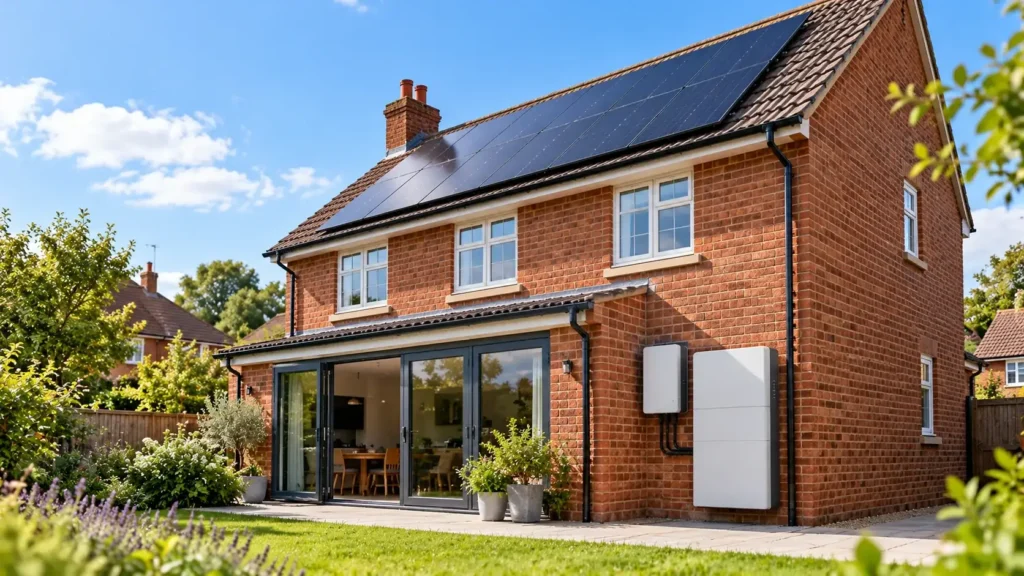
or a suitable outdoor spot, installed to safety guidance
Daytime: your solar panels power the home first, and spare electricity charges the battery instead of being exported cheaply.
Overnight: on a time-of-use tariff the battery tops up from the grid when electricity is cheapest.
Evening peak: when prices are highest, your home runs on the stored electricity instead of the grid.
Lower running costs
A home battery lowers your running costs in one of two ways, depending on whether you already generate your own electricity.
Without solar panels
A battery works with a time-of-use tariff, charging when electricity is cheapest and powering your home when it costs more.
With solar panels
A battery keeps the spare electricity your panels make during the day, so you use more of it yourself instead of exporting it cheaply.
Is it right for you?
A battery suits households that want more control over when they use electricity. If several of these apply to you, it is worth talking to us.
Use stored, lower-cost electricity instead of buying at peak rates.
Keep surplus generation for the evening instead of exporting it at a low rate.
Rely less on the grid from day to day.
Shifting more of your use to cheaper periods can make costs steadier.
See when you use electricity in the app and plan around your tariff.
Add solar panels or more storage later on a compatible system.
We’ll look at your usage, tariff and any solar panels, and tell you honestly whether a battery makes sense.
The process
Four clear steps from your first visit to switch-on. You always know what happens next, and nothing starts until you have agreed a fixed price.
Step 1
We assess your property, electrics and energy use, then recommend a suitable battery system and the best place to put it.
✓System recommendation
Step 2
You receive a clear, written quotation for the battery and installation, with everything included set out before you book.
✓One written price
Step 3
We notify or apply to your Distribution Network Operator (DNO) for the grid connection, as the size of the system requires.
✓Paperwork handled for you
Step 4
We install and commission the battery, set up monitoring and talk you through how it works, with your certificates and warranty details.
✓Certificates and app set-up
Integration
A battery works alongside new or existing solar panels. With solar, it stores surplus generation for later instead of exporting it at a low rate. Many existing solar systems can have a battery added; we check your inverter and wiring first.
Some batteries are modular, so you can add capacity later where the system supports it, and smart energy management helps you use electricity efficiently as your needs change.

FAQs
If your question is not answered here, please get in touch.
Yes. A battery can charge from the grid during cheaper periods on a time-of-use tariff and power your home when prices are higher. Savings depend on the difference between your peak and off-peak rates.
A battery installed inside a house usually does not need planning permission. An outdoor enclosure, a listed building or a property in a conservation area may need checking with your council. We confirm this during the survey.
Usually not, if it is installed correctly. FIT generation payments are based on your generation meter, and the battery must be connected so grid charging cannot pass through it. Tell your FIT supplier about the change; deemed export payments normally continue unless you have an export meter.
It depends on the battery size and its charging power. For example, a 5 kWh battery charging at about 3 kW takes under two hours; solar charging varies with the weather.
Only batteries installed with backup equipment can power your home during a power cut, usually for selected circuits. Without it, the battery switches off for safety. We explain which option suits your home.
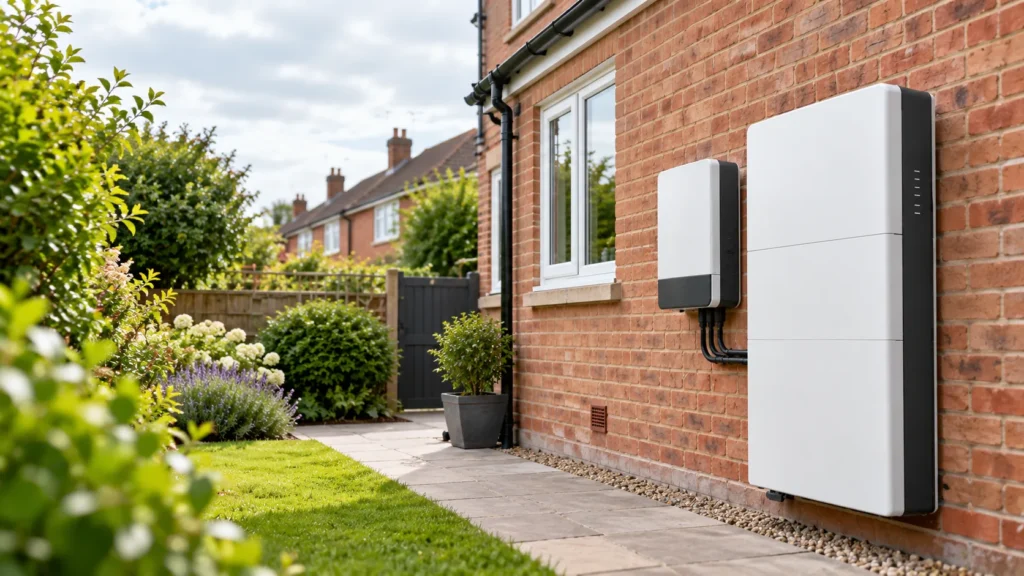
Most batteries are wall-mounted or floor-standing units about the size of a small radiator or a little larger. They are usually installed in a garage, utility room or outside, not in lofts, bedrooms or escape routes.
Often, yes. Many batteries are modular, so you can add capacity later. Expansion depends on the model and the inverter, so we plan for it at the start if you think you may need more storage.
Very little. Keep the area around the battery clear and ventilated, allow software updates, and contact us if the app shows a fault. We explain any recommended checks at handover.
Advice

Savings & Bills
Why your solar or battery quote shows 0% VAT, what the relief covers and the March 2027 deadline.
Read more about VAT on solar panels and batteries: the 0% rate explained
Battery Storage
What happens to your electricity hour by hour, how the battery is connected, and realistic expectations for summer and winter.
Read more about Using solar and battery storage together
Solar Energy
Getting more from your panels: shifting use into daylight hours, choosing the right tariff, and when battery storage helps.
Read more about How to reduce household electricity bills with solar PVLeave your details and our local team will get back to you. No obligation.
We'll be in touch soon. Check your email: you can reply there to book a free home survey.