Government-Backed Solar Loans: 5 Honest Answers for 2026
If you’ve been putting off solar panels because of the upfront bill, government-backed solar loans change the maths. The Warm Homes Loan Scheme opened to homeowners in autumn 2026, and it lets you spread the cost of panels and a home battery over several years, often at a rate well below a normal personal loan. Some lenders offer 0% interest.
It isn’t free money, though. You still borrow, you still pass a credit check, and the rate you get depends heavily on the lender and the term. Below is how the scheme actually works, what it might cost you each month, and the mistakes that turn a cheap loan into an expensive one.
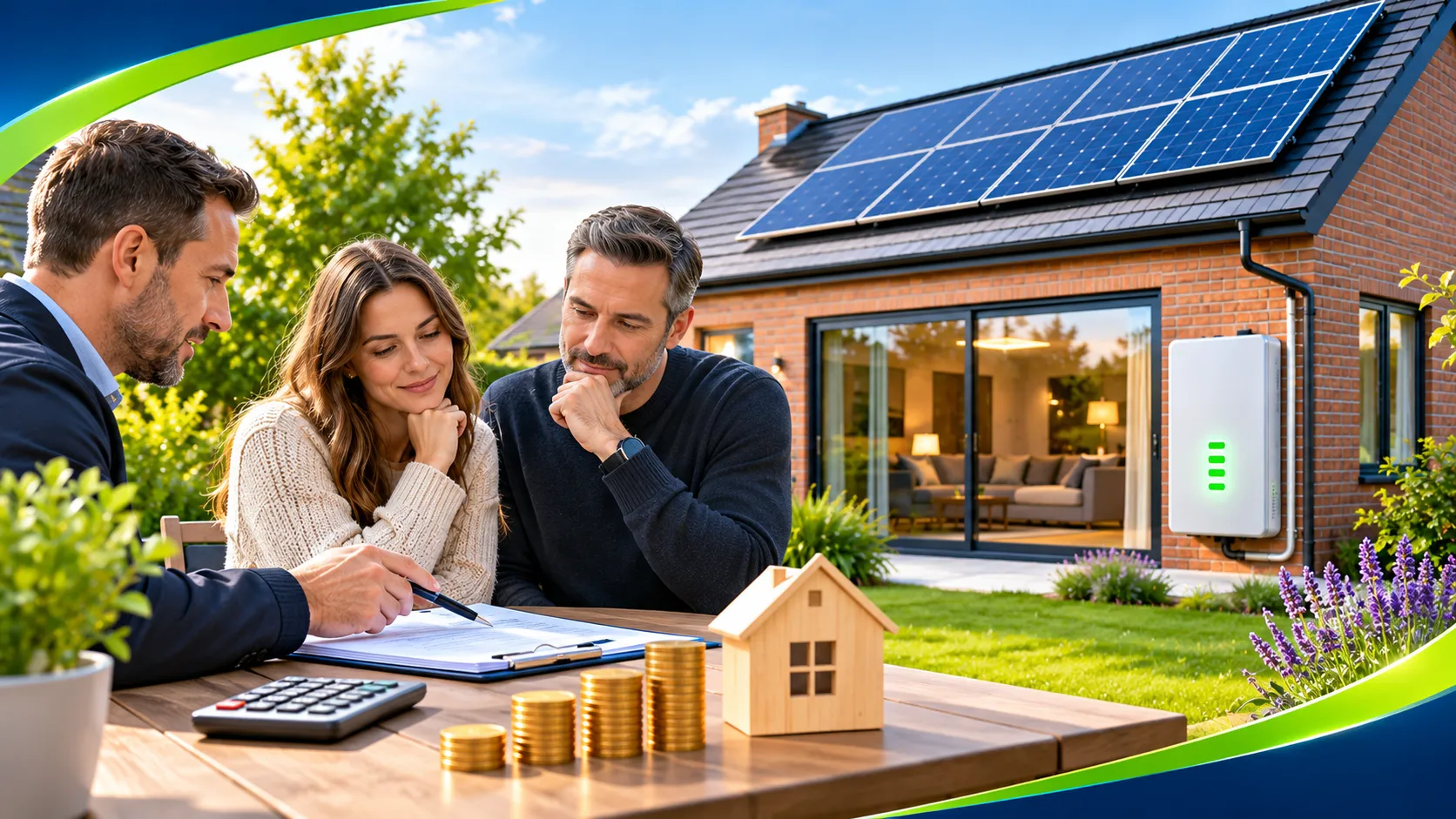
What are government-backed solar loans?
Government-backed solar loans are low or zero-interest loans offered by approved lenders under the Warm Homes Loan Scheme, part of the UK’s Warm Homes Plan. The government doesn’t lend you the money itself. It pays each approved lender a grant worth up to 20% of the loan, and the lender uses that to cut its normal interest rate by up to five percentage points, according to SunSave’s lender comparison (updated November 2026).
The wider Warm Homes Plan was published on 21 January 2026 with £15 billion of public investment behind it. The consumer loans were the part everyone was waiting for. They went live around late October 2026, and Uswitch’s guide lists ten lenders taking part, from banks to a credit union.
Short version: government-backed solar loans mean the same panels, the same installer and cheaper finance.
How much can you borrow with a Warm Homes loan?
The scheme sets a maximum per upgrade. For most homes in the North East, the two numbers that matter are these:
| Upgrade | Maximum loan |
|---|---|
| Solar panels (solar PV) | £15,000 |
| Battery storage | £15,000 |
| Air-to-water heat pump | £20,000 |
| Ground source heat pump | £35,000 |
Source: Uswitch, updated 10 November 2026.
Each lender then sets its own range inside that. South Manchester Credit Union, for example, lends from £1,000, while The Money Co-op starts at £7,500. A typical 4kWp system costs far less than the £15,000 cap. Our solar panel cost guide puts an average 3.5kWp system at around £5,840. So most families won’t need anywhere near the limit, and borrowing more than you need just means paying interest on it.
Who is eligible for a solar panel loan?
You need to own the home you’re upgrading, with or without a mortgage. Each lender runs its own credit and affordability checks, so approval isn’t automatic. Some lenders add their own rules on top: one only lends in certain postcodes, another needs a minimum income, and Selina Finance only lends against a mortgaged main home in England or Wales.
The work must be done by an MCS certified installer. You can’t fit the panels yourself and claim the loan, and your installation may be picked for a quality check afterwards.
What do government-backed solar loans really cost each month?
This is the bit most articles skip, and it’s where the decision lives. Rates on government-backed solar loans run from 0% to roughly 9.4% APR, with terms from one year to twenty or more. That spread is enormous.
Here’s a worked example. It’s hypothetical, but the rates are real ones published by scheme lenders in November 2026. Say you borrow £6,000 for a solar PV system:
| Loan option | Monthly repayment (approx.) | Total repaid (approx.) |
|---|---|---|
| 0% over 3 years | £167 | £6,000 |
| 3.2% APR over 10 years | £58 | £7,020 |
| 8.9% APR over 20 years | £54 | £12,860 |
Look at the last two rows. Stretching the loan from ten years to twenty saves you about £4 a month and costs you nearly £6,000 extra. I’d steer most people towards the shortest term their budget can comfortably handle.
The 0% government-backed solar loans are genuinely good if you can manage around £170 a month. They’re usually short, though, and some are tied to a specific installer.
Will solar savings cover the repayments?
Sometimes, not always. The government’s own factsheet, quoted by Uswitch, talks about savings of up to £550 a year. That’s about £46 a month, which won’t fully cover a £58 repayment. Add a battery, though, and you use more of your own power in the evening, which is when electricity is most expensive. A battery also keeps essential circuits running in a power cut (more on that in our home battery power cut guide).
Be wary of any salesperson who promises the panels will “pay for themselves” from month one. Your savings depend on your roof, your usage and your tariff. Our solar payback calculator gives you a rough figure for your own home in a couple of minutes.
Warm Homes loan vs grant: which do you actually qualify for?
Lots of people mix these up. A loan has to be paid back. A grant doesn’t.
The Warm Homes: Local Grant is still running in England. According to MoneySavingExpert, it can fund up to £30,000 of free upgrades, including solar panels, for some households earning under £36,000 a year or on certain benefits. It’s run through local councils, so availability varies by area.
If you might qualify for the grant, check that first. If you don’t, government-backed solar loans are the next best route. And separately, solar panels and batteries currently carry 0% VAT until 31 March 2027, which already takes a chunk off the price before any finance is involved.
How to apply for a Warm Homes loan, step by step
There’s no single government application form for government-backed solar loans. You go through a lender:
- Get a survey and a written quote from an MCS certified installer.
- Compare the scheme lenders on APR, term and any installer restrictions.
- Apply to your chosen lender and wait for approval (expect a credit check).
- Once approved, the installer fits the system.
- Repayments start after installation.
Some lenders only work with their own partner installers, so check that before you fall in love with a quote. Others, like The Money Co-op and South Manchester Credit Union, let you choose any MCS installer.
Common mistakes with government-backed solar loans
- Choosing the lowest monthly payment. As the table shows, the longest term often costs thousands more overall.
- Borrowing the maximum. The £15,000 cap is a ceiling, not a target. Get a fixed quote first, then borrow that amount.
- Ignoring early repayment fees. Some lenders charge up to 5% if you clear the loan early. Others charge nothing. Ask before you sign.
- Answering cold calls. Which? has warned about scams using the scheme’s name. A genuine lender won’t pressure you on an unexpected phone call or text.
- Skipping the grant check. If you’re on a lower income, you might get the work free instead of borrowing.
Frequently asked questions
Are government-backed solar loans really 0% interest?
Some are. A few lenders in the Warm Homes Loan Scheme offer 0% over one to six years. Longer terms usually carry interest, typically between about 3% and 9% APR in November 2026, depending on the lender and amount.
Do I need good credit for a Warm Homes loan?
Each lender runs its own credit and affordability checks, so your credit history matters. The government sets the overall scheme rules, but the lender decides whether to approve you and at what rate.
Can I use the loan for a battery only?
Yes. Battery storage is a separate eligible upgrade with its own maximum of £15,000, so you can finance a battery on its own or alongside solar panels.
Is the scheme available in the North East?
Yes. The scheme is UK-wide, though individual lenders may limit where they lend. Homeowners in Newcastle, Sunderland, Durham, Teesside and the rest of the North East can apply to lenders that cover England.
Your next step
Don’t start with the loan. Start with an accurate quote, because the right system size decides how much you borrow, and that decides everything else. Book a free home survey with Sunvolt Home and we’ll give you a fixed written price for solar panels or battery storage. Take that number to the scheme lenders and compare (our government-backed loans page explains each step). You’ll know within a week whether a government-backed solar loan makes sense for your home.