How to reduce household electricity bills with solar PV

By Sunvolt Home 4 min read Updated 15 November 2026 Solar Energy

Solar panels can reduce electricity bills a lot, but how much depends on how you use the power they make.
Getting more from your panels: shifting use into daylight hours, choosing the right tariff, and when battery storage helps.
Key points
- Using solar electricity directly is usually worth more than exporting it.
- Timing, tariffs and monitoring make a real difference.
- A battery increases self-consumption.
Why self-consumption matters
Every unit of solar electricity you use yourself replaces a unit you would otherwise buy. Export payments are usually lower than the price you pay for electricity, so using more of your own generation tends to give the biggest benefit. How much you save depends on your usage, tariff and system.
That is why the households that reduce electricity bills the most are usually the ones that use their solar power at home rather than exporting it.
Shift flexible use into daylight
- Run the washing machine, dishwasher and tumble dryer on timers around midday
- Charge laptops, power tools and e-bikes during the day
- Use an immersion diverter, if you have a hot water cylinder, to heat water from surplus solar
- Check your monitoring app to learn when generation peaks
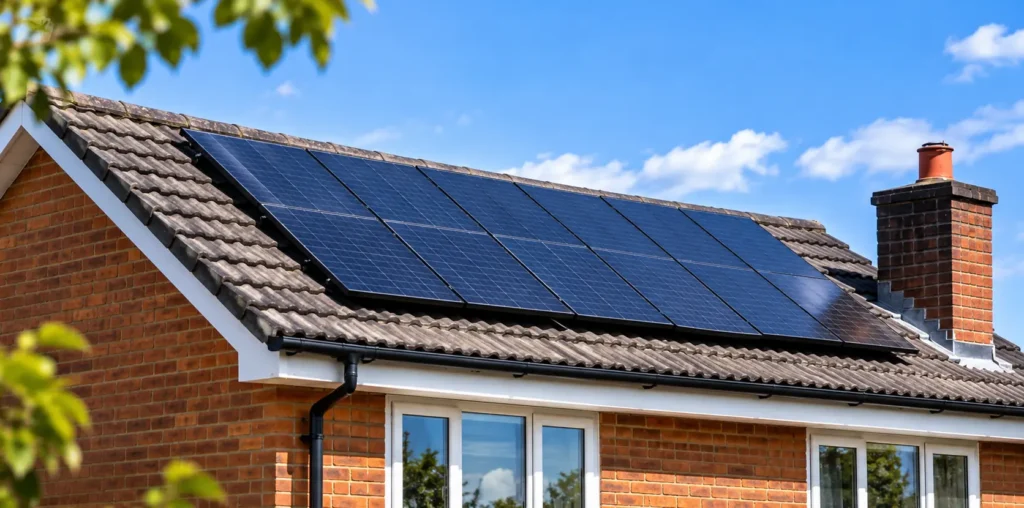
Moving just a few loads a week into sunny hours is one of the cheapest ways to reduce electricity bills once the panels are on the roof.

Choose the right tariffs
Look at both your import tariff and your export tariff. Time-of-use import tariffs can reward charging a battery or car overnight. A good export tariff increases the value of what you cannot use.
The right pair of tariffs can reduce electricity bills further without changing anything else in your home.
Add battery storage
A home battery moves daytime surplus into the evening. It increases how much of your own electricity you use.
Keep the system performing
Check generation in your app every so often and compare it with the same month last year. A sudden drop can point to an inverter fault or shading. See our guide to looking after solar panels.
A system that quietly underperforms will not reduce electricity bills as much as it should, so a quick monthly check is worth the minute it takes.
Reduce electricity bills with solar: a worked example

This is an illustration, not a quote. Say a household uses 3,500kWh a year and fits a 4kWp system that makes around 3,400kWh. Without changing any habits, they might use about a third of that directly, and export the rest.
Now they make three changes. They run the washing machine and dishwasher in the middle of the day, set the immersion or hot water diverter to use surplus solar, and charge the car at weekends when the sun is out. Their self-use might rise towards half of what the panels make.
That shift matters because a unit used at home saves the full price you pay for electricity, while an exported unit earns a lower export rate. The panels are the same. The bill falls further simply because more of the power is used at home. That is the single most reliable way to reduce electricity bills with solar.

Other ways to reduce electricity bills alongside solar

- Check your tariff. Compare your unit rate and standing charge with the Ofgem price cap. A time-of-use tariff can help if you can move usage.
- Add a battery. A home battery stores daytime surplus for the evening peak, and can charge overnight at cheaper rates in winter.
- Cut waste. LED bulbs, switching off standby and a smart meter display help you spot hungry appliances.
- Get paid for exports. Sign up for a good Smart Export Guarantee tariff.
Small changes stack up. A household that combines solar, sensible timing and the right tariff will usually reduce electricity bills far more than one that relies on the panels alone. To see what is realistic for your home, try our solar payback calculator.

Frequently asked questions
How much will solar save me?
It depends on your system, roof, usage pattern, tariffs and export rate. A good quotation shows an estimate based on your property, not a guarantee.
Should I switch tariff after installing solar?
Often it is worth reviewing both your import and export tariffs. Compare offers based on your actual usage pattern.
Thinking about this for your home? We will assess your property before recommending anything. Prefer email? info@sunvolthome.co.uk
Information checked on 25 October 2026. Rules, rates and schemes change; always confirm current details with the official source.