Looking after your solar panels: maintenance and cleaning
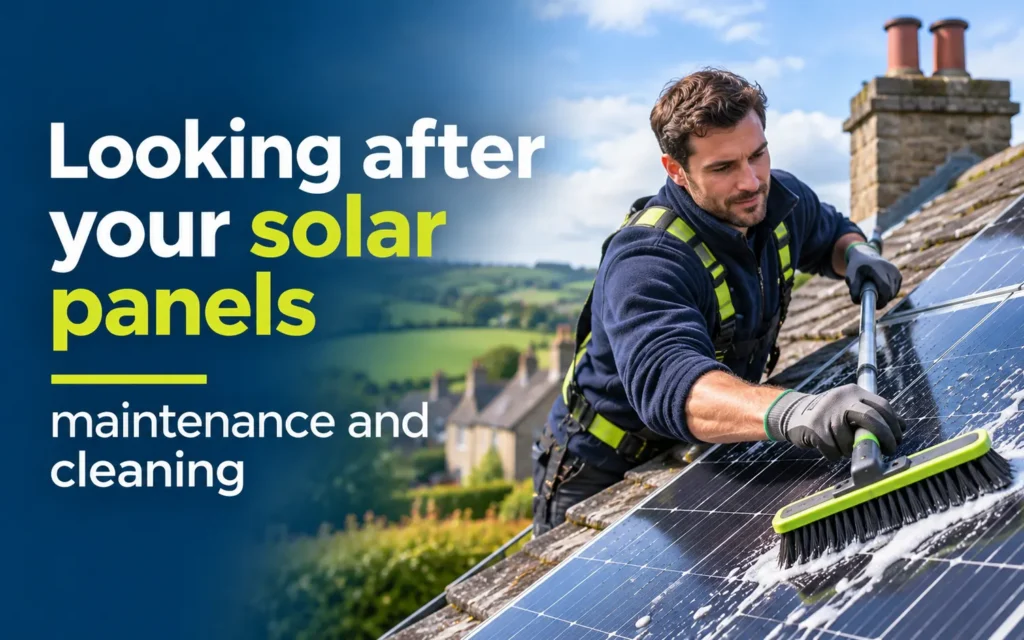
Rain keeps most pitched-roof panels clean enough in the UK. Low-tilt panels, or those near trees or farmland, may need occasional cleaning. Use a professional with suitable access equipment and soft water-fed brushes; never use abrasive cleaners or pressure washers, and never climb onto the roof yourself.
You don’t need a maintenance contract to keep a system healthy. A simple routine does most of the work:
- Every week or two: glance at your monitoring app. You’re looking for a sudden drop on sunny days, not normal ups and downs.
- Spring: check for winter debris and any new shading from growing trees.
- Summer: compare generation with last year’s same month, if you have the data.
- Autumn: look for leaves gathering at the bottom edge of panels.
- Winter: leave snow alone. It usually slides off on its own.
In the North East, regular rain does a lot of the cleaning for you. Most panels at a normal roof pitch stay clean enough on their own, so looking after solar panels is mostly about noticing problems early rather than scrubbing.
How often should a professional look at the system? For most homes, a visual check every few years is plenty, plus an inspection after storms or if the numbers drop. Ask your installer what their warranty requires, since some manufacturers expect a periodic check. Keep a note of any work done, along with your MCS certificate and the inverter’s serial number. Good records make looking after solar panels simpler, and they help if you ever sell the house or need to make a warranty claim.
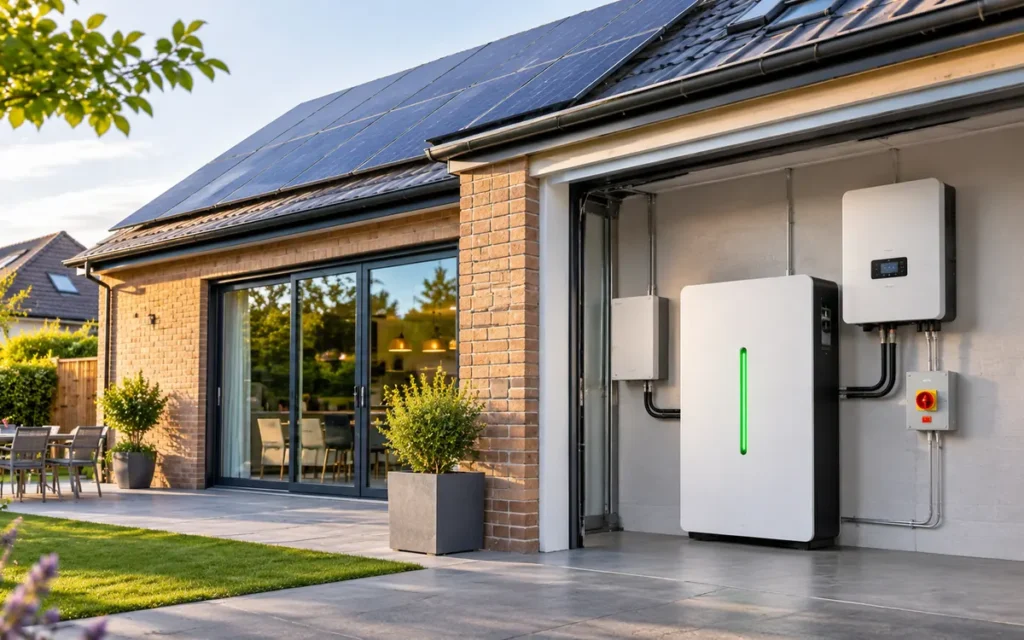
Some well-meant habits do more harm than good:
- Don’t use a pressure washer. It can damage seals and the panel surface.
- Don’t use harsh detergents or abrasive brushes. Plain water and a soft brush are enough.
- Don’t climb on the roof. Use a specialist with proper access equipment if cleaning is really needed.
- Don’t open the inverter or isolator. Electrical faults are a job for a qualified engineer.
- Don’t let anyone drill fixings through panels for bird mesh. Proper clips fit without damage.
Doing any of these can also affect your warranty, so check the terms before work starts. If you need help, an MCS certified installer can inspect the system safely. And if you’re adding a home battery later, looking after solar panels and battery together is no harder, since both report through the same app on most systems.
A useful habit is to note your total generation once a month in a simple notebook or spreadsheet. After a year you’ll have your own baseline, which makes looking after solar panels far easier than relying on manufacturer averages. If one month is much lower than the same month last year, with similar weather, that’s your cue to ask for a check.
Most systems need very little. In practice, looking after solar panels means watching the numbers, keeping shade in check, and calling a professional when something looks wrong. Do that, and a well-installed system should keep producing for decades.
When it comes to looking after solar panels in towns, birds are the other common nuisance. Pigeons like the sheltered gap under panels, and the mess and noise can become a real problem. Proper bird mesh, fitted with clips, keeps them out without harming the panels. It’s a small job for an installer and one of the few paid extras worth considering.