Solar panels in winter: what to expect in the North East

By Sunvolt Home 5 min read Updated 15 November 2026 Solar Energy

Here’s what solar panels in winter really produce this far north, and how to get the most from them.
Shorter days mean less solar electricity, but panels keep working through winter. Here is what to realistically expect in the North East, and how to keep bills down all year.
Key points
- Panels generate from daylight, so they work in winter, but output is much lower than in summer.
- Most of a year's generation happens between spring and early autumn.
- A battery and a time-of-use tariff help keep bills down in the darker months.
Do solar panels work in winter?
Yes. Solar panels respond to daylight rather than heat, and they actually run slightly more efficiently when they are cold. What changes in winter is the amount of light: days are short, the sun is low and cloud is common, so a system in Teesside or County Durham will generate a small fraction of its summer output in December and January.
That is normal and it is built into any honest estimate. Annual figures already include the dark months, which is why a quote should show expected generation over a full year rather than a sunny-day snapshot.
How output changes through the year
As a rough pattern for northern England, the months from April to September provide most of the year’s generation, the shoulder months of March and October are moderate, and November to February are low. A well-designed system still makes a useful contribution in winter, particularly on bright, cold days.
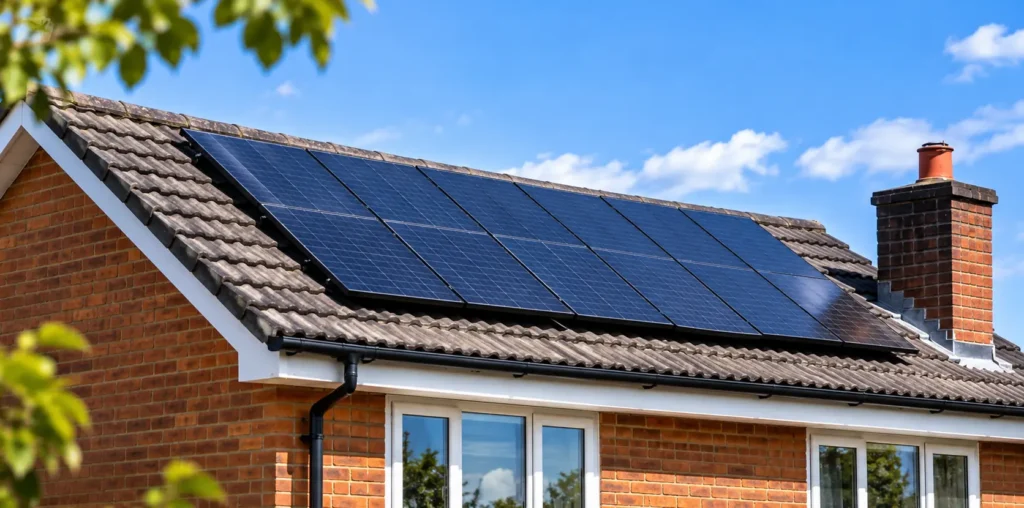
Light frost usually clears quickly. Snow blocks generation until it slides or melts off, which happens faster on steeper roofs. Never climb onto a roof to clear panels. Low winter sun also casts longer shadows from chimneys and trees, which is one reason a proper survey looks at shading across the year.

Keeping bills down all year round
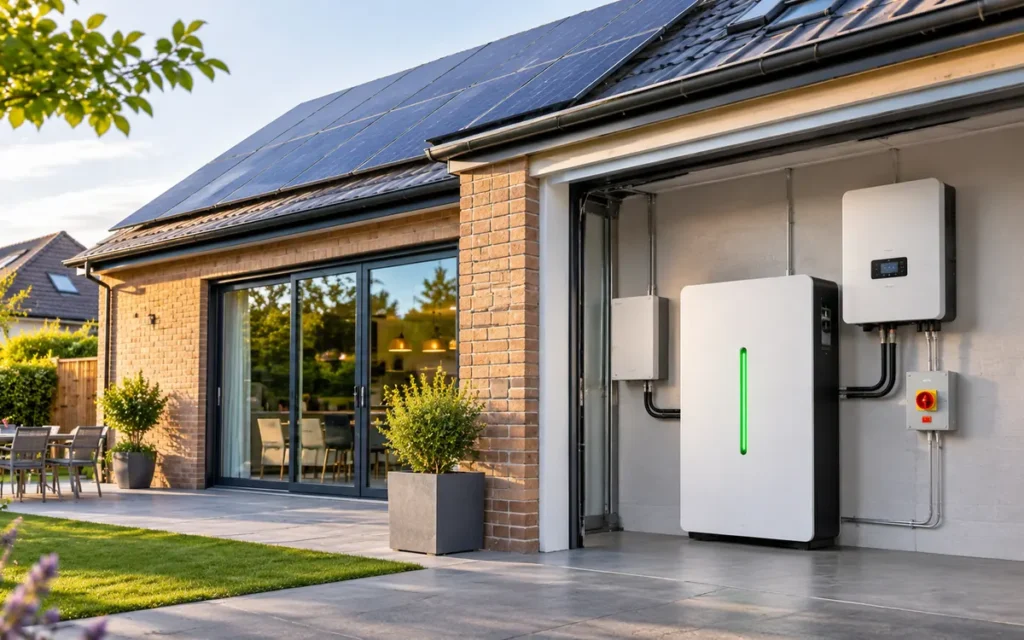
- Store summer’s surplus for the evening: a home battery covers more of your evening use from spring to autumn
- Charge from cheap overnight rates: on a suitable time-of-use tariff, a battery can charge when electricity is cheaper and supply your home at peak times in winter
- Earn from exports: the Smart Export Guarantee pays for electricity you send to the grid
- Cut waste: insulation and controls lower winter demand, when solar can do least
For the bigger picture on savings, see how to reduce electricity bills with solar PV.
Is solar worth it this far north?
The North East gets less sun than southern England, but solar is still widely installed here and annual generation is predictable. What matters most is your roof’s direction, pitch and shading, and how much of the electricity you can use yourself. We cover homes across Teesside and the North East and can give you a site-specific estimate.
How much do solar panels in winter produce in the North East?

Solar panels in winter produce less than in summer, but not nothing. As a rough guide, a typical North East system makes most of its yearly output between April and September. December and January are the quietest months, often producing only a small fraction of a good June.
Say you have a 4kWp system on a south-facing roof in Newcastle. That’s an illustrative example, not a promise. In a typical year it might generate somewhere around 3,000 to 3,500kWh, with a midwinter month contributing perhaps 2% to 4% of that. You can model your own roof with the EU’s free PVGIS solar calculator.
Two things work in favour of solar panels in winter. Solar panels in winter run cooler, and cold panels are more efficient than hot ones. And a bright, frosty day can produce more than a grey, mild one, because what matters is light, not warmth.
What hurts solar panels in winter most is shade. The sun sits low in December, so a chimney or tree that’s harmless in summer can cover panels for hours.
Getting the most from solar panels in winter

Winter is where a battery earns its keep, because solar panels in winter can’t cover the evening alone. On many time-of-use tariffs you can charge it overnight at a low rate, then run the house on that stored power through the expensive evening peak. On sunny winter days the panels top it up for free.
A few practical tips:
- Don’t climb on the roof to clear snow. It usually slides off once the sun hits the glass.
- Check your monitoring app weekly. A sudden drop on clear days can point to a fault rather than the weather.
- Ask your installer about winter shading when they design the system, not afterwards.
Judging solar panels in winter alone is like judging a garden in January. The fair test is a full year. Our solar payback calculator uses year-round figures, and our battery storage page explains how stored power covers the darker months.
So, are solar panels in winter worth it? On their own, they make a modest contribution. As part of a year-round system, they still chip away at your bills on every bright day.

Frequently asked questions
How much do solar panels produce in winter?
Far less than in summer. In northern England the winter months typically provide only a small share of annual generation; a quote should show expected output month by month or for the full year.
Should I clear snow off my panels?
No. Wait for it to slide or melt off. Climbing on a roof is dangerous and scraping can damage the glass.
Will a battery help in winter?
Yes, mainly by charging from cheaper overnight electricity on a suitable tariff and supplying your home at peak times, as solar alone provides little in midwinter.
Thinking about this for your home? We will assess your property before recommending anything. Prefer email? info@sunvolthome.co.uk
Information checked on 31 October 2026. Rules, rates and schemes change; always confirm current details with the official source.