Solar panels in the North East: what they produce, cost and save in 2026
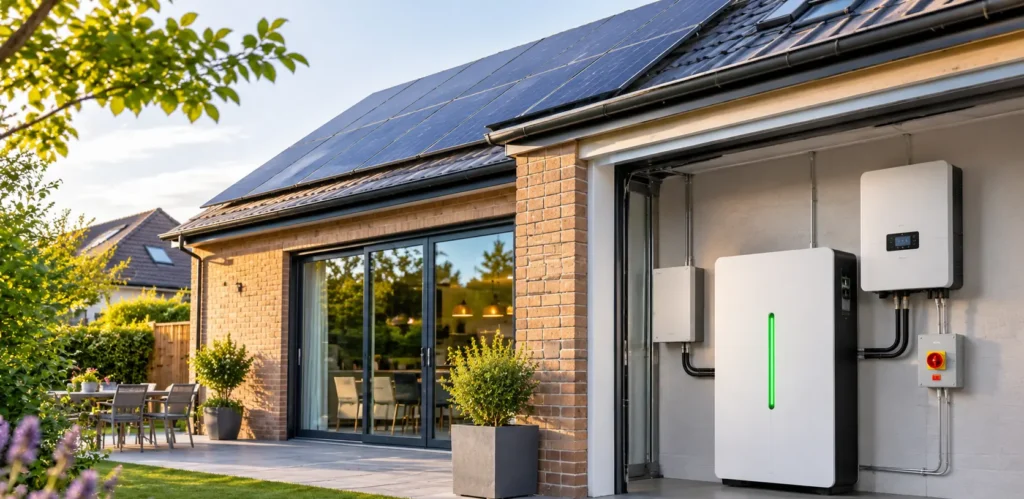
Solar panels in the North East work better than most people expect. A well-placed system here makes roughly 850 kWh a year for every kilowatt of panels, which is enough for a typical three-bed home to cover a large share of its daytime electricity.
The weather isn’t what holds people back. It’s the questions nobody answers straight: what will my roof actually produce, is a battery worth it this far north, and what help is still open in 2026? This guide answers all three for homes across Newcastle, Sunderland, Gateshead, County Durham, Northumberland and Teesside.
Do solar panels in the North East actually work?
Yes. Panels run on daylight, not heat, and the North East gets plenty of it between April and September. Cool air helps too. Solar cells lose efficiency as they warm up, so a bright, cold spring day on Tyneside can beat a hazy July afternoon in the south.
The trade-off is winter. December and January produce only a small slice of the year’s total, and no honest installer should pretend otherwise. Judge the system over twelve months, not one grey week. That’s how solar panels in the North East should be compared with anywhere else.

The chart above uses the same rule of thumb as our solar payback calculator: about 850 kWh per kWp on a south-facing roof with little shade. East and west roofs land lower, often by around 20 percent, but they spread generation across the morning and evening, which suits households who are out at midday.
If you want to test your own address, the EU’s free PVGIS calculator models any roof in Europe. It’s the same data most installers start from, and it’s a quick sanity check on any quote for solar panels in the North East.
What solar panels in the North East cost and save
Most homes here fit somewhere between 8 and 14 panels. A 10-panel, 4.5 kWp system is a common size for a three-bed semi, and it’s the example our calculator uses: for a home using 2,700 kWh a year, with a 5 kWh battery, it estimates about £810 saved in the first year at current prices. That’s an estimate, not a promise, and it moves with your tariff and habits.
Price depends on roof access, scaffolding, panel choice and whether a battery goes in. Our solar panel cost guide breaks this down by system size. Two things help right now:
- 0% VAT on solar panels and batteries for homes, currently due to run until 31 March 2027.
- Low-rate finance. The Warm Homes Loan Scheme opened in late October 2026, with loans of up to £15,000 for solar and up to £15,000 for a battery through participating lenders. Our government-backed loans page explains how it works.
Our honest view: the size of the system matters less than how much of its output you use at home. Every unit you use saves the full import price. Every unit you export earns a much lower export rate. That’s why the best results from solar panels in the North East usually come from homes that shift washing, dishwashers and car charging into daylight hours.
Battery storage in the North East: the Storm Arwen lesson
Ask anyone in Weardale or Teesdale about November 2021.
Storm Arwen cut power to around 240,000 Northern Powergrid customers. Most were back within days, but about 3,000 homes were still without electricity nine days after the storm, according to reports at the time, and Ofgem later criticised the response. For rural homes on the edge of the network, that wasn’t an abstract risk. It was a week of cold houses and dead freezers.
That’s why battery storage in the North East is about more than bills. A standard solar system switches off in a power cut, for safety. A battery with backup (sometimes called EPS) can keep chosen circuits running, such as the fridge, lights, router and boiler controls. Our battery backup page explains how it works and what it can realistically power.
Not every battery offers backup, and not every home needs it. If you’re in a town centre with a reliable supply, the case rests on savings alone. If you’re in a rural village at the end of a long overhead line, backup may be the main reason to buy. Pairing a battery with solar panels in the North East also means the panels can top the battery up during a daytime outage, which a battery alone can’t do.
Help available for solar panels in the North East in 2026
Support has changed a lot this year, so here’s where things stand as of November 2026:
- North East Warm Homes One-Stop-Shop. Run by the North East Combined Authority, it gives free, independent retrofit advice to homeowners, tenants and landlords across County Durham, Gateshead, Newcastle, North Tyneside, Northumberland, South Tyneside and Sunderland. See the North East Combined Authority’s warm homes page.
- Low-interest domestic retrofit loan. Offered through Lendology, but applications were paused due to high demand at the time of writing. You can register interest.
- Switch Together North East. A group-buying scheme for solar and batteries. Registration closed on 27 September 2026, so watch for a future round.
- Warm Homes: Local Grant. Lower-income homeowners may get fully funded upgrades through their council, which can include solar panels.
Be careful with cold calls promising “free solar panels in the North East”. Genuine grants check your eligibility through the scheme first. Nobody legitimate asks for a deposit to “secure” a free system.
Choosing solar panel installers in the North East
A good survey tells you more than any brochure. When comparing solar panel installers in the North East, ask:
- Are you MCS certified? Most finance and export payments depend on it.
- What yearly generation do you expect, and how did you calculate it?
- How will you handle shading from chimneys or trees in winter, when the sun sits low?
- Who notifies Northern Powergrid, the local network operator?
- Is the inverter battery-ready, and does the battery offer backup?
- What workmanship warranty do you give, and is it insurance-backed?
Vague answers are a warning sign. So is pressure to sign on the day. Solar panels in the North East should last 25 years or more, so a week spent comparing quotes is time well spent.
Common mistakes we see
Sizing only for today is the big one. If an electric car or heat pump is likely within five years, plan the array and inverter for it now. The second is ignoring the tariff: a battery earns far more on a time-of-use tariff that lets it charge cheaply overnight in winter. The third is cleaning panels from a ladder. In our rainy climate, pitched panels mostly look after themselves, which is one of the quieter advantages of solar panels in the North East.
Frequently asked questions
Are solar panels worth it in the North East?
For most homes with a reasonably unshaded south, east or west roof, yes. A well-placed system makes around 850 kWh per kWp a year here. Savings depend on how much of that power you use at home, so a battery or daytime usage makes a big difference.
Do solar panels work in Newcastle in winter?
They do, but output drops sharply in December and January because days are short and the sun is low. Most of the year’s generation comes between April and September, which is why the fair test is a full year.
Can I get free solar panels in the North East?
Only through eligible schemes, mainly the Warm Homes: Local Grant for lower-income homeowners via councils. Everyone else can use 0% VAT and the new low-rate Warm Homes loans to spread the cost.
Next step
If you’re weighing up solar panels in the North East, start with your own numbers. Try the payback calculator, then book a free home survey. We’ll look at your roof, your usage and whether a battery or backup makes sense, and give you one written quote to compare against others. Read more about our solar panel installations and home battery storage.