How many solar panels does a home need?
By Sunvolt Home 5 min read Updated 15 November 2026 Solar Energy

How many solar panels you need comes down to three things: how much electricity you use, how much roof you have, and your future plans.
Start with your electricity use, not the roof: a step-by-step way to estimate system size, plus why bigger is not always better.
Key points
- Start from your annual electricity use, shown in kWh on your bills.
- System size is measured in kilowatt-peak (kWp); panel count depends on each panel's wattage.
Step 1: find your annual electricity use
Your annual consumption in kilowatt-hours (kWh) is on your bills or your supplier’s app. As a reference point, Ofgem’s typical figure for a medium-use home is 2,500 kWh of electricity a year (revised from 2,700 kWh in July 2026). Your own figure matters far more than the average, especially if you work from home, have electric heating or drive an electric car.
This one number does more than anything else to decide how many solar panels make sense for you.
Step 2: understand kWp and generation
Solar systems are sized in kilowatt-peak (kWp), the output under standard test conditions. Across much of the UK, each kWp produces very roughly 800 to 1,000 kWh a year, with more in the south and less in the north, and less again on east or west-facing or partly shaded roofs. Your installer’s design will use location-specific data rather than a rule of thumb.
Once you know the kWp you need, working out how many solar panels that means is simple division.
Step 3: convert system size into panels
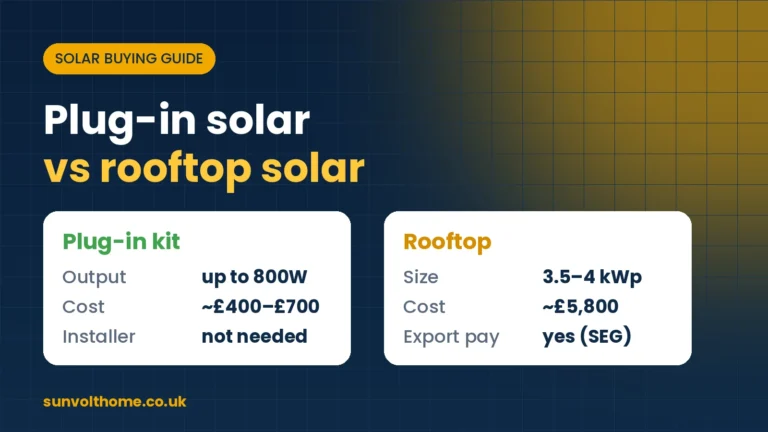
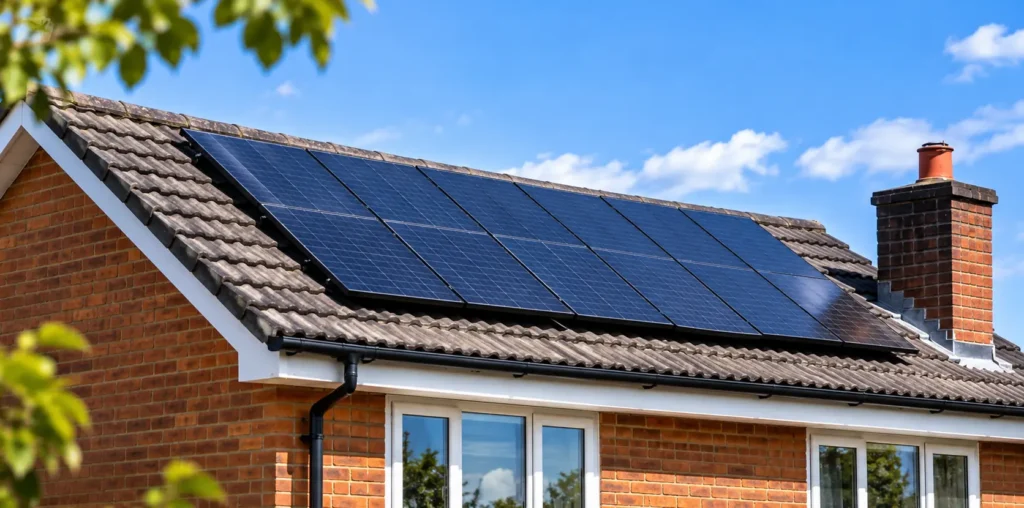
Most current residential panels are rated at roughly 400 to 450 watts. A 4 kWp system therefore needs about 9 to 10 panels, and a 6 kWp system about 14. Higher-wattage panels mean fewer panels for the same output, which helps on smaller roofs.
A worked example
A household using 3,000 kWh a year in the Midlands, with a south-west-facing roof, might consider a system of around 3.5 to 4 kWp. That could generate roughly 3,000 to 3,600 kWh a year. Because generation peaks in the middle of summer days, the household would still buy electricity in winter and in the evenings and would export some surplus in summer. A home battery shifts more of that solar into the evening.
These figures are illustrations, not a quotation. Actual output depends on your roof, location, shading and equipment.
When a bigger system makes sense
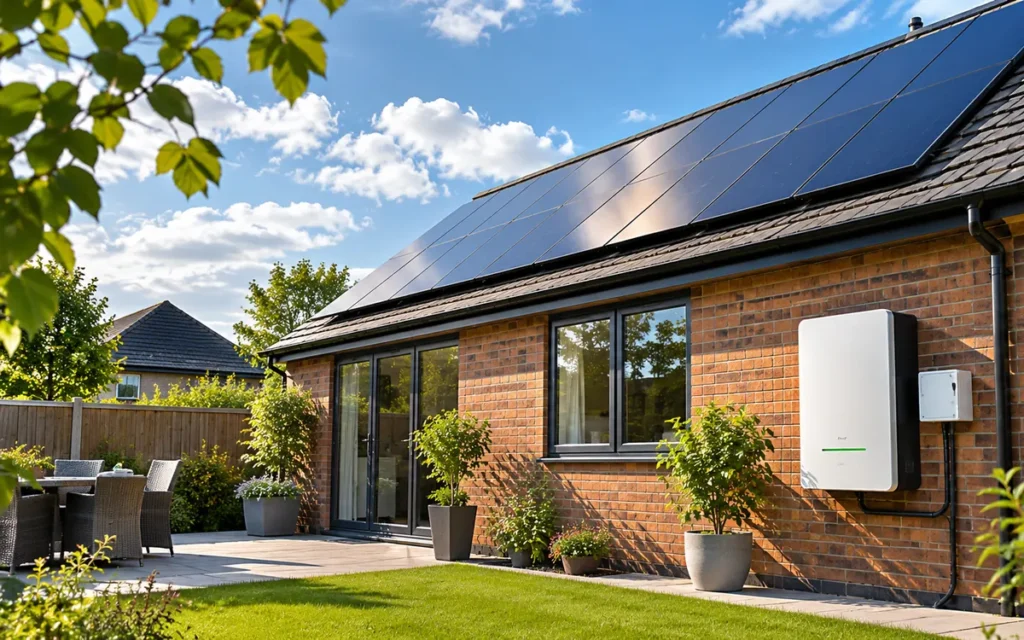
- You plan to add a battery that you want to fill from solar
- You have, or expect to buy, an electric car
- You may switch to electric heating in future
- Your roof faces east and west, so a larger array spreads generation across the day
Roof space is often the limiting factor. See how many solar panels can fit on your roof. Larger systems may also need approval from your network operator before installation.
How much of your bill do you want to cover?
Matching 100% of your annual use on paper rarely means using 100% of your solar, because most generation happens in summer and in the middle of the day. Many households size a system to cover roughly half to two-thirds of their annual use, then add a battery to use more of what they generate. Covering more is possible, but each extra panel adds mostly summer surplus that is exported.
So the right answer to how many solar panels is often a little below a full match.
Network limits and inverter size
On a standard single-phase supply, systems with inverters up to about 3.68 kW can usually be connected and then notified to the network operator. Larger systems need the network operator’s approval before installation. This is routine, and your installer applies, but it can add time.
This can cap how many solar panels you can connect without extra paperwork.
How many solar panels for your usage: examples

These are illustrations, using panels of around 430W:
- Low use, around 2,000kWh a year: often 6 to 8 panels.
- Typical family, around 3,500kWh: often 9 to 12 panels.
- High use, 5,000kWh or more: often 12 to 16 panels, roof permitting.
Roof space usually sets the upper limit. Our guide to how many panels fit on a roof explains why.
How many solar panels if you add a battery or EV

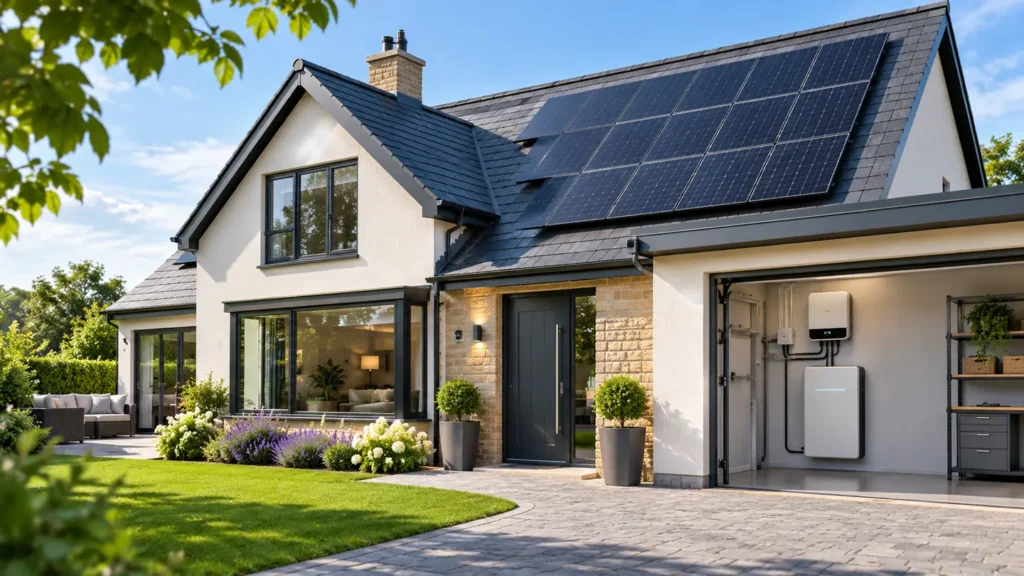
An electric car can add 2,000kWh or more a year, and a heat pump even more. If either is likely, plan for it now. A home battery does not change how many solar panels you need, but it helps you use more of what they make. When in doubt, ask how many solar panels your roof can take and size towards the top of that range.

Frequently asked questions
How many solar panels does a 3-bedroom house need?
Many 3-bedroom homes fit systems of about 3.5 to 5 kWp, roughly 8 to 12 modern panels, but the right size depends on your actual electricity use and roof.
Can I have too many solar panels?
A system much larger than your use mostly exports electricity. That may still be worthwhile if export rates and costs make sense, but it is worth modelling first.
Will a battery reduce how many panels I need?
No. Panels are sized to your use; a battery lets you use more of what they generate instead of exporting it.
Thinking about this for your home? We will assess your property before recommending anything. Prefer email? info@sunvolthome.co.uk
Official sources and further reading
Information checked on 28 October 2026. Rules, rates and schemes change; always confirm current details with the official source.
Fine-tuning the number of panels
- Allow for losses: some energy is lost in the inverter, cabling and through heat and dirt, so systems are sized with a margin rather than to the exact figure.
- Decide your target: work out how much of your yearly electricity you want solar to cover. Covering all of it is rarely practical because most generation happens in summer.
- Panel efficiency: higher-wattage panels produce more from the same roof area, so fewer may be needed.
- Roof orientation: south-facing roofs produce the most; east- and west-facing roofs produce somewhat less but spread generation across the morning and evening.