
Free Quote

How efficient are solar panels, and does it matter?
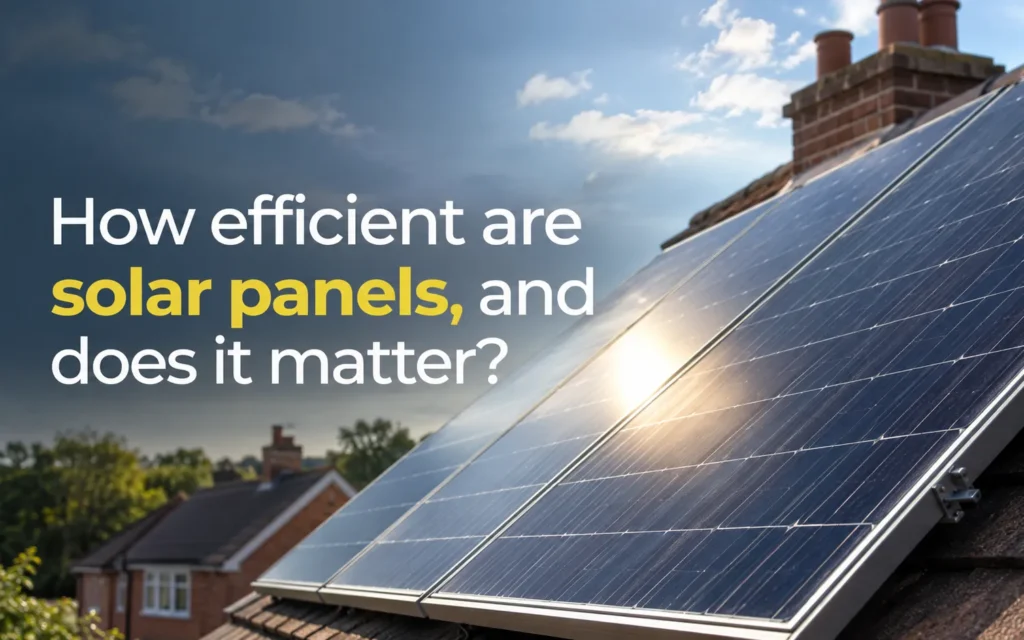
Close-up of solar panels catching the sun on a tiled roof, with the title How efficient are solar panels, and does it matter?

How efficient are solar panels today? Most good home panels convert around a fifth of the sunlight that hits them into electricity.

Efficiency explained: typical figures for modern panels, why the number matters most when roof space is tight, and what really affects output.

Key points

What efficiency means

A panel’s efficiency is the percentage of the light energy hitting it that it turns into electricity under standard test conditions. A more efficient panel produces more electricity from the same area of roof.

So when people ask how efficient are solar panels, they usually mean this percentage.

Typical efficiency today

Most panels sold for homes now use monocrystalline silicon cells, and many are roughly 20% to 23% efficient. Premium panels can be higher. Ten years ago, typical panels were noticeably lower, so a modern system can generate more from the same roof than an older one.
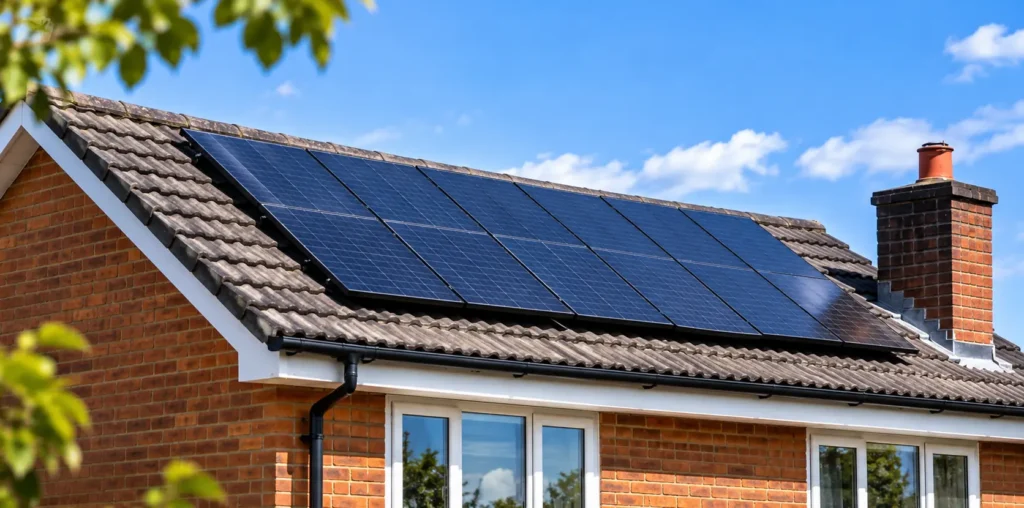
Brick house with modern solar panels, showing how efficient are solar panels on a UK roof

For most homes, how efficient are solar panels matters less than how many you can fit and where they face.

When efficiency matters

If you have a large, unshaded south-facing roof, a slightly less efficient panel may make sense if the price is right, because you can fit more of them. On a small or awkward roof, higher-efficiency panels let you fit more generating capacity into limited space.

On a small roof, though, how efficient are solar panels becomes a much bigger question.

What really affects output

  • Orientation and pitch: south-facing at around 30 to 40 degrees produces the most over a year in the UK
  • Shading: even partial shade can have a big effect
  • Temperature: panels lose a little output as they get hotter
  • Inverter efficiency and cabling losses
  • Dirt and debris, although UK rain cleans most roofs adequately

These real-world factors often affect output more than how efficient are solar panels on paper.

Does efficiency fall over time?

Panels slowly produce a little less each year, a process called degradation. Manufacturers publish a performance warranty guaranteeing a minimum output after a stated period, often 25 years or more. Check the datasheet and warranty terms when comparing quotes.

How efficiency is measured

Panel efficiency is measured under Standard Test Conditions: a cell temperature of 25°C and light of 1,000 watts per square metre. This allows fair comparison between panels, but real roofs rarely match these conditions, so actual output differs from the rating.

Efficiency and wattage are different

Efficiency is a percentage; wattage is a panel’s power rating. A larger, less efficient panel can have a similar wattage to a smaller, more efficient one. When comparing quotes, look at total system size in kWp and the estimated annual generation.

Panel types

  • Monocrystalline: the usual choice for homes today, with the highest efficiencies
  • Polycrystalline: less efficient and now uncommon in new home installations
  • Thin-film: light and flexible but much less efficient, so rarely used on house roofs

Individual laboratory cells can reach far higher figures than finished panels, because a panel includes a frame, glass and gaps between cells that produce no electricity.

Temperature and winter

Panels produce slightly less as they heat up; each datasheet shows a temperature coefficient, the percentage of output lost per degree above 25°C. Cold does not reduce efficiency, so bright winter days can be productive, even though shorter days mean lower total generation.

That is one reason the answer to how efficient are solar panels changes through the year.

How efficient are solar panels in UK weather?

Rows of UK homes with solar panels under a bright sky, showing how efficient are solar panels in UK weather

Efficiency ratings are measured in lab conditions. On a real roof, output also depends on light levels, temperature and angle. Panels still work on cloudy days, just at a lower level, and they actually run more efficiently when they are cool. A bright, cold spring day can be one of the best days of the year.

So if you are asking how efficient are solar panels in the North East, the practical answer is: efficient enough to make a real difference. A well-placed system here typically produces somewhere around 800 to 900kWh per kWp each year. You can test your own roof with the free PVGIS calculator.
How efficient are solar panels over time?

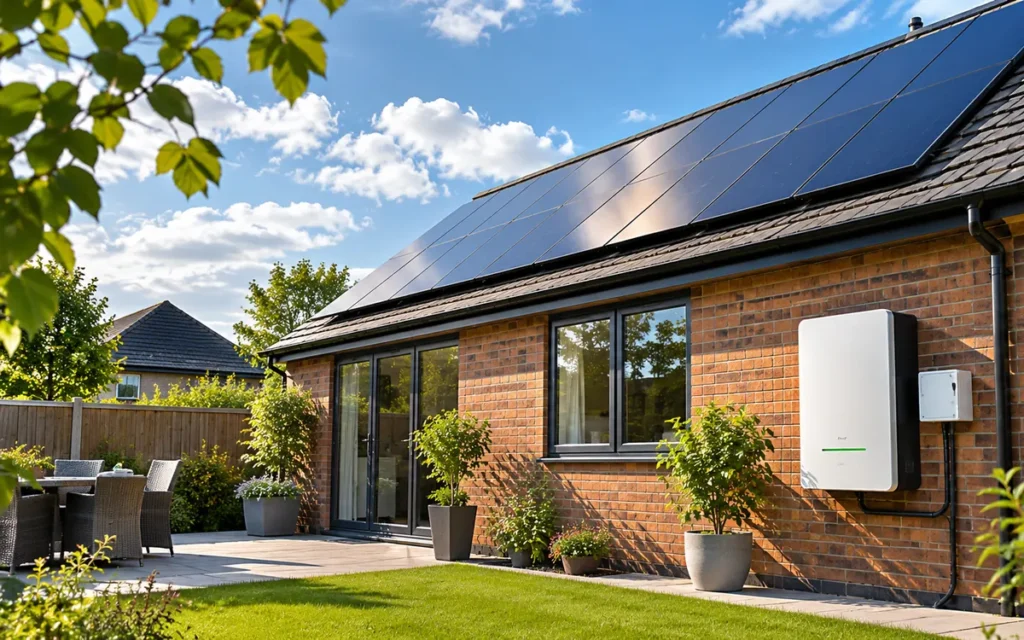
Solar panels and inverter on a semi-detached home, still performing years after installation

Panels slowly lose output as they age, typically a fraction of a percent per year. Many manufacturers guarantee that panels will still produce around 80% to 90% of their rated output after 25 years or more, so check the performance warranty on any quote.

Inverters usually need replacing once during a panel’s life. Keeping an eye on your monitoring app helps you spot a fault early. If you want to understand how efficient are solar panels on your own roof, our solar payback calculator uses realistic yearly figures rather than lab ratings.

Frequently asked questions

All-black panels can run slightly warmer, but modern all-black panels are competitive. Appearance is often the deciding factor.

Only if they let you fit more capacity or generate more from your roof. Compare cost per kWh generated, not efficiency alone.

No, but there is less daylight, so total generation is lower. Cold, bright days can be quite productive.

Thinking about this for your home? We will assess your property before recommending anything. Prefer email? info@sunvolthome.co.uk

Official sources and further reading

Information checked on 28 October 2026. Rules, rates and schemes change; always confirm current details with the official source.

Getting the most from your panels

  • Angle and tilt: in the UK, a tilt of roughly 30 to 40 degrees facing south gives the highest yearly output, though other angles still work.
  • The right inverter: a correctly sized inverter matters. Where parts of the roof are shaded at different times, optimisers or microinverters can reduce losses.
  • Cloudy days: panels still generate from daylight on overcast days, just less than in bright sun.

Thinking about an upgrade?

Tell us about your home and we will help you work out what is worth doing.

Prefer email? info@sunvolthome.co.uk

Get A Quote
Questions?Chat on WhatsApp