Cheap ways to lower your carbon footprint (and your bills)

- Switch off standby: TVs, consoles and chargers left on standby use electricity all day
- Wash at lower temperatures: most loads clean well at 30°C
- Air-dry laundry when you can rather than tumble drying
- Fill the kettle only as much as you need
- Use LED bulbs: they use a fraction of the electricity of old bulbs
For a fuller list, see ways to save energy at home.

Before you change anything, it helps to know where the carbon actually is. In most UK homes, heating and hot water are the biggest slice by a distance, especially with a gas boiler. Electricity comes next, and its footprint depends a lot on when you use it.
That timing point surprises people. The UK grid’s carbon intensity has more than halved over the last decade, but it still swings through the day. A windy, sunny afternoon can be several times cleaner than a still winter evening. The free Carbon Intensity forecast shows this for your region.
So the order to lower your carbon footprint is simple: cut heat loss first, then make your heating more efficient, then shift electricity to cleaner hours. Gadgets and standby savings are real but small. If you want to lower your carbon footprint, heating is where the tonnes are.
If you only remember one thing, make it this: to lower your carbon footprint at home, start with heat. Every degree you don’t need to generate is carbon you never emit. And because heating is the biggest cost too, the steps that lower your carbon footprint fastest are usually the ones that cut your bill fastest as well.
None of these need a tradesperson or a credit check:
- Turn your combi boiler’s flow temperature down to around 60°C. Most are set far higher than they need to be.
- Wash clothes at 30°C and air-dry when you can.
- Cut one minute off each shower.
- Bleed radiators and close curtains at dusk in winter.
- Run the dishwasher and washing machine in the cleaner, often cheaper, hours.
- Check your smart meter display for a week to find the appliance you didn’t know was hungry.
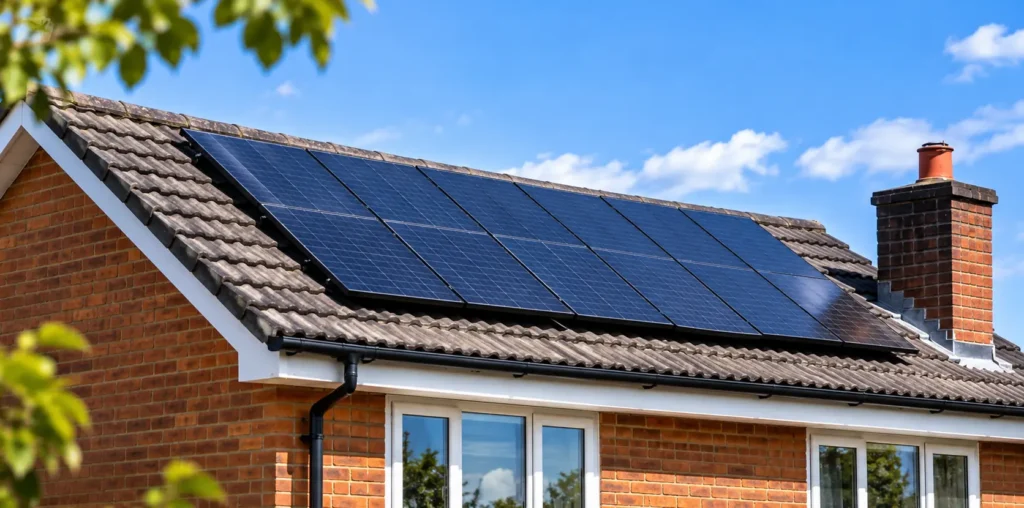
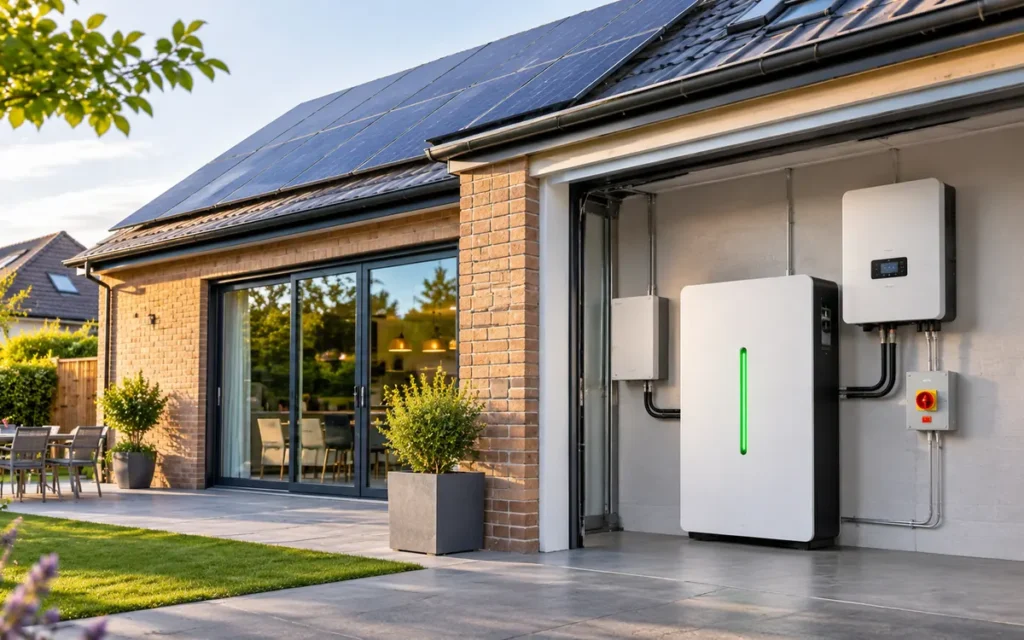
Small habits add up, but they have a ceiling. To lower your carbon footprint by a lot, the bigger steps are insulation, a heat pump when your home is ready, and solar panels with a battery so you use your own clean power in the evening. If the upfront cost is the blocker, read our guide to government-backed solar loans.
Here’s a worked example, labelled as an example rather than a promise. Say a three-bed semi turns the boiler flow temperature down, tops up the loft insulation and moves laundry to off-peak hours. None of that is expensive, and together it can lower your carbon footprint from heating and electricity noticeably within one winter. Add solar panels and a battery the following year and the household starts making some of its own clean electricity too.
The order matters. People who start with the big purchase often skip the cheap steps, and those cheap steps are what lower your carbon footprint fastest per pound spent. Start small, measure with your smart meter, then decide on the bigger upgrades with real numbers in front of you. That’s the most reliable way to lower your carbon footprint without wasting money.