
What is energy-efficient retrofitting? A practical guide for homeowners
By Sunvolt Home 5 min read Updated 15 November 2026 Home Energy Efficiency

Energy efficient retrofitting simply means upgrading the home you already have so it uses less energy.
Retrofitting is simply improving the home you already have so it wastes less energy. Here is what it involves, the sensible order to do things in, and how to avoid paying twice.
Key points
- Retrofitting improves an existing home rather than building a new one.
- Reducing waste first (draughts, insulation, controls) usually comes before generating your own power.
- Solar panels and a battery cut the electricity you buy; they work best in a home that already wastes little.
What retrofitting means
A retrofit is any improvement that makes an existing home cheaper to run and more comfortable: better insulation, draught-proofing, efficient heating controls, new glazing, low-carbon heating, or generating your own electricity with solar panels. A “whole-house” retrofit looks at all of these together, so each change supports the next instead of working against it.
Most UK homes were built long before today’s energy standards. New homes in England will soon be built to the Future Homes Standard, but the homes most of us live in will only improve if they are retrofitted.
A sensible order for upgrades
There is no single rule, but this sequence avoids the most common mistake, which is paying for more generation or heating than a leaky house really needs:
- 1. Understand the house: your EPC, your bills and any damp or ventilation problems
- 2. Reduce waste: draught-proofing, loft and wall insulation where suitable, and better heating controls
- 3. Use energy at better times: a smart meter and a time-of-use tariff
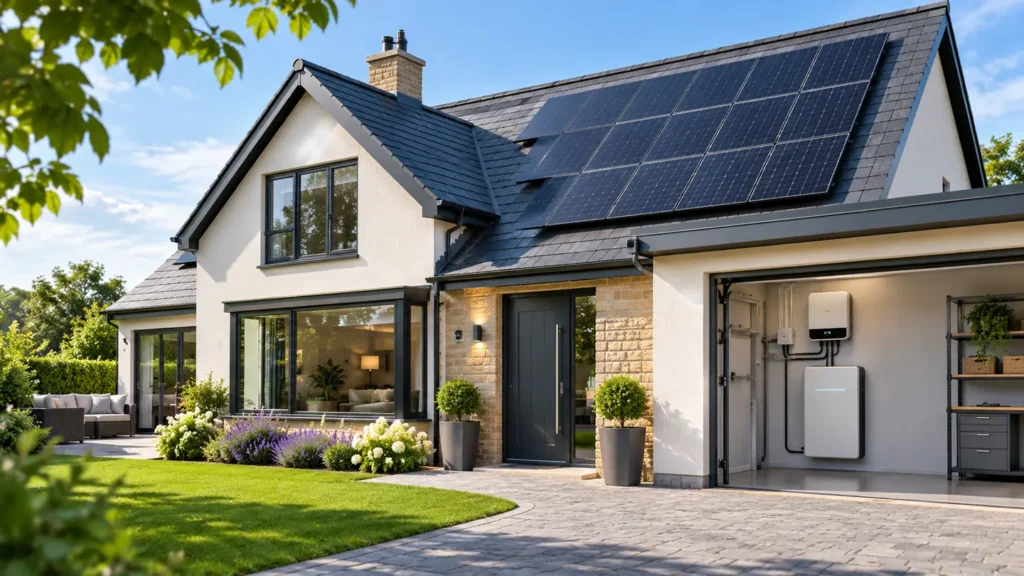
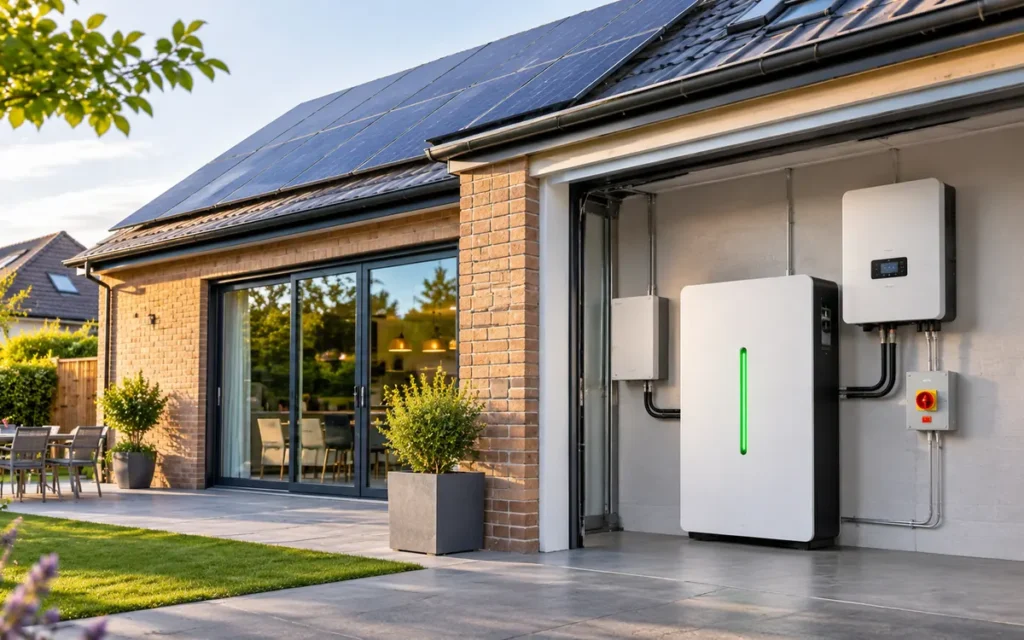
- 4. Generate and store: solar PV, then a home battery to use more of what you generate
- 5. Replace heating when your boiler is due, sized for the improved home
Ventilation matters. Making a home more airtight without enough ventilation can cause condensation and damp, which is why proper retrofits plan both together.
Where solar and batteries fit
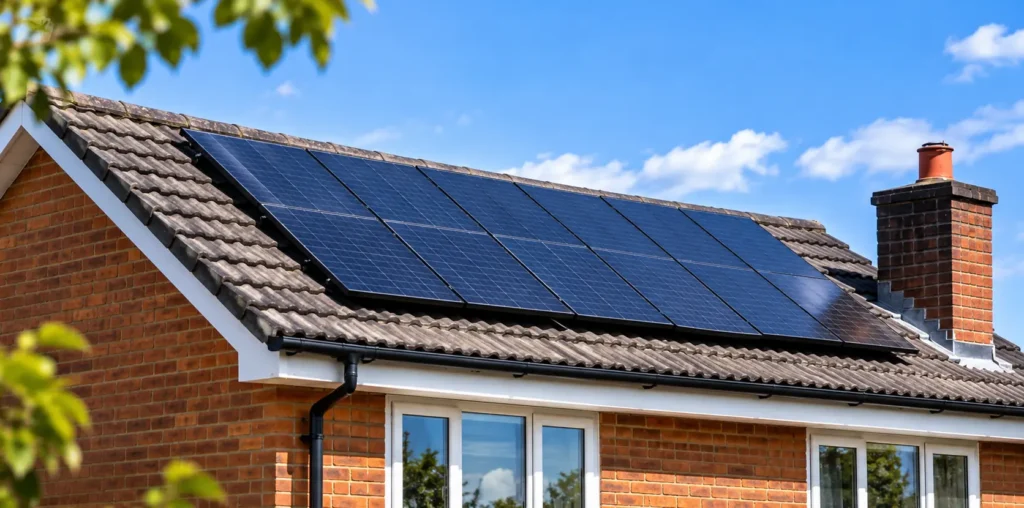
Solar panels do not reduce how much energy your home needs; they change where it comes from. That is why they are often the step after basic fabric improvements. Once waste is down, a modest solar system covers a larger share of what you use, and a battery lets you use daytime generation in the evening rather than exporting it cheaply.
If your roof is in good condition and well oriented, solar can also be a sensible first step on its own, especially if insulation is already reasonable. Read how solar and battery storage work together for the detail.
Paying for a retrofit
Costs vary hugely with the size and age of the property.
What energy efficient retrofitting costs

The cost of energy efficient retrofitting varies hugely with the house, so be wary of anyone who quotes a single figure. A loft top-up can cost a few hundred pounds. Cavity wall insulation, where suitable, is usually affordable. Solid wall insulation, a heat pump or a full solar and battery system are the big-ticket items.
For solar specifically, our solar panel cost guide shows typical prices by system size. You don’t need to do everything at once. Most energy efficient retrofitting happens in stages, as budgets and boilers allow.
Funding helps. Lower-income households in England may qualify for the Warm Homes: Local Grant, and homeowners can now spread the cost of solar and batteries with government-backed loans. Check what you qualify for before you pay full price.
A practical tip: get two or three quotes for each stage, and ask every installer the same questions. Comparing like with like is the simplest way to keep energy efficient retrofitting costs under control, and it quickly shows you who has actually looked at your house.
Common energy efficient retrofitting mistakes

We see the same energy efficient retrofitting mistakes again and again:
- Skipping ventilation. Seal a house up without planning ventilation and you can create damp and mould.
- Fitting a heat pump before insulating. It’ll work, but it’ll work harder and cost more to run.
- Using unregistered installers. Funded work usually needs a TrustMark registered business and, for solar and heat pumps, MCS certification.
- Ignoring the whole-house plan. Grant-funded retrofits often follow PAS 2035, which looks at the house as a system. Even if you’re paying yourself, that approach avoids doing jobs in the wrong order.
Energy efficient retrofitting works best with a plan. A short survey tells you which steps give the biggest return in your home, and in what order.
If you’re unsure where to begin, an EPC is a good starting point, since it lists improvements suited to your home. Then plan energy efficient retrofitting in stages over a few years, matching each job to when you’d be spending money anyway, such as replacing a boiler or re-roofing.
Frequently asked questions
Is retrofitting worth it?
Usually, if it is planned. Upgrades that cut waste tend to pay back faster than generation alone, and doing them in the right order avoids oversizing later systems.
Do I need to do everything at once?
No. Most households retrofit in stages. A plan simply makes sure each step does not have to be redone later.
Does retrofitting improve my EPC?
Most measures that reduce energy use or generate electricity, such as insulation and solar panels, can improve an EPC rating. The exact change depends on the property.
Thinking about this for your home? We will assess your property before recommending anything. Prefer email? info@sunvolthome.co.uk
Official sources and further reading
Information checked on 31 October 2026. Rules, rates and schemes change; always confirm current details with the official source.

