Are you overpaying for energy? How to check, and what helps
By Sunvolt Home 5 min read Updated 15 November 2026 Energy Saving Guides

Most households overpaying for energy don’t know it, because the warning signs are hidden in the small print of the bill.
Many households pay more than they need to without realising it. A ten-minute check of your bill against the current price cap, your tariff and your usage can show where the money is going.
Key points
- The Ofgem price cap limits unit rates and standing charges on default tariffs, not your total bill.
- From 1 October to 31 December 2026 the average capped electricity rate is 26.32p per kWh with a 54.83p daily standing charge (Direct Debit).
- Better tariffs, lower usage and generating your own electricity all reduce what you pay.
Start with your bill
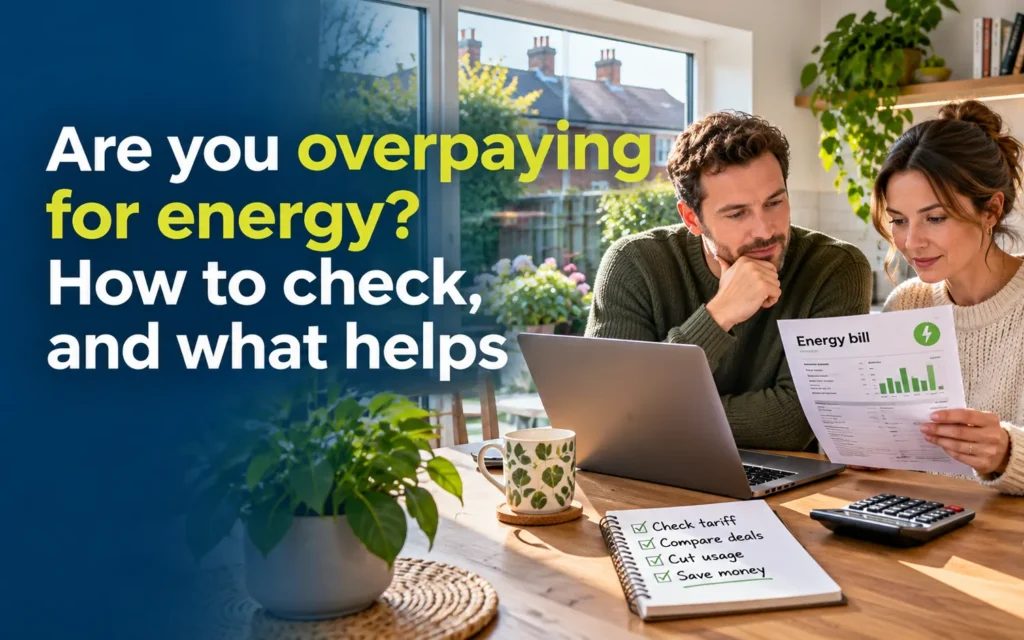
Find three figures on your latest bill or app: your electricity unit rate (pence per kWh), your daily standing charge, and how many kWh you used. The unit rate times your usage, plus the standing charge for each day, is most of what you pay. If you cannot find these figures, your supplier must provide them.
Compare with the price cap
Ofgem sets a cap on the unit rates and standing charges suppliers can charge on default (standard variable) tariffs. For 1 October to 31 December 2026, the typical annual dual-fuel bill under the cap is £1,723, and the average electricity rates for Direct Debit customers are 26.32p per kWh and 54.83p a day. Rates vary by region and payment method, and the cap is reviewed every three months.
The price cap is not a cap on your total bill. If you use more energy, you pay more.
Common reasons people overpay
- Estimated bills: submit regular readings or use a smart meter so you pay for what you actually use
- The wrong tariff: a time-of-use tariff can be much cheaper if you can shift usage, especially with a battery
- Paying by cash or cheque: standard credit usually costs more than Direct Debit
- Wasted energy: draughts, old appliances and heating controls set badly add up
- Low export payments: if you have solar, check your Smart Export Guarantee rate
Cutting what you buy for good
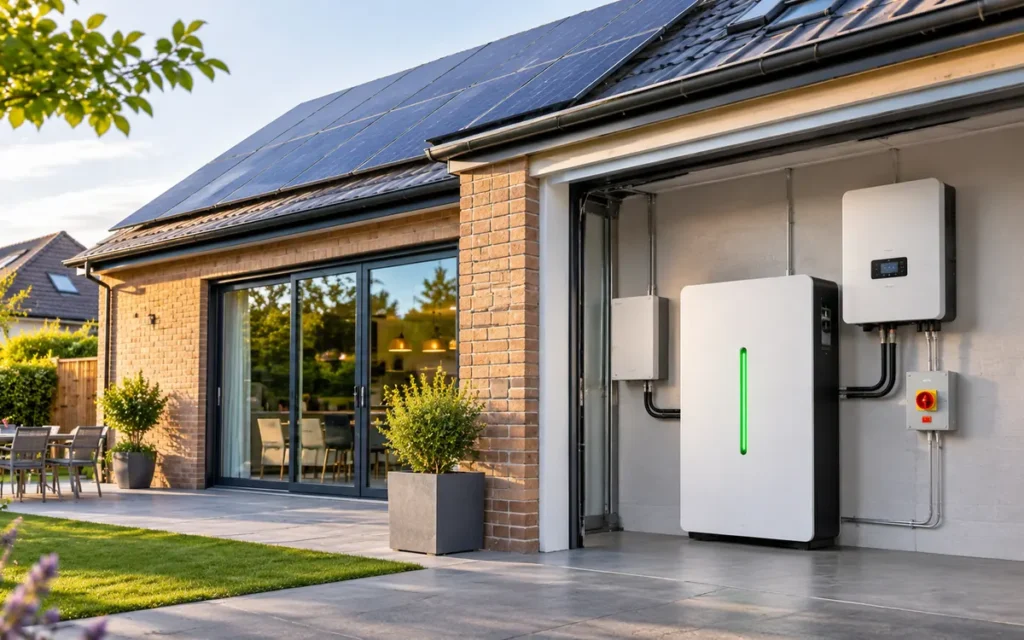
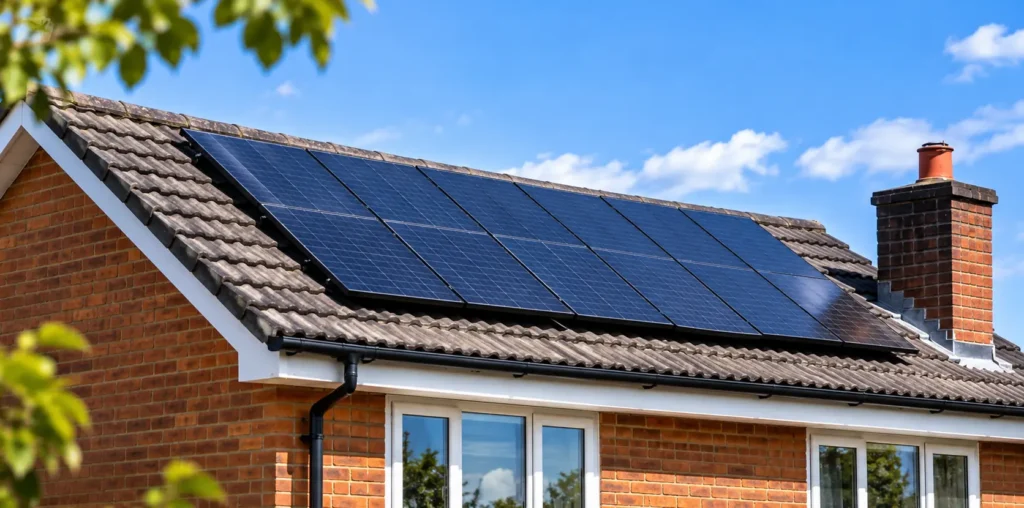
Switching tariffs helps, but generating your own electricity reduces how much you need to buy in the first place. Solar panels supply your home during the day, and a home battery can store solar or cheap overnight electricity for the evening peak. See practical ways to save energy at home for no-cost changes you can make today.
Five signs you're overpaying for energy

To find out if you are overpaying for energy, go through your last bill with these five checks. It takes about ten minutes.
- Estimated readings. If the bill says “estimated”, you may be paying for energy you haven’t used. Submit an actual reading.
- A direct debit that keeps growing. A large credit balance means you’re lending your supplier money. You can ask for it back.
- The wrong tariff. If you’ve never switched or checked, compare your unit rate with the current Ofgem price cap.
- An old Economy 7 meter used at the wrong times. Cheap night rates only help if you actually use power at night.
- Standing charges on a meter you don’t need. Some homes still pay for a gas supply they barely use.
Two or more of these and you’re very likely overpaying for energy right now. Even one is worth fixing, because overpaying for energy by a few pounds a month adds up over a year.

How to stop overpaying for energy for good

Switching tariffs and fixing readings stops the leak. It doesn’t change how much energy you have to buy, so you can still end up overpaying for energy at peak times.
That’s the bigger lever. Every unit you generate yourself is a unit you never pay a supplier for. Solar panels cover a lot of your daytime use, and a home battery stores the surplus for the evening, when grid prices are highest. On a time-of-use tariff, the battery can also charge overnight at a cheaper rate.
Be wary of anyone who promises your bill will hit zero. Your savings depend on your roof, your usage and your tariff. Our solar payback calculator gives a realistic starting figure. If you suspect you’re overpaying for energy, fix the bill first this week, then look at generating your own.
A worked example, for illustration only: a household paying by direct debit notices a £200 credit balance, two estimated readings in a row and an old fixed deal that rolled onto a standard tariff. Fixing all three takes an afternoon. That’s what overpaying for energy usually looks like in practice: not one big mistake, but several small ones quietly adding up. Check again every six months, because tariffs and usage both change.
Frequently asked questions
What is the energy price cap right now?
From 1 October to 31 December 2026 the typical annual dual-fuel bill under the cap is £1,723 for Direct Debit customers. Ofgem reviews the cap every three months.
Is the price cap the maximum I can pay?
No. It limits the unit rate and standing charge on default tariffs. Your total bill still depends on how much energy you use.
Can solar panels lower my standing charge?
No. The standing charge is fixed by your tariff. Solar reduces the number of units you buy.
Thinking about this for your home? We will assess your property before recommending anything. Prefer email? info@sunvolthome.co.uk
Official sources and further reading
Information checked on 31 October 2026. Rules, rates and schemes change; always confirm current details with the official source.