
Free Quote

How do solar panels work? A plain-English guide for UK homes
Brick house with solar panels on its roof under a blue sky, with the title How do solar panels work? A plain-English guide for UK homes

How do solar panels work? In short, they turn daylight into electricity your home can use straight away.

From daylight to the socket: what each part of a home solar PV system does, and what happens to electricity you don’t use.

Key points

From daylight to electricity

Solar panels are made of photovoltaic (PV) cells, usually silicon. When light hits a cell, it knocks electrons loose, and the cell’s structure pushes them in one direction. That flow of electrons is direct current (DC) electricity.

Panels respond to daylight rather than heat, so they still generate on cloudy days, just less than in bright sun. In fact, very high temperatures slightly reduce a panel’s output, which is one reason spring days can be surprisingly productive in the UK.

That is the core of how do solar panels work: light in, electricity out, with no moving parts.

The parts of a home solar PV system

  • Panels, wired together in one or more strings on the roof
  • Mounting system, fixed to the rafters through the roof covering
  • Inverter, which converts DC into the 230V AC used by your appliances
  • Isolators and protection, so the system can be switched off safely
  • Generation meter and monitoring, so you can see what the system produces
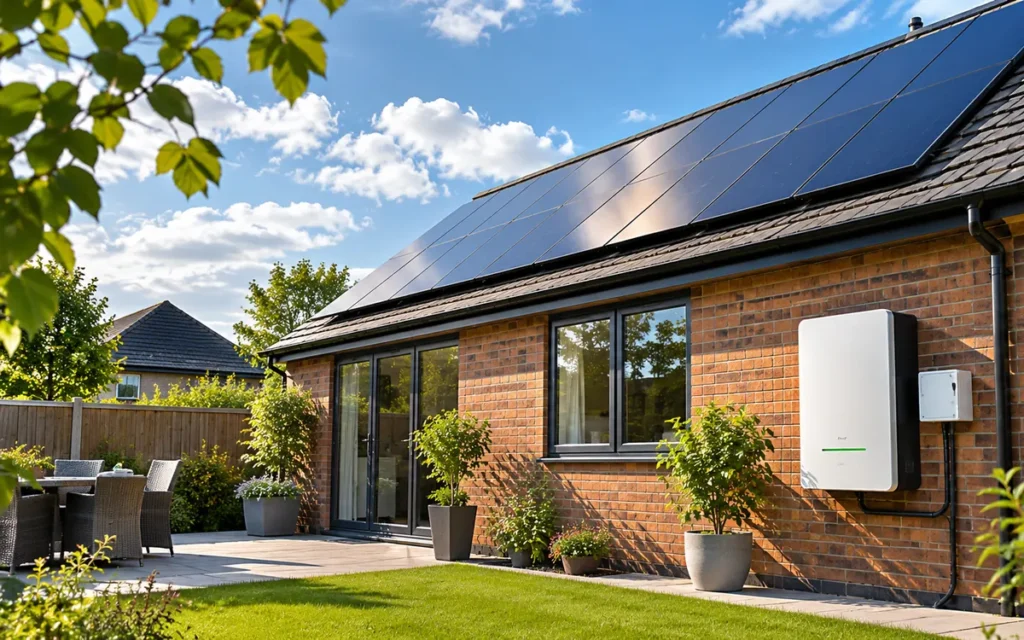
Solar panels and inverter on a semi-detached home, showing how do solar panels work in practice

Some systems use panel optimisers or microinverters, which manage each panel individually. These can help where parts of a roof are shaded at different times of day.

The parts differ, but the basics of how do solar panels work stay the same.

What happens to the electricity

Solar electricity always goes to whatever is running in your home first. If the panels produce more than you are using, the surplus has three possible destinations:

  • A home battery, if you have one, stores it for later
  • The grid, where it can earn a payment under the Smart Export Guarantee

When the panels produce less than you need, at night or on dull winter days, your home simply draws the difference from the grid or the battery. You do not need to switch anything over.

This is how do solar panels work inside your home: you use the power first, and only the spare goes out.

Does it work in a power cut?

A standard grid-connected system switches off during a power cut. This is a safety requirement, so engineers working on the network are not exposed to electricity coming from your roof. Some battery systems can provide backup power to selected circuits, but this needs specific equipment and has to be designed in.

Many people are surprised by this part of how do solar panels work, so ask about backup if it matters to you.

Is your home suitable?

Roof direction, pitch, shading, roof condition and space for the inverter all matter. South-facing roofs produce the most over a year, but east and west-facing roofs can suit households that use more electricity in the morning or evening. Our guide to choosing a solar PV system covers this in more detail, or you can read about our solar panel installation service.

A survey shows how do solar panels work on your particular roof, not just in theory.

How do solar panels work in winter and on cloudy days?

Rows of homes with solar panels under a cloudy sky, showing how do solar panels work in poor weather

Panels respond to light, not heat, so they keep working in winter and under cloud, just at a lower output. Short days and a low sun are the main reasons winter output falls. Cold actually helps the cells work more efficiently, so bright, frosty days can be surprisingly productive.

Over a full year in the North East, most output comes between April and September. That is why a fair way to judge how do solar panels work for your home is to look at yearly totals, not a single grey week.
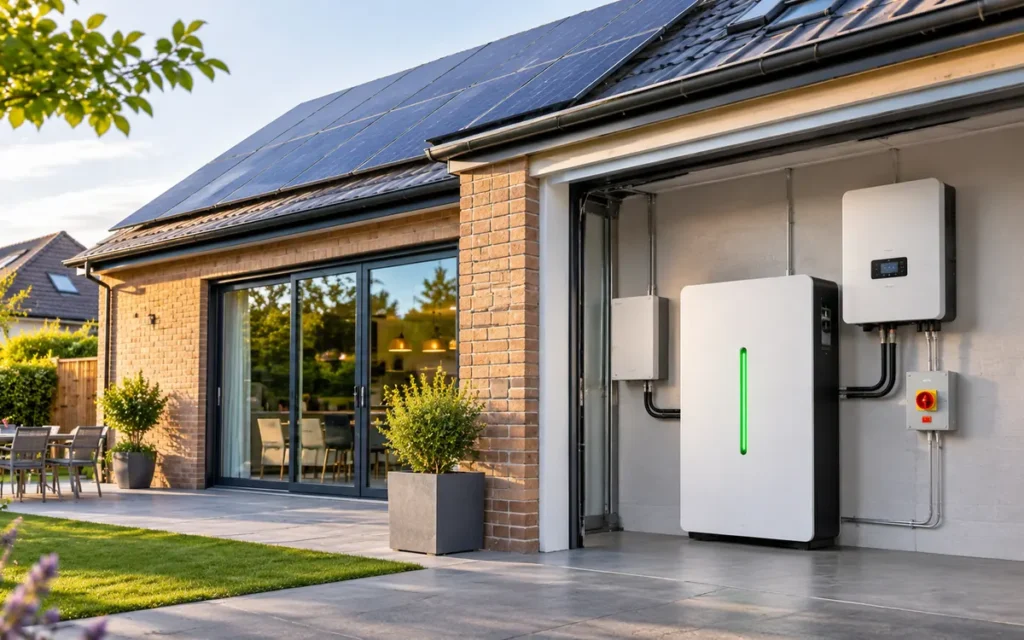
How do solar panels work with a battery?

Home battery and inverter on a wall, storing solar power for later

Without a battery, any solar power you do not use is exported to the grid. With a home battery, the surplus is stored first and used in the evening. The inverter manages this automatically. You can read more about export payments in our Smart Export Guarantee guide, or see the Energy Saving Trust for independent advice on how do solar panels work with storage.
Frequently asked questions

No. They generate from daylight, so they still produce electricity under cloud, although output is lower than on bright days.

Yes. Almost all home systems stay connected so you can draw electricity when the panels are not producing enough, and export any surplus.

Thinking about this for your home? We will assess your property before recommending anything. Prefer email? info@sunvolthome.co.uk

Official sources and further reading

Information checked on 25 October 2026. Rules, rates and schemes change; always confirm current details with the official source.

Step by step: from sunlight to your sockets

  1. Light reaches the panels: daylight hits the photovoltaic cells.
  2. The photovoltaic effect: the cells release electrons, creating direct current (DC) electricity.
  3. The inverter converts it: DC is converted into alternating current (AC), which your home uses.
  4. Your home uses it first: the electricity flows through your consumer unit to whatever is running.
  5. Surplus is stored or exported: spare electricity can charge a battery or go to the grid, where Smart Export Guarantee payments may apply.

Thinking about an upgrade?

Tell us about your home and we will help you work out what is worth doing.

Prefer email? info@sunvolthome.co.uk

Get A Quote
Questions?Chat on WhatsApp