Solar Panels for Farms: Planning, Grid and Tax Rules in 2026
Written by the Sunvolt Home team. Last updated 27 November 2026.
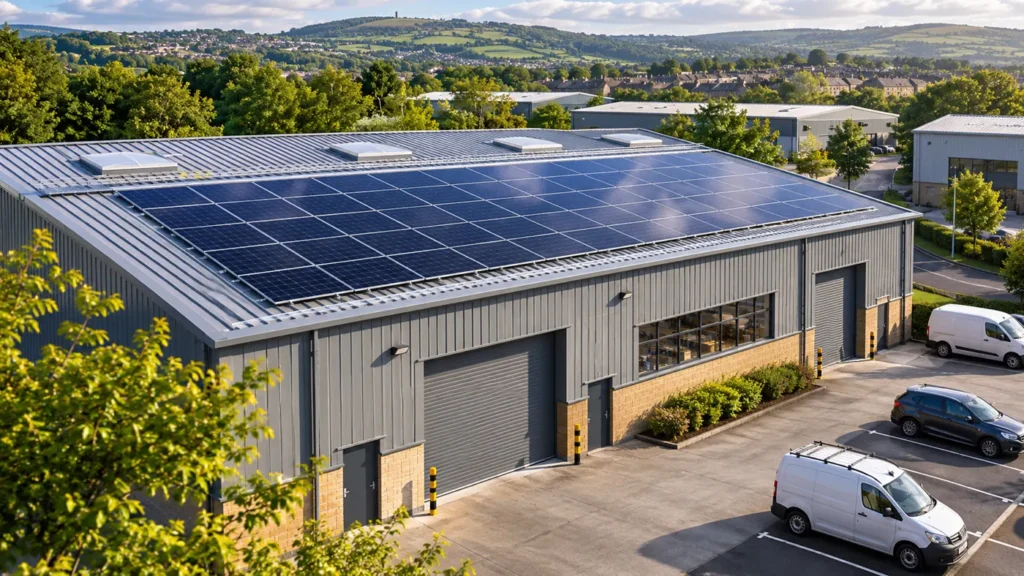
Solar panels for farms often make a lot of sense. There are big roofs on barns, sheds and dairy units, and the daytime electricity use from milking, cooling, grain drying, ventilation and workshops lines up with when panels generate most. Rooftop solar on agricultural buildings in England can often be fitted without a full planning application, and businesses can claim tax relief on the cost.
This guide to solar panels for farms covers what’s involved, the planning rules in England, how tax and VAT work, and the questions to ask before you get a quote.
Why solar panels for farms make sense
The value of solar comes from using the electricity yourself rather than buying it. Farms tend to use a lot of power during daylight hours, so a larger share of what the panels produce is used on site. Electricity you export earns far less than electricity you avoid buying.
Typical good fits include:
- dairy farms, with milking, milk cooling and water heating every day
- poultry and pig units with ventilation, heating and lighting
- arable farms with grain drying and storage
- farm shops, cold stores and workshops
- diversified farms with holiday lets or business units on the same supply
Farms that use little power during the day can still benefit, but the payback is slower. Adding a battery can help if most of your use is early morning or evening.
Roof or ground-mounted solar panels for farms?
Panels on farm buildings
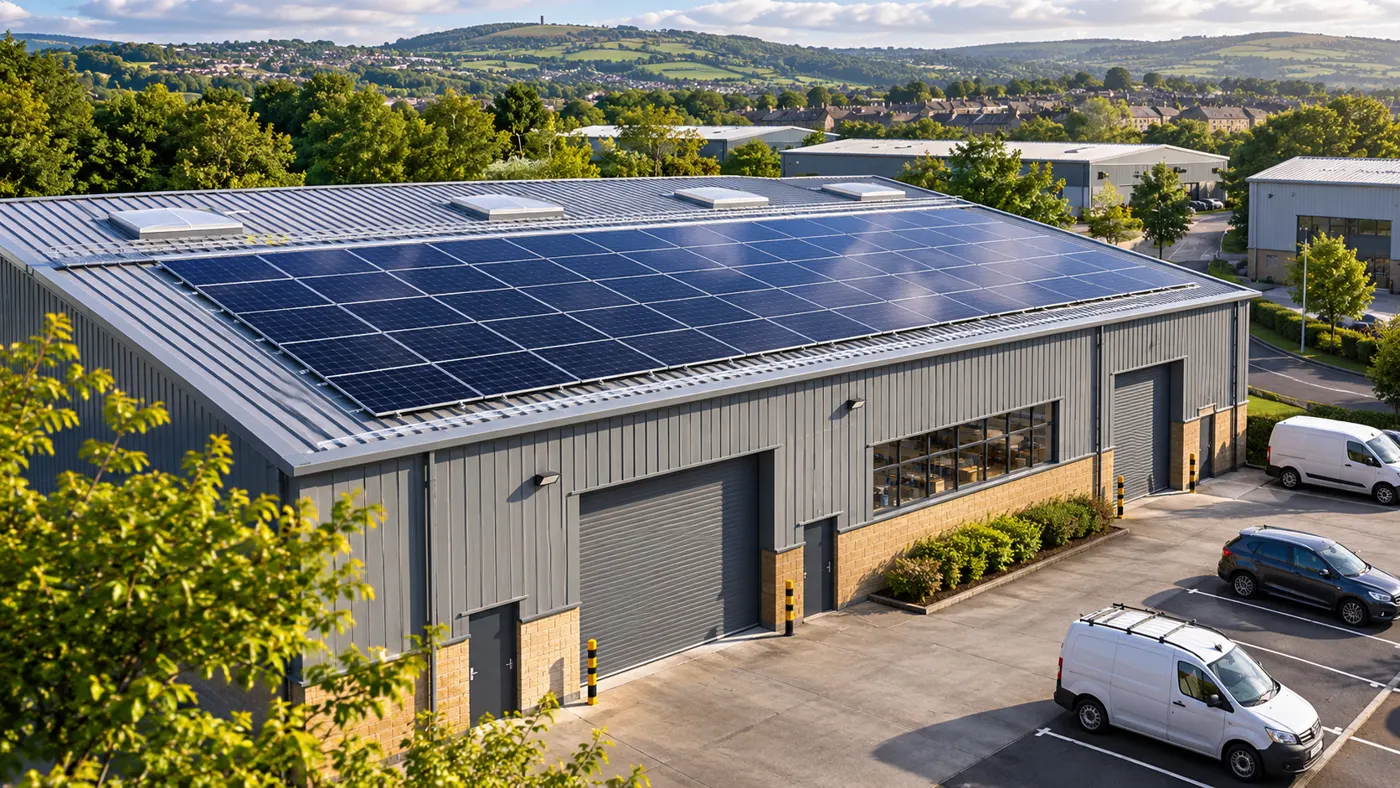
Rooftop panels use space you already have and don’t take land out of production. Before anything else, the roof needs checking. Many older farm buildings have roof sheets made of asbestos cement, which should be assessed by a specialist before any work. The structure also has to carry the extra load, so a structural check is a normal part of the survey.
Ground-mounted arrays
Ground-mounted panels can face the ideal direction and are easier to clean and maintain. They take up land, though, and larger arrays usually need full planning permission.
Planning rules for solar panels for farms in England
Rooftop solar on non-domestic buildings, including farm buildings, is often permitted development under Class J of Part 14 of the General Permitted Development Order (legislation.gov.uk). The main conditions are:
- On a pitched roof, panels must not stick out more than 0.2 metres from the roof slope.
- On a flat roof, the highest part of the equipment must not be more than 1 metre above the highest part of the roof, not counting chimneys.
- Panels must not be within 1 metre of the outside edge of the roof.
- The rights don’t apply to listed buildings, buildings within the curtilage of a listed building, or scheduled monuments.
- Some installations need prior approval from the council, mainly about appearance and glare, and there are extra limits on protected land such as conservation areas and National Landscapes.
- Equipment should be sited to keep its effect on appearance and the surrounding area to a minimum, and removed once it’s no longer needed.
Stand-alone ground-mounted solar is much more limited under permitted development (Class K). Only one stand-alone installation is allowed, it can’t be more than 4 metres high, must be at least 5 metres from the boundary, and the panels can’t exceed 9 square metres or 3 metres in any dimension (legislation.gov.uk). Anything bigger, which is most farm ground arrays, needs a planning application.
If you want certainty, you can apply to your council for a Lawful Development Certificate. Scotland and Wales have their own rules.
Connecting solar panels for farms to the grid
Every solar system has to be registered with your local Distribution Network Operator (DNO). Smaller systems are usually notified after installation under the G98 process. Larger systems, which most farm installations are, need approval before connection under G99. The DNO may limit how much you can export, or ask for network upgrades in rural areas where the lines are weaker. Your installer should handle the application, but leave time in the plan for it.
Many farms have a three-phase supply, which makes larger systems easier to connect. If you’re on single phase, the DNO may limit the system size.
Tax relief and VAT on solar panels for farms
Capital allowances
For businesses, solar panels count as special rate expenditure for capital allowances (HMRC). The Annual Investment Allowance lets businesses deduct the full cost of most plant and machinery up to £1 million a year (GOV.UK). Companies can also use a 50% first-year allowance for special rate assets. Which allowance suits you depends on your business structure and other spending, so speak to your accountant.
VAT
The 0% VAT relief on solar panels applies to homes and certain charity buildings, not to farm or commercial buildings (GOV.UK). Farm installations are normally charged at the standard rate. If your farm business is VAT-registered, you can usually reclaim it in the normal way. A system on a farmhouse that’s lived in is different, and may qualify for 0% VAT.
Selling spare electricity
Under the Smart Export Guarantee, licensed suppliers pay for the electricity you export. Rates vary between suppliers, so compare them. Because export rates are usually much lower than what you pay for electricity, design the system around what you can use on site first.
How to size solar panels for farms
- Get your half-hourly data. Most farms with a business supply have half-hourly or smart meter data. It shows exactly when you use power.
- Look at the seasons. Grain drying in late summer, lambing in spring and housed livestock in winter all change the pattern.
- Match the system to daytime use. A system that covers your daytime base load usually pays back faster than one built purely to export.
- Consider a battery. If you milk early and late, a battery can move solar from the middle of the day into the morning and evening.
- Check the roofs and the connection. Roof condition and DNO limits often decide the final size.
Our solar payback calculator gives a starting point, but solar panels for farms need a proper survey based on your own data.
Questions to ask about solar panels for farms
- Will you check the roof structure and roof sheets, including asbestos?
- Who handles the DNO application, and is it G98 or G99?
- Is the system designed around our half-hourly usage?
- Is the installer MCS certified? This matters for the Smart Export Guarantee on smaller systems.
- What are the warranties on the panels, inverter and workmanship?
- How will the panels be protected from livestock, vermin and dust?
Our guide to choosing a solar PV system has more.
Solar panels for farms FAQs
Do I need planning permission for solar panels on a barn?
Often not, in England, as long as the installation meets the Class J conditions and the building isn’t listed. Some installations need prior approval from the council. Check with your planning authority if you’re unsure.
Can I put solar panels on an asbestos roof?
Not without a specialist assessment. Asbestos cement roofs often need replacing or overcladding first. Your installer should arrange the right checks.
Is there 0% VAT on solar panels for farms?
No. The 0% VAT relief covers homes and some charity buildings. A farm business normally pays standard-rate VAT and, if VAT-registered, can usually reclaim it.
Can farms get paid for exporting electricity?
Yes, through the Smart Export Guarantee or an export agreement with a supplier. Rates vary, so compare offers.
Are there grants for solar panels for farms?
Grant schemes open and close, so check GOV.UK and your local authority for current funding before you commit.
Talk to us about solar for your farm
Sunvolt Home designs and fits solar panels and battery storage for homes and businesses across the North East and Yorkshire. We can survey your buildings and design solar panels for farms around your real usage. Find out more about our commercial solar panels, or read our guides to solar panels and smart battery storage.
Request a free site survey and quote or call us on 0330 057 7202.