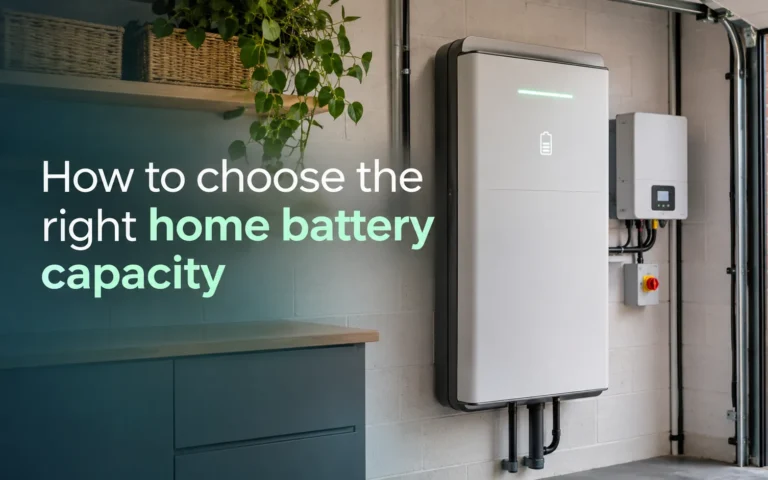
Using solar and battery storage together
By Sunvolt Home 4 min read Updated 15 November 2026 Battery Storage

Solar and battery storage work best as a team: the panels make power in the day and the battery keeps it for the evening.
What happens to your electricity hour by hour, how the battery is connected, and realistic expectations for summer and winter.
Key points
- Solar powers the home first, then charges the battery, then exports.
- Hybrid (DC-coupled) and AC-coupled designs both work.
- Expect most self-sufficiency in summer and much less in winter.
Through a typical day
- Morning: panels start generating and your home uses it first
- Midday: surplus charges the battery; once it is full, the rest is exported
- Evening: the battery supplies your home until it reaches its reserve level
- Night: you draw from the grid, or a time-of-use tariff recharges the battery cheaply
How the battery is connected
- DC-coupled (hybrid inverter): panels and battery share one inverter, which is efficient and tidy for new installations
- AC-coupled: the battery has its own inverter, which is often simplest when adding storage to an existing system

Summer versus winter
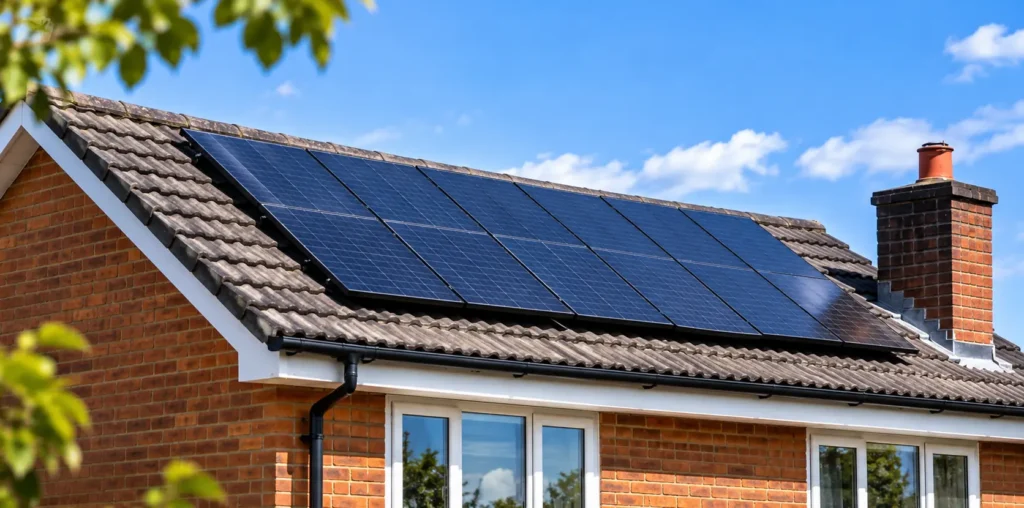
In summer, many homes can run from solar and battery for much of the day and evening. In winter, generation is far lower and the battery may rarely fill from solar alone. That is where smart tariffs help: charging overnight at a lower rate and using that energy at peak times.
Will I be energy independent?
Most grid-connected homes still buy some electricity each year, and you still pay standing charges. A solar and battery system can reduce how much you buy, but the grid remains your backup.
Being fully off-grid is rarely practical or cost-effective for a UK home. A more useful goal is to cut how much you buy at peak times. For many households, solar and battery storage together reduce grid use in the evening by a large share for much of the year, while the grid remains a reliable backup for dark winter weeks and unusually heavy days.
Next steps
Read more about solar panel installation and home battery storage, or request a quote for a combined system.
Solar and battery storage: a worked example

Here is an illustrative example, not a promise. Picture a three-bed home using about 3,500kWh of electricity a year, with a 4kWp solar system and a 5kWh battery.
On a bright spring day the panels might produce around 15 to 20kWh. The house uses some of that straight away for the fridge, washing machine and chargers. Without a battery, much of the rest would be exported for a few pence per unit. With solar and battery storage, the battery fills up by early afternoon and then powers the kitchen, TV and lights through the evening.
The result is that the home buys far less from the grid between 4pm and 8pm, when prices are often highest. In summer, many homes run for most of the evening on stored solar. In winter, the battery can still earn its place by charging overnight on a cheaper tariff.
Your own figures depend on your roof, usage and tariff. Our solar payback calculator gives a rough estimate for solar and battery storage together.
Choosing solar and battery storage sizes together

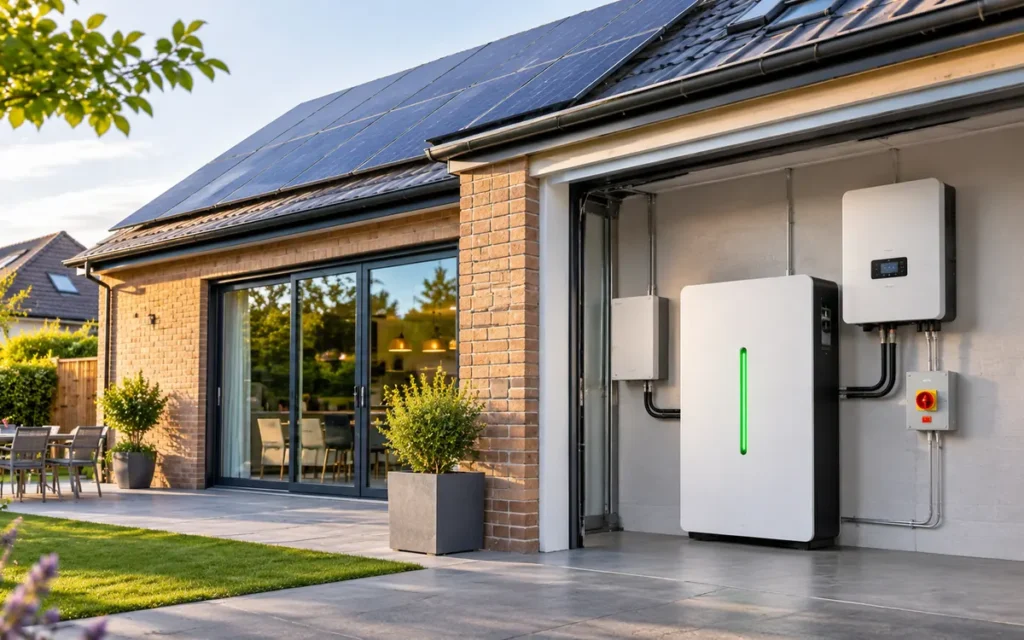
The panels and the battery should be sized as a pair. A huge battery with a small array will rarely fill up. A big array with a tiny battery will export most of its surplus.
- Start with your evening usage. A battery roughly matching what you use from late afternoon to bedtime is a sensible starting point.
- Check how much surplus your panels will make on a typical sunny day. That is the most a battery can store from solar.
- Think ahead. An electric car or heat pump changes the picture, so a hybrid inverter and an expandable battery give you room to grow.
A good installer models solar and battery storage together rather than quoting each in isolation. Read more on our home battery storage page, or see how the 0% VAT rate currently applies to both.
Frequently asked questions
Can I install the battery later?
Yes. Choosing a hybrid inverter now makes it simpler and avoids replacing the inverter later.
Does the battery charge from the grid?
It can, if you set it to, for example on an off-peak tariff in winter.
Thinking about this for your home? We will assess your property before recommending anything. Prefer email? info@sunvolthome.co.uk
Information checked on 25 October 2026. Rules, rates and schemes change; always confirm current details with the official source.