Solar battery storage: costs, benefits and how it works
By Sunvolt Home 6 min read Updated 15 November 2026 Battery Storage

Solar battery storage lets you keep the power your panels make in the day and use it when you need it.
What a home battery does, how it pairs with solar and smart tariffs, what drives the cost and how to decide whether it is worthwhile.
Key points
- A battery stores surplus solar or cheaper off-peak electricity for later.
- Value depends on when you use electricity and on your tariff.
- Siting must follow manufacturer requirements and UK fire-safety guidance.
What a home battery does
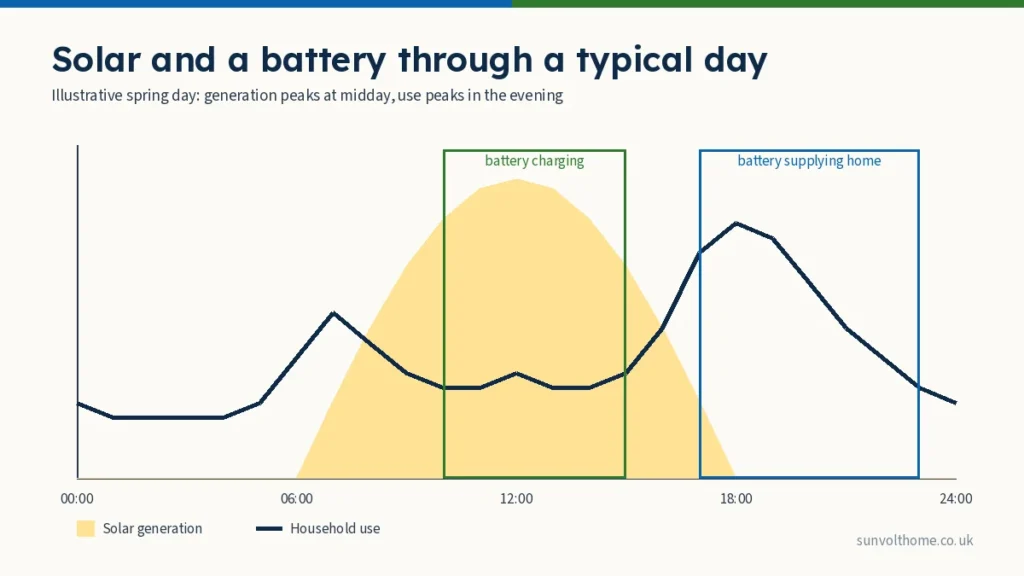
A battery stores electricity so you can use it at a different time. With solar panels, it captures daytime surplus that would otherwise be exported, then supplies your home in the evening. Without solar, or in winter, it can charge from the grid at cheaper off-peak times on a suitable tariff.
In short, solar battery storage moves your cheapest electricity, the power your own panels make, to the times you actually need it.
Benefits
- Use more of your own solar electricity
- Buy less electricity at peak times
- Make the most of time-of-use tariffs
- Optional backup power for selected circuits, with the right equipment
- Monitor generation, storage and use in an app
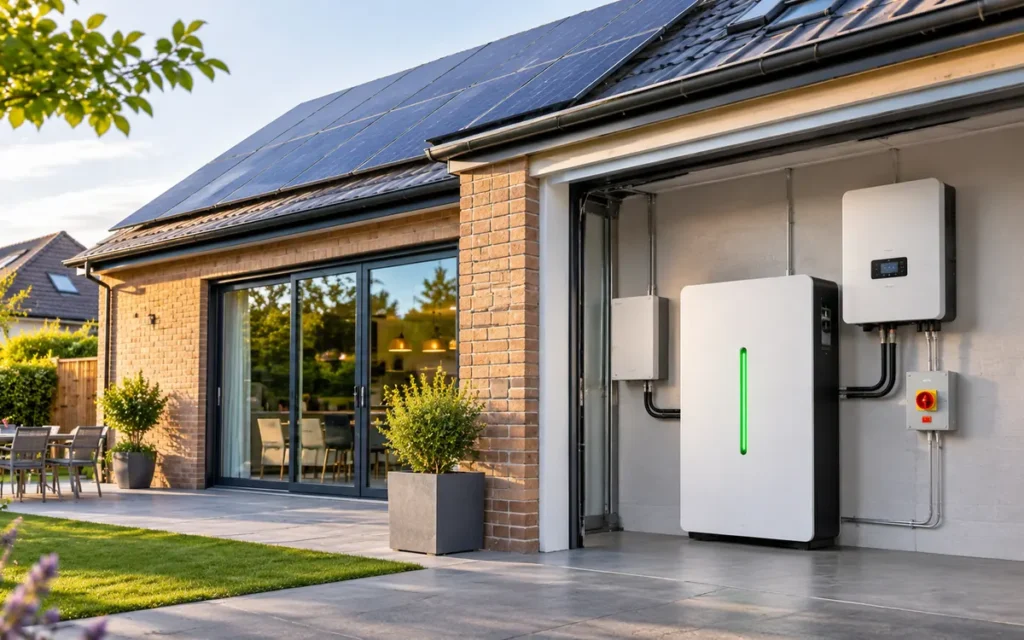
For most homes, these benefits of solar battery storage show up first as lower evening bills.

What affects the cost
- Usable capacity in kWh, which matters more than headline capacity
- Battery chemistry and brand; many home batteries now use lithium iron phosphate (LFP)
- Inverter: using an existing hybrid inverter, adding an AC-coupled battery inverter, or replacing the inverter
- Backup capability
- Location and cable runs
Installing a battery in a home is currently zero-rated for VAT, including batteries added to an existing solar system, until 31 March 2027. See our VAT guide.
Safety and siting
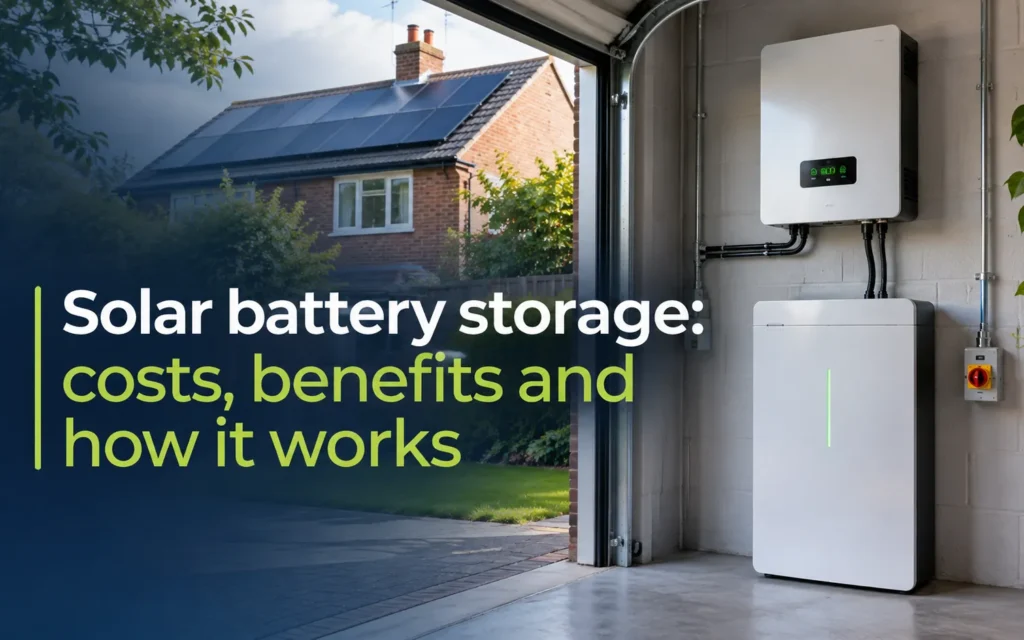
Batteries must be installed where the manufacturer’s instructions allow, with suitable ventilation, access and protection. Installers follow current UK guidance on fire safety for batteries in homes, such as PAS 63100. Garages, utility areas and suitable external walls are common locations; escape routes and living spaces are often unsuitable.
A good installer will explain where solar battery storage can safely go in your home before quoting.
Is a battery worth it?
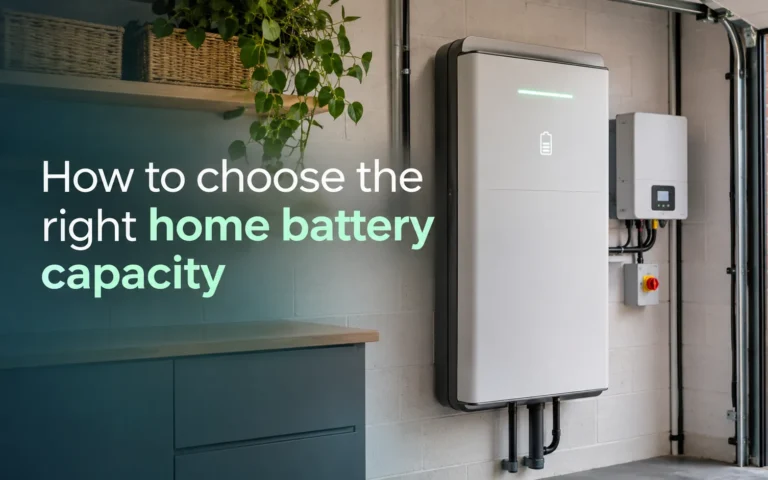
A battery tends to suit households that are out during the day and use most electricity in the evening, homes with larger solar systems that export a lot, and anyone with access to a time-of-use tariff. It may be less worthwhile if you already use most of your solar directly. Our guide to choosing battery capacity helps with sizing, or read about our battery storage installation.
If that sounds like your home, solar battery storage is likely to be worth a closer look.
Can you use a battery without solar panels?
Yes. On a time-of-use tariff, a battery can charge when electricity is cheaper, often overnight, and supply your home at more expensive times. To estimate the value, multiply the usable capacity you would cycle each day by the difference between your peak and off-peak rates, then allow for round-trip losses. The wider the gap between your rates, the more it is worth.
This is why solar battery storage can still be useful even before you add panels.
Battery-only savings depend entirely on your tariff. Check the current rates on your own tariff rather than relying on typical figures.
How long do home batteries last?
Manufacturers usually warranty batteries for a period of years or a number of charge cycles, whichever comes first, with a minimum retained capacity at the end. Batteries do not stop working when the warranty ends; they gradually hold less charge. Lithium iron phosphate (LFP) batteries are now common in homes because of their stability and cycle life.
Where can a battery go?
Batteries must be installed where the manufacturer allows and in line with current UK fire-safety guidance (PAS 63100). Garages, utility rooms and suitable external walls are common. Escape routes such as hallways and stairs, bedrooms and lofts are generally unsuitable for new installations.
When a battery may not be worth it yet
- You already use most of your solar during the day, for example working from home
- Your annual electricity use is very low
- You are on a flat-rate tariff and do not plan to change
- More panels would add more value first; storage can usually be added later
In these cases, it can make sense to wait and revisit solar battery storage later, for example when you buy an electric car.
Monitoring and maintenance
Most batteries come with an app showing generation, storage, use and export, and run automatically to your chosen settings. They need little maintenance beyond keeping the area clear and ventilated.
A quick look each month is usually all the maintenance solar battery storage needs.
Solar battery storage and time-of-use tariffs

A battery does two jobs. In summer it stores spare solar. In winter, when the panels make less, it can charge from the grid overnight on a cheaper time-of-use tariff and power the house through the expensive evening peak.
That second job is why solar battery storage can still pay its way in the darker months. Check that your tariff and battery work together, and that the battery app lets you set charging times easily.
Used this way, solar battery storage works hard all year rather than just in summer.
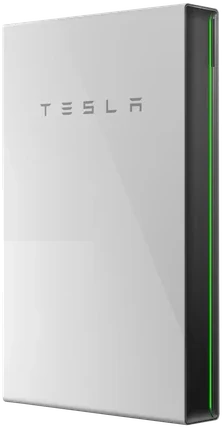
Solar battery storage: questions to ask your installer

- What usable capacity does the battery have, not just the headline size?
- Can it provide backup power in a power cut, and for which circuits?
- Can it be expanded later?
- What is the warranty, in years and in throughput or cycles?
Clear answers make it far easier to compare solar battery storage quotes fairly. See our home battery storage page for the systems we fit.
Frequently asked questions
How long do home batteries last?
Manufacturers usually warranty batteries for a number of years or charge cycles, with a minimum retained capacity. Check the warranty terms when comparing quotes.
Can I add a battery to existing solar panels?
Usually yes, either with an AC-coupled battery or by replacing the inverter with a hybrid unit. Compatibility is checked during the survey.
Do batteries work in winter?
Yes. Solar charging is lower in winter, but on a time-of-use tariff a battery can still charge from cheaper overnight electricity.
Thinking about this for your home? We will assess your property before recommending anything. Prefer email? info@sunvolthome.co.uk
Official sources and further reading
Information checked on 28 October 2026. Rules, rates and schemes change; always confirm current details with the official source.