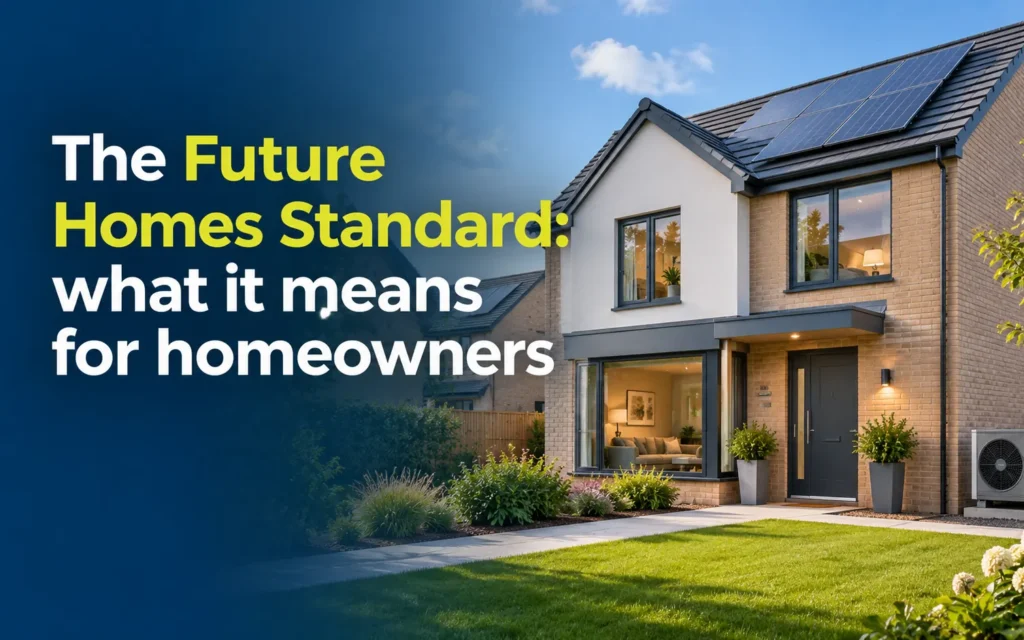
The Future Homes Standard: what it means for homeowners
By Sunvolt Home 5 min read Updated 15 November 2026 Renewable Energy

The Future Homes Standard mostly affects new builds, but it gives every homeowner a useful benchmark.
Published in March 2026, the Future Homes Standard will change how new homes in England are built, with solar panels and low-carbon heating becoming the norm. Here is what it does and does not affect.
Key points
- The government published the Future Homes Standard on 24 March 2026.
- The new rules come into force on 24 March 2027, with a 12-month transition period.
- It applies to new homes in England; it does not require changes to existing homes.
What the Future Homes Standard is
The Future Homes Standard is an update to the Building Regulations in England, mainly Part L (conservation of fuel and power). It sets much higher energy performance requirements for new homes, so they are cheaper to run and produce far less carbon than homes built to earlier rules. The government says new homes built to the standard should emit at least 75% less carbon than those built to the 2013 standards.
When it applies
The government published its final response and the regulations on 24 March 2026. The requirements come into force on 24 March 2027, followed by a 12-month transition period, so they will apply in full to new homes from 2028. Exact dates for an individual development depend on when it entered the building control process.
What new homes will need
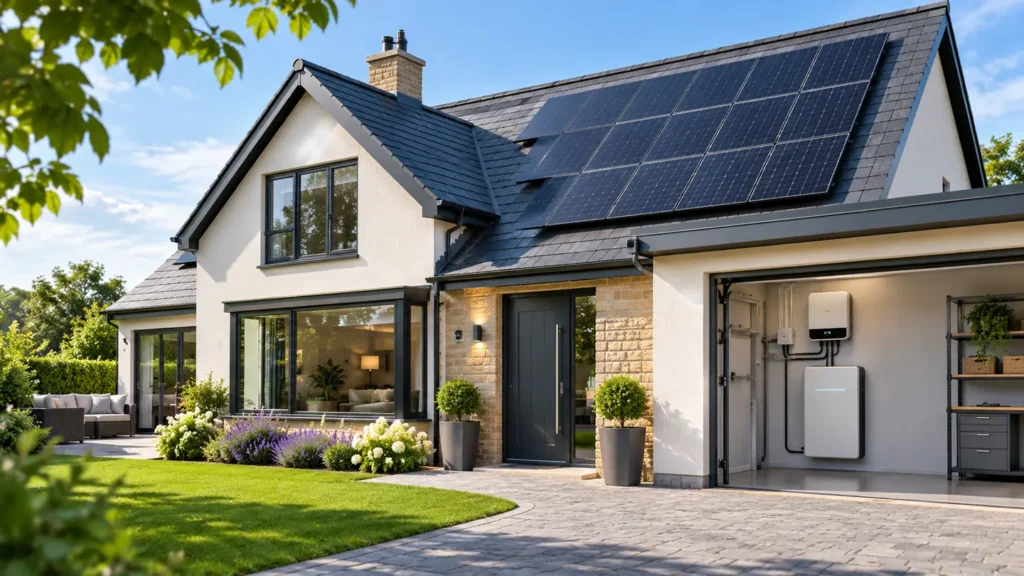
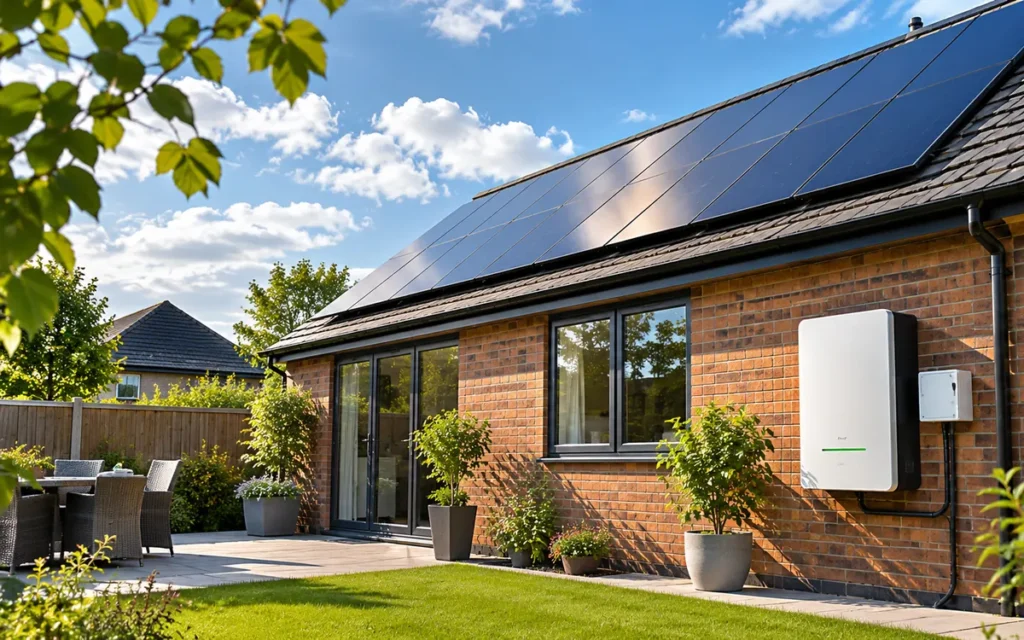
- Solar panels as standard: most new homes will need on-site renewable generation, with a solar PV requirement linked to the size of the home’s ground floor
- Better fabric: higher insulation and airtightness standards
- New assessment method: the Home Energy Model is being introduced to measure compliance
What it means if you live in an existing home
Nothing changes automatically. The standard applies to new homes, not to homes that already exist. It does, however, show where home energy is heading: solar generation and electric, low-carbon heating are becoming the expected baseline. Many homeowners are choosing to add solar panels and a home battery now, rather than waiting, so their home keeps pace with new-build standards.
If you are buying a new-build in the next couple of years, it is worth asking the developer whether the home is being built to the new standard or to the previous rules.
Future Homes Standard: what it means for solar and heat pumps

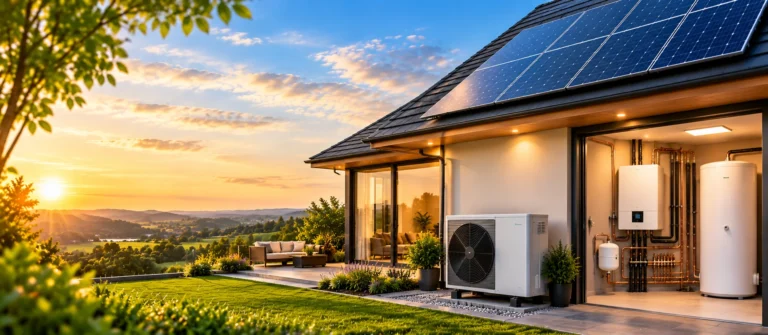
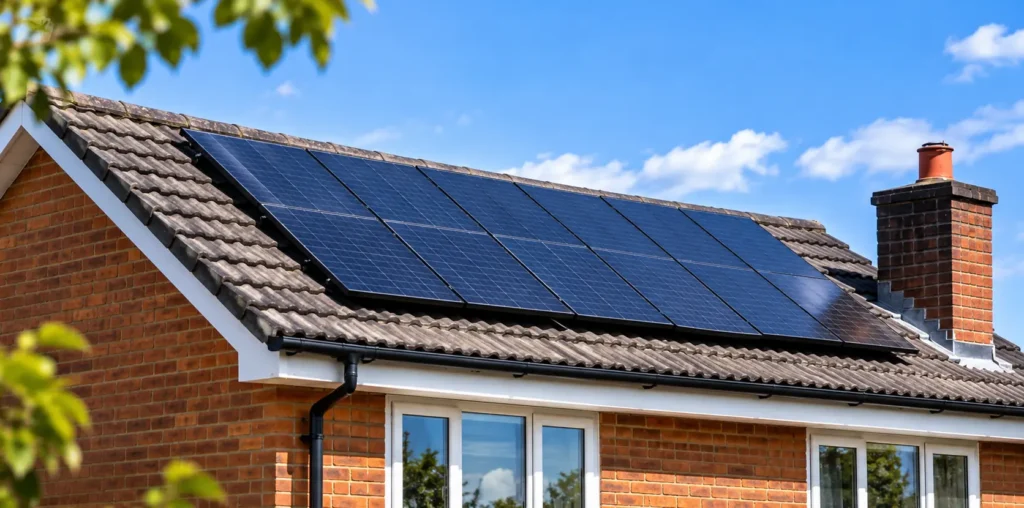
The headline change is about heating. Under the Future Homes Standard, new homes are expected to use low-carbon heating, which in practice usually means a heat pump rather than a gas boiler. The government has also said that most new homes will need solar panels on the roof.
That matters beyond new builds. It tells you where housing as a whole is heading: electric heating, rooftop solar, and homes designed to lose much less heat. The standard sits alongside the Building Regulations, so the detail is technical, but the direction is clear.
For buyers, it’s a useful checklist. If you’re looking at a new home, ask whether it was built to the Future Homes Standard, what heating it has, and how big the solar system is. A small token array is not the same as one sized to the house.
Should you wait for a Future Homes Standard home or upgrade now?

Most people won’t move just to get a better-built house, and they shouldn’t need to. The same technologies the Future Homes Standard relies on can be added to many existing homes.
The sensible order is the same one we’d suggest for any retrofit. Cut heat loss first with insulation and draught-proofing. Then add solar panels, and a home battery if you use a lot of power in the evening. A heat pump comes once the house holds its heat well.
Our honest view: waiting rarely pays. Every year without solar is a year of buying all your electricity from the grid. You won’t match a brand-new Future Homes Standard build exactly, but you can get a long way towards it. If cost is the issue, our guide to government-backed solar loans explains how the new low-interest finance works.
One more point worth knowing: the Future Homes Standard applies to new homes, not to homes people already live in. Nobody will force you to rip out a working boiler because of it. But as more new streets are built to the Future Homes Standard, buyers will start comparing older homes against them, and running costs will become part of that comparison.
Frequently asked questions
Do I have to add solar panels to my existing home?
No. The Future Homes Standard applies to new homes in England. There is no requirement to change an existing home.
When will all new homes have solar panels?
The rules come into force on 24 March 2027 with a 12-month transition, so most new homes should be built with solar from 2028 onward.
Does the standard apply in Scotland or Wales?
No. Building regulations are devolved; the Future Homes Standard covers England. Scotland and Wales set their own standards.
Thinking about this for your home? We will assess your property before recommending anything. Prefer email? info@sunvolthome.co.uk
Official sources and further reading
Information checked on 31 October 2026. Rules, rates and schemes change; always confirm current details with the official source.