Emerging renewable energy technologies to watch
By Sunvolt Home 5 min read Updated 15 November 2026 Renewable Energy

Not all emerging renewable energy technologies are ready for your roof yet, so this guide separates the proven from the promising.
Solar and storage keep improving. Here are the technologies attracting attention, how close they are to your roof, and why waiting for the next breakthrough rarely pays.
Key points
- Today's silicon panels are mature, reliable and widely available.
- Perovskite and tandem cells, floating and canal-top solar, and smarter batteries are developing fast.
- Most new technologies take years to reach homes at an affordable price.
Better solar cells
Perovskites are crystal materials that absorb light very efficiently. Layered on top of silicon in a “tandem” cell, they can capture more of the spectrum and have reached record efficiencies in laboratories. The challenge is durability: rooftop panels need to last for decades outdoors, and manufacturers are still proving long-term stability.
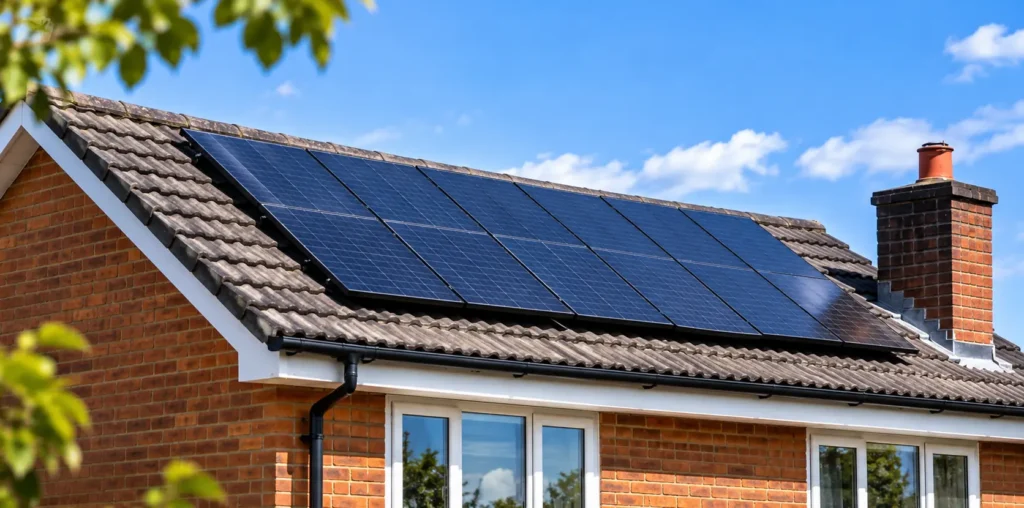
These are already on the market. Bifacial panels collect light reflected onto their rear side, which suits ground mounts more than roofs; back-contact designs move wiring behind the cell for a cleaner look and slightly higher efficiency. See how efficient solar panels are for what the numbers mean.
New places to put solar
Solar is moving onto surfaces that already exist: canopies over car parks, panels floating on reservoirs, and arrays built over canals, where the panels shade the water and reduce evaporation. Pilots of canal-top solar in California drew wide attention. In the UK, the government’s Solar Roadmap looked at car park canopies and plug-in solar for flats and balconies.
Smarter storage and flexibility
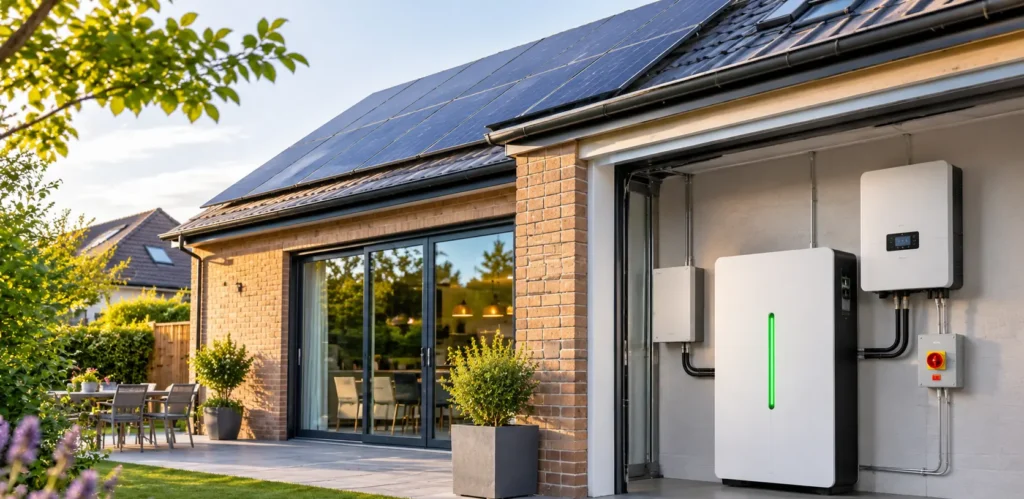
- Home batteries: lithium iron phosphate (LFP) chemistry has become common for its safety and long life, and prices have fallen
- Smart tariffs: batteries increasingly charge and discharge automatically around time-of-use prices
- Vehicle-to-home: some electric cars can power a home, although compatible equipment is still limited
- Sodium-ion: an emerging alternative chemistry using more abundant materials
A home battery installed today can already take advantage of smart tariffs.
Should you wait for the next breakthrough?
Usually not. Panels improve gradually, and a system installed now starts saving money immediately; waiting years for a few percentage points of efficiency often costs more in lost savings than it gains. The exception is if your roof needs replacing soon, in which case do the roof first. When you are ready, ask us about solar panel installation in the North East.
Which emerging renewable energy technologies are ready for homes now?

Plenty of headlines talk about breakthroughs. Far fewer tell you whether you can actually buy the thing. Here’s how we’d sort the emerging renewable energy technologies people ask us about, from ready to wait-and-see:
- Ready now: silicon solar panels, lithium home batteries and air source heat pumps. All three are mature, MCS-certified and available from local installers.
- Arriving: perovskite-silicon tandem panels. Oxford PV began commercial shipments in 2024, but you won’t find them on most UK installers’ price lists yet.
- Early days: vehicle-to-home and vehicle-to-grid charging. A handful of UK tariffs and chargers exist, but they depend on a compatible car and charger.
- Not for homes: large-scale ideas like floating solar and long-duration storage. Interesting, important, and irrelevant to your roof.
Our take on emerging renewable energy technologies: if a technology isn’t on the MCS scheme yet, it’s probably too early for your home.

How to judge emerging renewable energy technologies before you buy

New kit isn’t automatically better kit, and that’s especially true of emerging renewable energy technologies. Before paying for anything sold as the next big thing, ask five questions.
Is it certified? Most grants and the government-backed loan scheme need an MCS installer and MCS-listed products. Is there real data? Look for independent test results, not just a launch press release. What’s the warranty, and who stands behind it if the start-up behind it disappears? Can a local engineer service it? And does it actually beat what’s available today on cost per kWh?
That last one usually settles it. A standard solar and battery system bought now starts saving straight away. Waiting three years for a panel that’s 10% more efficient rarely wins once you count the bills you’d pay in the meantime.
If you want a sense of today’s numbers, our solar panel cost guide shows typical prices by system size. Emerging renewable energy technologies will keep improving, and the good news is that a battery-ready system fitted today can usually take on new kit later.
A quick reality check on timing. Emerging renewable energy technologies usually take five to ten years to move from a lab record to an affordable product on a UK roof. Perovskite cells set efficiency records years before the first commercial modules shipped. So if you’re deciding between solar now or later, compare what you’d save in that waiting period with the small extra efficiency you might gain. For most homes, the maths favours acting now and adding emerging renewable energy technologies later, once they’re proven, certified and priced for homes.

Frequently asked questions
What is perovskite solar?
A newer type of solar cell material that can be layered on silicon for higher efficiency. Lab results are strong, but long-term outdoor durability is still being proven.
Should I wait for better solar panels?
In most cases, no. Improvements are gradual, and the savings from a system installed now usually outweigh small future gains.
Can my electric car power my house?
Some cars support vehicle-to-home, but it needs compatible chargers and equipment that are not yet widely available in the UK.
Thinking about this for your home? We will assess your property before recommending anything. Prefer email? info@sunvolthome.co.uk
Information checked on 31 October 2026. Rules, rates and schemes change; always confirm current details with the official source.